Guests rarely say it out loud, but they are quietly scanning your living room the moment they walk in, and certain eyesores grab their attention instantly. The quickest way to make the space feel calmer and more welcoming is to toss or tame the specific clutter magnets experts say visitors always notice. Use this list as a room-by-room checklist so the next time you host, your living room looks intentional instead of overloaded.
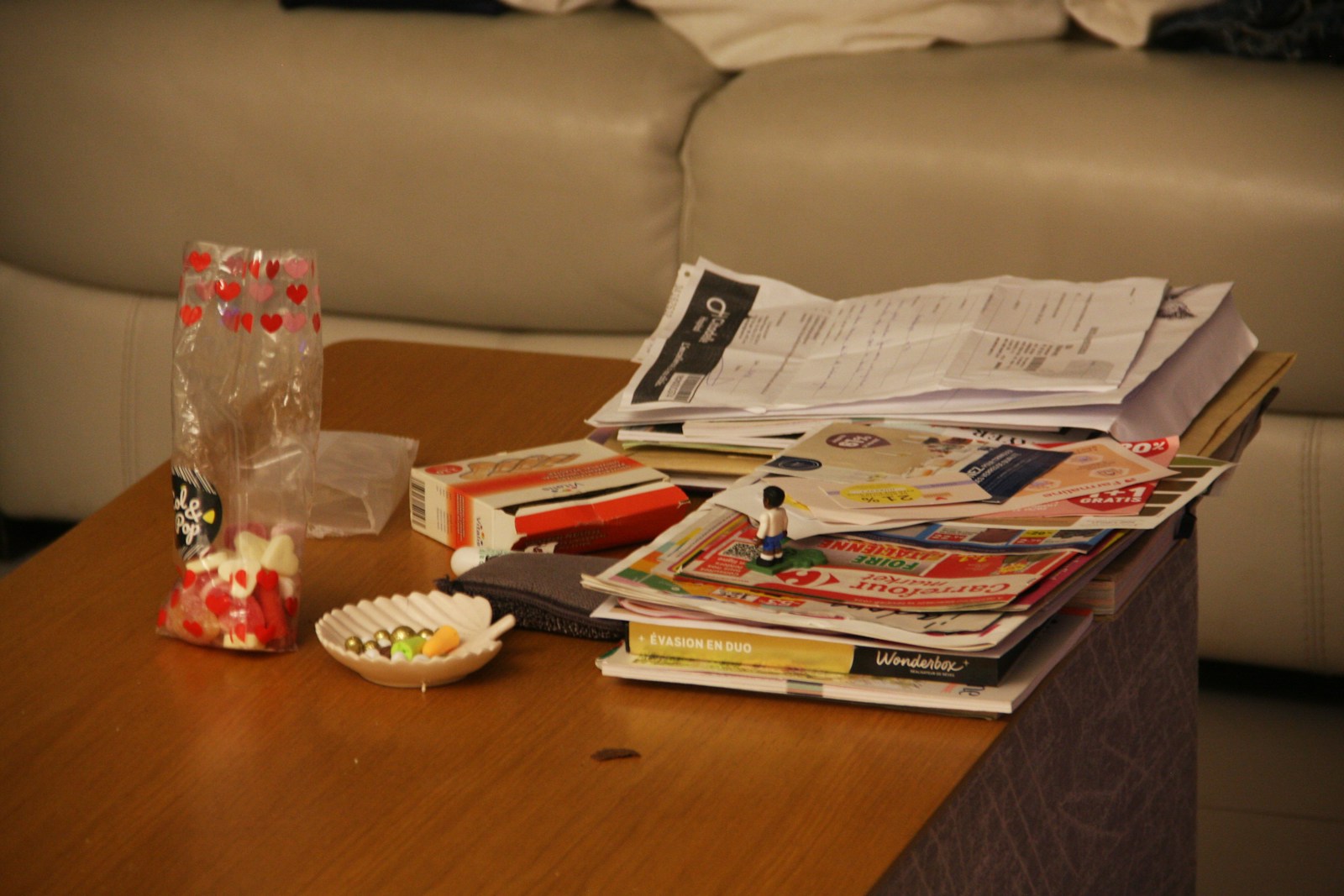
1) Cluttered Coffee Table
A cluttered coffee table is one of the first things guests clock, because it sits in the center of your living room and acts like a landing zone for everything. Organizing pros point out that high-traffic surfaces, especially the coffee table, are among the messy areas visitors always notice. When this surface is buried under mail, chargers, half-burned candles, and random toys, it signals that clutter has taken over the room.
Clearing it starts with deciding what actually earns a permanent spot. Keep a small tray for remotes, a single candle, and maybe one book, then move paperwork to a desk or file box. If you like to keep coasters or a small plant, group them so the table still shows plenty of empty space. The visual breathing room instantly makes the entire living room feel cleaner, even if you have not touched anything else yet.
2) Worn-Out Sofa Cushions
Worn-out sofa cushions are another detail guests notice quickly, because seating is where they spend most of their time. When the fabric is sagging, pilled, or visibly faded, it draws attention to everyday wear and makes the whole room feel tired. Visitors may not care if your sofa is a luxury brand, but they do register when cushions are flattened or permanently indented in the spots where you always sit.
If the structure is still solid, you can often revive the sofa by replacing inserts, rotating cushions, or adding a tailored slipcover. When the upholstery is beyond saving, it becomes clutter in its own right, taking up prime real estate without adding comfort or style. Tossing or donating a worn piece and replacing it with a simpler, well-cared-for option can change how guests perceive your entire living area, even if nothing else in the room is new.
3) Dusty Shelves and Ledges
Dusty shelves and ledges are a classic giveaway that your living room has slipped down the priority list. Experts who study messy zones note that dust buildup on open surfaces is one of the first things people notice, especially when sunlight hits a bookcase or TV stand. A fine gray film on picture frames, soundbars, and decorative bowls makes even expensive pieces look neglected.
Because dust collects fastest on items you rarely touch, it also highlights clutter that no longer serves you. When you wipe down a shelf and have to move twenty tiny objects just to reach the wood, that is a sign you are storing more decor than you can realistically maintain. Editing down to a few larger, meaningful pieces makes cleaning easier and keeps dust from becoming the silent narrator of how long it has been since you last tackled the room.
4) Stacks of Old Magazines
Stacks of old magazines on side tables and under the coffee table are a subtle but powerful signal of procrastination. Spring decluttering guidance for April 2025 specifically calls out piles of outdated reading materials as space hogs that should be tossed to maximize room. Once an issue is months or years old, it usually functions more as visual clutter than as a resource you truly revisit.
Other decluttering lists of the Most Unwanted Things to keep around also single out Old Magazines and Newspapers as prime candidates for the recycling bin. Guests see those leaning towers of paper and assume the rest of the home is just as backed up. Keep only current issues in a slim basket, recycle the rest, and snap photos of any pages you genuinely want to reference later so your living room is not functioning as an archive.
5) Lingering Pet Hair
Lingering pet hair on sofas, chairs, and throws is one of the top details visitors notice as soon as they sit down. Reporting on what guests immediately clock in a home highlights fur on fabrics as a standout issue, especially for people who do not live with animals. Even if you are nose-blind to it, a cushion coated in hair can make guests worry about their clothes and allergies.
Regularly vacuuming upholstery, using a lint roller before company arrives, and choosing tightly woven fabrics that do not trap fur can dramatically change the impression your living room makes. Keeping a washable throw on the pet’s favorite perch and tossing it in the laundry before hosting is another simple fix. When pet hair is under control, visitors focus on your decor and conversation instead of silently brushing off their pants.
6) Tangled Cords and Remotes
Tangled cords and a pile of remotes on the coffee table or media console create instant visual noise. Spring decluttering advice for 2025 urges people to clear out duplicates that you do not need, and unused electronics clutter fits that description perfectly. Old streaming sticks, retired game controllers, and mystery chargers often linger long after you have upgraded devices.
Guests may not comment, but they do notice when a TV stand looks like a nest of cables. Start by identifying which remotes and cords you actually use, then store them in a small box or drawer. Label power strips, bundle wires with Velcro ties, and recycle outdated gadgets. A streamlined setup not only looks better, it also makes it easier for visitors to operate the TV without feeling like they might unplug the wrong thing.
7) Faded Throw Pillows
Faded throw pillows that have lost their shape or color quietly drag down your living room’s style. Professional organizers who focus on wardrobe cleanouts recommend tossing worn decorative textiles like stretched-out sweaters and damaged scarves, and the same logic applies to pillows. When the fabric is pilled, the inserts are lumpy, or the patterns no longer match your current palette, guests read it as a sign the space has not been refreshed in years.
Because pillows are relatively affordable to replace, they are one of the easiest upgrades you can make before hosting. Choose covers with zippers so you can wash them regularly, and limit yourself to a few coordinated designs instead of a jumble of leftovers from past styles. Editing out the tired pieces instantly sharpens the room, making even an older sofa feel more intentional and cared for.
8) Overstuffed Bookshelves
Overstuffed bookshelves packed with more than just books quickly become a focal point for the wrong reasons. Organizing experts note that cluttered storage zones are among the messy areas guests always notice, and a shelf crammed with random souvenirs, paperwork, and cords is a prime example. Instead of reading as a curated collection, it looks like a catchall for anything you did not know where else to put.
To fix it, start by removing items that do not belong in the living room, such as kitchen gadgets or unopened mail. Group books by size or color, then leave some open space on each shelf so the eye can rest. A few framed photos or a single plant can add personality without tipping back into chaos. When shelves look edited, guests see your interests, not your storage problems.
9) Musty Odors from Upholstery
Musty odors from sofas, armchairs, and rugs are one of the most memorable impressions guests take away from a visit. Reporting on what people immediately notice in a home points out that unpleasant smells in seating areas are hard to ignore, even if the room looks tidy. Fabric absorbs everything from cooking fumes to pet accidents, and over time that can create a stale scent that no candle can fully mask.
Addressing the source is more effective than layering on air fresheners. Vacuum cushions thoroughly, launder removable covers, and consider a professional steam cleaning for heavily used pieces. Opening windows regularly and using baking soda on rugs can also help. When the air feels fresh, guests are more likely to describe your living room as cozy instead of stuffy, and they will actually want to sink into the sofa you worked so hard to style.
10) Chipped Mantel Decor
Chipped mantel decor, from cracked vases to figurines with missing pieces, draws the eye for all the wrong reasons. Spring 2025 decluttering advice singles out broken decorative pieces as items that should be cleared out to refresh key focal points like fireplaces. When guests sit facing the mantel, they have plenty of time to notice every chip and scratch.
It can be hard to part with sentimental objects, but displaying damaged items often undercuts the effect you want. Consider repairing truly meaningful pieces and relocating them to a less prominent spot, then replace the rest with a few intact, larger-scale accents. A simple arrangement of candles, a framed print, and a plant can look far more polished than a crowded lineup of knick-knacks that have seen better days.
11) Dusty Knick-Knacks
Dusty knick-knacks scattered across every surface make even a clean living room feel cluttered. Organizing guidance that urges people to toss excess sentimental items in closets translates directly to your shelves and side tables. When you own more trinkets than you can reasonably dust, they quickly become dust collectors rather than meaningful decor.
Guests may politely admire a few special pieces, but they are more likely to notice the layer of dust that signals you are overwhelmed by your own stuff. Choose a handful of favorites and store or donate the rest. Grouping items on a tray or in a glass-front cabinet can also make them feel intentional instead of scattered. With fewer objects to maintain, your regular cleaning routine becomes faster, and visitors see curated style instead of visual clutter.
12) Frayed Area Rugs
Frayed area rugs with worn patches or curling edges are hard to ignore, especially in walkways where guests constantly look down as they move. Experts who map out messy zones point to worn flooring as a problem area people always spot, and a tired rug is part of that picture. Threads sticking up or corners that refuse to lie flat can even become tripping hazards.
Replacing a large rug can feel like a big investment, but it has an outsized impact on the room’s overall impression. If a full replacement is not in the budget, consider trimming loose fibers, using rug tape to secure edges, or layering a smaller, fresher rug over the worst spots. When the floor looks cared for, it anchors the rest of your furniture and makes the entire space feel more put together.
13) Forgotten Games Under Seats
Forgotten board games and puzzles shoved under sofas or chairs are the kind of hidden clutter guests notice when they cross the room or sit down. Reporting on what people pick up on in others’ homes notes that clutter in corners and under furniture quietly draws attention. A half-open game box peeking out from beneath a chair suggests unfinished projects and a lack of storage.
Instead of letting entertainment items migrate across the floor, designate a single cabinet or lidded basket for games and puzzles. Rotate a few current favorites to an accessible spot and store the rest elsewhere, or donate sets you no longer use. Clearing the floor not only makes vacuuming easier, it also gives guests a clear path and a sense that the room is actively maintained rather than perpetually mid-cleanup.
14) Lingering Holiday Ornaments
Lingering holiday ornaments in the living room long after the season ends are a surprisingly common eyesore. Decluttering checklists for April 2025 specifically call out out-of-season decor as something to pack away to reclaim space. When guests see winter garlands in spring or a stray pumpkin in late winter, they immediately register that you are behind on basic resets.
Seasonal decor has the most impact when it appears and disappears on schedule. Create a clearly labeled storage bin for each holiday and set a reminder to put items away within a week or two of the event. Keeping your living room aligned with the current season makes it feel more intentional and prevents shelves and mantels from becoming permanent parking spots for last year’s celebrations.
15) Stained Window Drapes
Stained or mismatched window drapes frame your entire living room, so guests notice them even if they never comment. The same decluttering advice that urges you to toss damaged fabric items in your wardrobe applies to curtains that are discolored, torn, or visibly dusty. Because they sit in direct light, fading and stains are especially obvious during the day.
Replacing drapes does not have to be expensive; simple cotton panels in a neutral color can instantly freshen the room. If you prefer to keep what you have, laundering them according to the care label and using a steamer to remove wrinkles can make a big difference. When window treatments look clean and cohesive, they act like a picture frame for your view instead of a reminder of postponed chores.
16) Bare or Cluttered Walls
Bare or cluttered walls both catch guests’ attention, just in different ways. Organizing pros note that overloaded wall areas can feel as messy as a crowded shelf, while completely empty walls in an otherwise furnished room can look unfinished. Visitors often sit facing these large surfaces, so they have time to take in every detail, or lack of one.
If your walls are crowded with random art, calendars, and hooks, start by removing anything purely functional that could live inside a closet. Group remaining pieces into a simple gallery or choose one large statement artwork. On the other hand, if the walls are blank, adding a mirror, framed photos, or a single shelf can make the room feel intentional. The goal is balance, not maximalism or minimalism at any cost.
17) Piled-Up Blankets
Piled-up blankets and throws can make a living room feel cozy, but when they are heaped on the sofa or floor, guests see clutter instead of comfort. Observers of home habits point out that excess textiles in heaps are something visitors notice right away as they scan the room. A mountain of blankets suggests there is no system for where things go when they are not in use.
Limit yourself to two or three throws in the living room and give them a designated home, such as a lidded basket, blanket ladder, or ottoman with storage. Fold them neatly at the end of the day or before guests arrive so they read as intentional accents rather than laundry in progress. With a simple routine, you keep the warmth and lose the mess, which is exactly what visitors remember after they leave.
Leave a Reply