Celebrity homes have always doubled as mood boards, and many of yesterday’s boldest choices would slide seamlessly into your feed today. Looking at how stars once lived helps you see why certain aesthetics keep resurfacing, especially as TikTok and Instagram recycle and remix vintage interiors. Here are 10 past celebrity home decisions that would feel instantly on trend in your space right now.
1) Old-Hollywood dressing rooms as everyday closets
Old-Hollywood dressing rooms, with their wall-to-wall mirrors and glowing vanity bulbs, anticipated the way you now treat your closet as a content set. Those built-in vanities, upholstered stools, and curtain-draped wardrobes were designed for trying on looks and lingering, not just grabbing clothes and leaving. Today, you see the same impulse in walk-in closets styled with pendant lighting, gallery walls, and dedicated selfie corners that make getting dressed feel like a daily shoot.
As social platforms reward polished “get ready with me” videos, a closet that functions like a mini studio becomes a practical asset. The focus on flattering light, reflective surfaces, and curated backdrops mirrors the creator-first interiors tracked in tools like the TikTok trend tracker, where rooms are built to perform on camera. Reimagining a classic dressing room in your home lets you tap into that same cinematic energy while keeping storage highly functional.
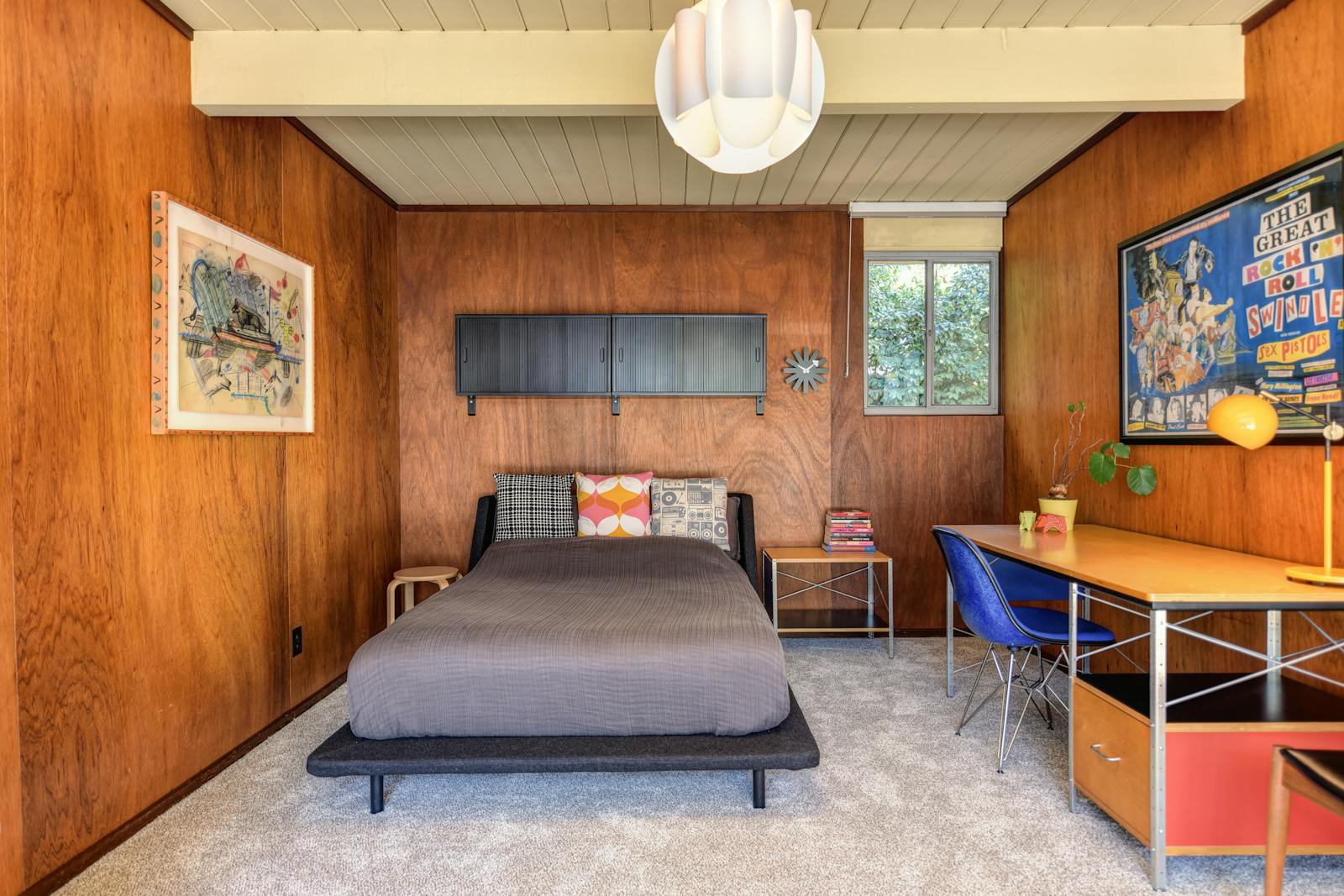
2) Mid-century modern time capsules that never age
Mid-century modern homes that celebrities embraced in the 1950s and 1960s, with low-slung sofas, tapered legs, and open-plan layouts, read today like they were designed for your Pinterest board. Those clean lines and warm woods were originally about efficiency and optimism, but they now align perfectly with the minimalist, camera-friendly rooms that dominate your feed. When you see a teak sideboard or an Eames-style lounge chair, it feels contemporary even though the silhouette is decades old.
For you, the appeal lies in how easily mid-century pieces mix with newer elements like smart speakers, flat screens, and sculptural LED lamps. The style’s emphasis on negative space and simple geometry also makes small rooms look larger on video, which matters when you are filming in an apartment. By leaning into vintage mid-century forms, you get a home that feels both historically grounded and algorithm-ready without chasing short-lived decor fads.
3) Maximalist wallpapered rooms as statement backdrops
Celebrity homes that once layered bold wallpaper in every room, from palm fronds to oversized damask, anticipated the maximalist revival now playing out online. Those spaces treated walls as art, wrapping entire rooms in pattern instead of relying on a single accent wall. Today, you see the same instinct in saturated, print-heavy interiors that turn even a small corner into a scroll-stopping backdrop for outfit photos, book stacks, or beauty flat lays.
When you adopt this approach, you are not just decorating, you are building a visual identity that reads instantly on camera. A powder room covered in graphic florals or a dining room in moody toile gives your content a recognizable setting that followers remember. Because wallpaper can be removable and renter-friendly, you can borrow this old-school celebrity drama without committing to permanent renovation, then swap patterns as your aesthetic evolves.
4) Sunken living rooms as social media stages
Sunken living rooms, once a hallmark of glamorous celebrity entertaining, now look like they were designed for overhead shots and wide-angle videos. The lowered floor naturally frames people sitting or dancing in the pit, while the surrounding ledge doubles as casual seating or a place to style plants and books. On camera, that change in elevation creates depth and visual interest that a flat, boxy room cannot match.
If you are not ready to remodel, you can still borrow the concept by zoning your living area with layered rugs, step-like platforms, or modular sofas that create a “conversation pit” effect. This layout encourages face-to-face interaction during parties and makes group photos feel more dynamic. In a culture where gatherings are often documented, a sunken-style arrangement turns your living room into a natural stage without sacrificing comfort.
5) Indoor-outdoor courtyards as wellness hubs
Many past celebrity estates revolved around central courtyards, blurring the line between indoors and outdoors with sliding doors, tiled patios, and lush planting. That layout anticipated your current focus on wellness, natural light, and biophilic design, where greenery and fresh air are treated as daily essentials. A courtyard or patio that flows directly from the kitchen or living room now functions as an extra “room” for working, dining, or stretching.
Even if you only have a balcony or small yard, you can echo this celebrity blueprint by treating it like a styled interior. Layer outdoor rugs, weatherproof cushions, and potted trees to create a cohesive zone that photographs as well as any indoor corner. As more of your social life and workday moves outside when possible, these hybrid spaces become key to both mental health and the kind of relaxed, sunlit imagery that performs well online.
6) Library walls and home offices as creative sets
Celebrity homes that once showcased floor-to-ceiling libraries or paneled studies now feel like prototypes for the modern home office. Those rooms, lined with books, art, and collected objects, were designed to signal intellect and taste during in-person meetings. Today, the same backdrop instantly elevates your video calls, livestreams, and recorded content, turning a simple desk setup into a branded environment.
By arranging books by color, mixing in sculptural bookends, and adding a focused table lamp, you can recreate that cinematic study even in a small apartment. The visual density behind you helps the camera read depth, while the curated objects quietly communicate your interests. As remote work and digital side projects remain central to daily life, a library-style wall becomes both a productivity tool and a subtle way to shape how others perceive you online.
7) Statement staircases as architectural runways
Grand staircases in celebrity mansions, with sweeping railings and dramatic landings, were always meant to showcase an entrance. In the age of outfit-of-the-day content, they function like built-in runways, giving you a natural place to film full-length looks and transitions. The vertical lines of balusters, the curve of a banister, and the play of light on each step all add movement that flat backdrops lack.
Even a modest staircase can be styled to capture this effect with a bold runner, framed art along the wall, and a sculptural pendant overhead. When you film from above or below, the stairs guide the viewer’s eye and make simple clips feel more editorial. For homeowners and renters alike, treating the staircase as a design moment turns a purely functional zone into one of the most photogenic spots in the house.
8) Retro kitchens with visible collections
Retro celebrity kitchens that displayed copper pots, patterned dishes, and colorful appliances anticipated today’s open-shelf obsession. Instead of hiding everything behind uniform cabinetry, those spaces treated cookware and pantry staples as decor, creating a lived-in warmth that translates well on camera. When you see rows of mismatched mugs or a stack of vintage mixing bowls, the kitchen feels personal rather than staged.
To adapt this look, you can combine a few glass-front cabinets or open shelves with closed storage so only your best pieces are on show. Grouping items by color or material keeps the scene cohesive, while a single vintage appliance, like a pastel stand mixer, anchors the vignette. As cooking content and casual hosting continue to thrive online, a kitchen that proudly displays its tools feels both nostalgic and very current.
9) Private screening rooms as content labs
Home theaters that once signaled peak celebrity luxury now mirror how you use media rooms as multi-purpose content hubs. Those darkened spaces with tiered seating, acoustic panels, and oversized screens were built for film premieres and sports nights. Today, a similar setup doubles as a gaming zone, editing suite, and watch party venue, supporting everything from Twitch streams to group movie marathons.
By prioritizing sound quality, blackout shades, and comfortable modular seating, you create a room that works as well for recording voiceovers as it does for binge-watching. LED strips behind the screen or along the ceiling add a customizable glow that reads cleanly on video. As entertainment keeps shifting toward at-home experiences, a scaled-down screening room becomes less of an indulgence and more of a flexible studio for your digital life.
10) Spa-style bathrooms as daily reset spaces
Celebrity bathrooms that once featured soaking tubs, oversized showers, and hotel-level finishes anticipated your current obsession with spa-style self-care. Those spaces treated bathing as a ritual, with dimmable lighting, plush textiles, and generous counter space for products. Now, the same elements underpin the “night routine” and “skin-care shelfie” content that fills your feeds, turning the bathroom into a stage for wellness storytelling.
You can echo this atmosphere with a few targeted upgrades, like layered lighting, a teak bath mat, and coordinated glass bottles that make everyday products look intentional. Adding a stool or small side table near the tub creates a spot for candles, books, or a tablet, reinforcing the idea of lingering rather than rushing. As you look for ways to decompress without leaving home, a spa-inspired bathroom becomes both a practical sanctuary and a quietly aspirational backdrop.
Leave a Reply