Designers say your bathroom is one of the easiest rooms to give a nostalgic refresh, and vintage details are roaring back with a vengeance. From checkerboard floors to colored fixtures, the classics you remember from older homes are being reimagined with sharper lines and smarter materials. If you want a space that feels current but rooted in history, these 10 vintage bathroom trends show you exactly where to start.
1) Checkerboard floors
Checkerboard floors are returning as a graphic anchor that instantly makes a bathroom feel tailored and intentional. Designers point to black and white checkerboard tile as a timeless pattern that reads vintage without feeling theme-y, especially when you keep the scale moderate and the grout lines crisp. Some recommend softening the contrast with warm white and charcoal instead of pure black, which helps the floor blend with wood vanities and brass fixtures. The pattern’s strong geometry also makes small bathrooms feel more structured and less cluttered.
Because checkerboard is such a bold visual, you can keep the rest of the finishes simple and still get a high-impact look. Many designers now rotate the pattern on the diagonal to stretch the room visually and draw the eye toward a freestanding tub or window. If you are renovating, using porcelain or ceramic tiles with a matte finish gives you the classic look with better slip resistance and easier maintenance than older marble installations.
2) Claw-foot and pedestal tubs
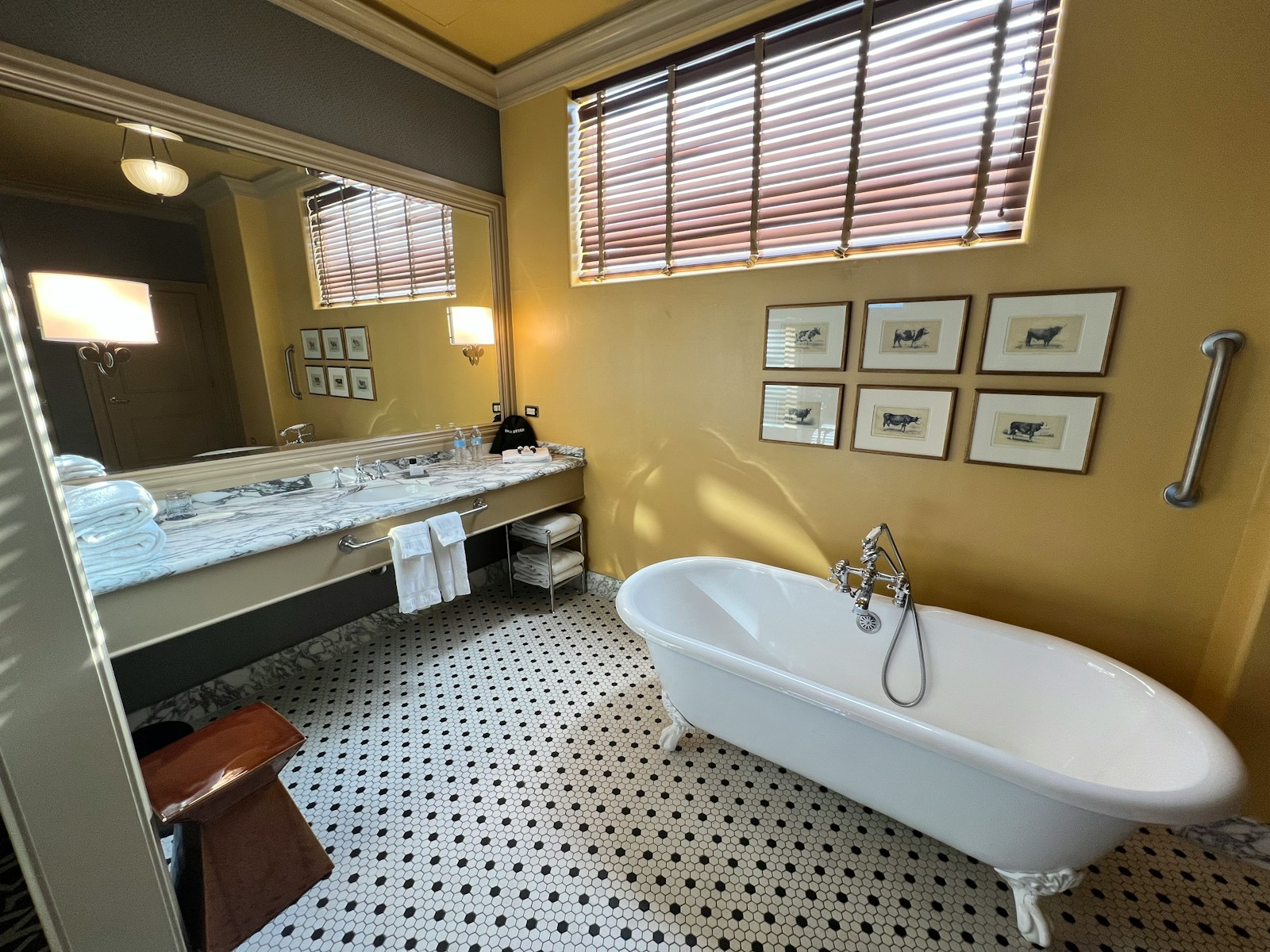
Claw-foot and pedestal tubs are back as sculptural centerpieces that signal a vintage-inspired bathroom from the moment you walk in. Designers say these standalone tubs work especially well in primary suites where you can float them in the room instead of pushing them against a wall. Cast-iron models with updated enamel interiors give you the deep soaking experience associated with historic homes, while modern plumbing and overflow hardware keep them practical. Many homeowners are also refinishing original tubs, preserving the classic silhouette while upgrading the interior surface.
To keep the look from feeling dated, designers often pair these tubs with streamlined floor-mounted fillers in unlacquered brass or polished nickel. That mix of old and new lets you lean into the nostalgia without sacrificing water efficiency or comfort. If you are short on space, a compact pedestal tub can still deliver the vintage vibe while leaving room for a walk-in shower, which is a common compromise in older houses being updated for contemporary use.
3) Colored toilets and sinks
Colored toilets and sinks, once considered relics of midcentury bathrooms, are reappearing as confident design statements. Designers note that soft pastels like blush, pale blue, and mint feel especially fresh, echoing the 1950s and 1960s while working with today’s lighter tile palettes. Some manufacturers have reintroduced archival colors, allowing you to specify a matching toilet and sink for a coordinated vintage look. In powder rooms, a single colored pedestal sink can be enough to set the tone without overwhelming the small footprint.
Because these fixtures are such focal points, designers suggest keeping surrounding surfaces relatively quiet, using white or neutral tile and simple mirrors. That restraint lets the color read as intentional rather than leftover. If you are hesitant to commit, wall-mounted sinks in vintage hues offer flexibility, since they are easier to swap than a full toilet. The renewed interest in colored fixtures also reflects a broader shift away from all-white bathrooms toward spaces with more personality and historical reference.
4) Subway tile with dark grout
Subway tile with dark grout is resurging as a way to give bathrooms a utilitarian, early-20th-century feel while still looking sharp and current. Designers emphasize that the contrast between white tile and charcoal or black grout outlines each piece, echoing classic subway stations and prewar apartments. This approach works particularly well in showers and around tubs, where the grid adds structure and rhythm. It also has a practical upside, since darker grout tends to show less discoloration over time than bright white formulas.
To keep the look elevated, many designers specify slightly longer or slimmer subway tiles, which stretch the walls and avoid a generic feel. Pairing the tile with traditional cross-handle faucets or exposed shower valves reinforces the vintage mood without sacrificing modern performance. When you repeat the grout color in cabinet hardware or lighting, the whole room feels cohesive, proving that a simple material like subway tile can still feel fresh when you lean into its historic roots.
5) Pedestal and console sinks
Pedestal and console sinks are back in favor as designers look for ways to make small bathrooms feel airy and authentic to older architecture. A pedestal sink exposes more floor area than a bulky vanity, which can make a tight room feel wider and less cramped. Console sinks, which rest on slender legs and sometimes include a metal frame, add a hint of industrial or Art Deco character while still providing a generous basin. These silhouettes echo early plumbing fixtures, which were designed to be seen rather than hidden behind cabinetry.
Because you lose under-sink storage, designers often pair pedestal or console sinks with recessed medicine cabinets or narrow wall shelves. That trade-off is worth it in historic homes where a full vanity would crowd the doorway or cover original tile. Many updated versions now include integrated towel bars or small side ledges, giving you just enough landing space for soap and daily essentials while preserving the vintage profile that makes these sinks so distinctive.
6) Brass and unlacquered metal finishes
Brass and unlacquered metal finishes are surging as a favorite way to bring vintage warmth back into bathrooms dominated by chrome. Designers highlight unlacquered brass in particular because it develops a natural patina over time, echoing the lived-in character of older homes. Classic cross handles, gooseneck faucets, and exposed shower sets in these finishes instantly read as traditional, even when paired with modern valves and water-saving technology. The subtle aging of the metal becomes part of the design story, rather than something you constantly polish away.
To keep the look balanced, many designers mix brass with cooler elements like white porcelain, marble, or simple subway tile. That contrast keeps the room from feeling overly ornate. Using the same finish on faucets, towel bars, and light fixtures creates a cohesive vintage thread without needing elaborate millwork or patterned tile. For homeowners, the appeal lies in getting a bathroom that feels warm and collected over time, instead of a space that looks brand-new and static.
7) Vintage-inspired patterned tile
Vintage-inspired patterned tile, especially small-scale mosaics, is returning as a defining feature of character-rich bathrooms. Designers are specifying hexagon, penny, and basketweave mosaics that echo early 1900s floors, often in black and white or soft neutrals. These patterns add movement underfoot without overwhelming the room, which is crucial in compact spaces. Many tile makers now offer updated versions with slip-resistant finishes and mesh-backed sheets, making installation easier while preserving the historic look.
Patterned tile also lets you introduce subtle motifs, such as a contrasting border or a simple floral medallion in the center of the floor. Designers often use these details to nod to a home’s original era, especially in bungalows and prewar apartments. When you keep the walls quieter, the floor becomes the star, giving you a vintage statement that still feels clean and tailored. The result is a bathroom that looks thoughtfully restored rather than generically renovated.
8) Wall-mounted faucets
Wall-mounted faucets are gaining renewed attention as a vintage detail that also solves modern space challenges. Designers trace their roots to early plumbing layouts, where pipes were often run through walls instead of vanities. In a contemporary bathroom, a wall-mounted faucet paired with a simple rectangular sink or console immediately suggests an old-world sensibility. It also frees up counter space, which is especially valuable in narrow powder rooms or small primary baths.
Because installation requires planning, designers recommend committing to this choice early in a renovation so rough-in heights and projections are correct. When done well, the faucet becomes a focal point, especially in finishes like polished nickel or unlacquered brass. Pairing it with a framed mirror and classic sconces reinforces the vintage mood. For homeowners, the payoff is a bathroom that feels custom and considered, with fixtures that look like they belong to a carefully preserved older home.
9) Beadboard and paneled walls
Beadboard and paneled walls are reappearing as a way to give bathrooms architectural detail that many newer builds lack. Designers use vertical beadboard or simple tongue-and-groove paneling on the lower half of walls to echo traditional wainscoting, often capping it with a narrow ledge. Painted in soft whites, grays, or muted colors, the paneling adds texture and depth without relying on busy tile. It also helps protect walls from everyday splashes, which is especially useful in family bathrooms.
To keep the look from feeling too cottage-like, designers often pair beadboard with streamlined fixtures and modern lighting. Running the paneling behind a pedestal sink or claw-foot tub ties the whole composition together, making the room feel like it has always been that way. In older homes, adding beadboard can bridge the gap between original trim and newer tile, creating a cohesive envelope that respects the house’s age while still feeling fresh and functional.
10) Vintage-style lighting and mirrors
Vintage-style lighting and mirrors are finishing touches that designers say can completely shift a bathroom toward a nostalgic mood. Schoolhouse sconces, ribbed glass shades, and picture-frame mirrors with beveled edges all reference early- to mid-20th-century design. Placing a pair of sconces on either side of a mirror, instead of a single bar light above, instantly feels more traditional and flattering. These details are relatively easy to swap, making them a low-risk way to test a vintage direction before committing to bigger changes.
Designers often source mirrors with arched tops or metal frames that echo the faucet finish, tying the room together visually. When combined with classic tile and warm metals, the lighting and mirrors help the bathroom feel layered, as if it has evolved over decades rather than being installed all at once. For you, that means a space that feels both current and rooted in history, aligning perfectly with the broader return of vintage bathroom trends.
Leave a Reply