Old-school closets relied on simple hardware, sturdy materials, and habits that kept clothes visible instead of buried. You can still use those classic tricks to out-perform many bulky modern systems, especially in small or oddly shaped spaces. By mixing time-tested solutions with a few smart upgrades, you create a closet that is easier to maintain, cheaper to tweak, and flexible enough to evolve with your wardrobe.
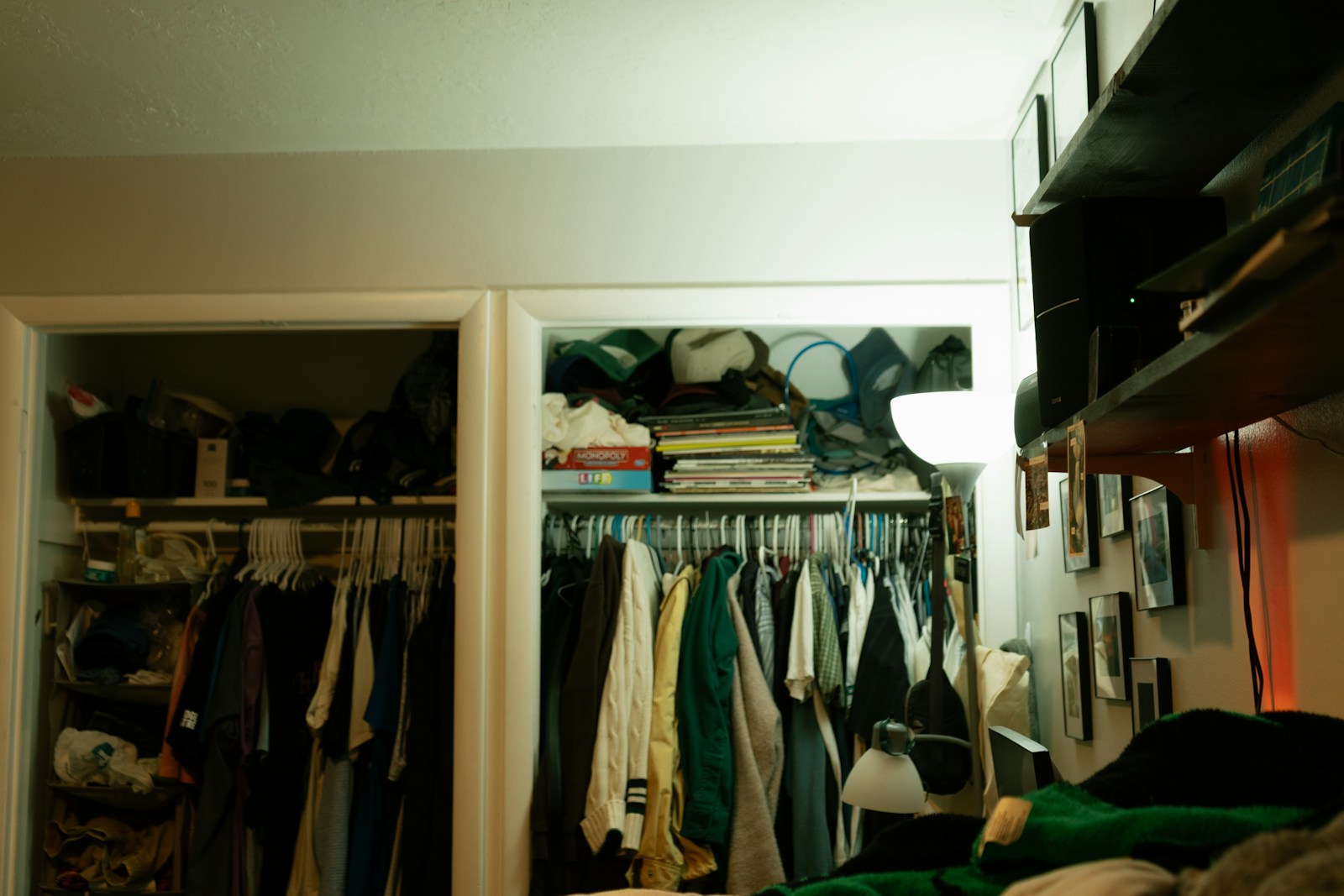
1) Single sturdy hanging rod with a high shelf
A single sturdy hanging rod with a high shelf is one of the oldest closet layouts, and it still solves more problems than many modular kits. The straightforward design keeps every hanger at the same depth, so you can scan your clothes in one glance instead of hunting through staggered sections. A full-width shelf above the rod captures suitcases, bins, and off-season items without needing specialty hardware or custom cabinetry.
Guides to closet organizing ideas consistently highlight how this basic structure works in closets of any size, because it is easy to install, inexpensive to adjust, and compatible with almost any hanger style. For you, the stakes are practical, not nostalgic: a simple rod and shelf can be repaired, raised, or extended as your storage needs change, instead of locking you into a fixed, expensive system.
2) Wall-mounted hooks and peg rails
Wall-mounted hooks and peg rails were standard in older homes, and they still outperform many modern accessories for grab-and-go storage. By lining a short wall or the back of a door with sturdy hooks, you create instant parking spots for bags, robes, hats, and tomorrow’s outfit. Unlike deep cubbies or drawers, hooks keep everything in plain sight, which reduces the chance that items get forgotten or wrinkled at the bottom of a pile.
Designers who focus on functional closet layouts often treat vertical wall space as prime real estate, using simple hooks instead of bulky add-ons that eat into floor area. That approach mirrors traditional mudrooms, where peg rails handled heavy coats for decades without failing. For you, the implication is clear: a few well-placed hooks can replace entire towers of shelves, especially in narrow reach-in closets where every inch matters.
3) Freestanding wooden dressers inside the closet
Freestanding wooden dressers inside the closet are a classic workaround that still beats many built-in drawer stacks. Instead of paying for custom cabinetry, you slide an existing dresser under hanging clothes, instantly adding deep storage for sweaters, T-shirts, and accessories. Because the piece is not fixed to the wall, you can pull it out for cleaning, repaint it, or swap it for a different size as your wardrobe evolves.
Practical guides to tested closet systems often note that drawers are essential for containing smaller items, but they do not have to be part of a proprietary kit. A solid wood dresser typically offers smoother glides and longer life than lightweight modular drawers, and it can move with you if you change homes. For renters or anyone on a budget, this old-school tactic delivers built-in-level function without permanent construction or landlord approval.
4) Open shelves for folded stacks
Open shelves for folded stacks are a staple of traditional closets, and they still outperform many closed cabinets for everyday clothes. When you can see every T-shirt, jean, or sweater at a glance, you are less likely to buy duplicates or forget what you own. Shallow shelves, spaced just high enough for a single stack, prevent toppling piles and make it easy to pull one item without disturbing the rest.
Detailed guides to Closet Storage Solutions emphasize that open shelving supports functional closet design by keeping frequently used items accessible and visible. For you, the payoff is faster daily dressing and fewer “lost” garments hiding behind doors. Instead of investing in opaque drawers that invite clutter, you can rely on simple, adjustable shelves that adapt to changing seasons and storage bins.
5) Over-the-door racks and organizers
Over-the-door racks and organizers have been around for decades, and they still solve storage problems that modern built-ins often ignore. By using the back of the door for shoes, scarves, or cleaning supplies, you reclaim space that would otherwise sit empty. Classic metal or fabric organizers are easy to install without drilling, which makes them ideal for renters or anyone who wants flexibility.
Closet organization guides that cover small spaces frequently highlight over-the-door storage as a way to add capacity without widening the closet or adding new walls. Compared with fixed cubbies, these racks can be swapped out when your needs change, from baby gear to gym accessories. For you, that means a low-cost, reversible upgrade that can dramatically reduce floor clutter and keep high-rotation items within arm’s reach.
6) Matching wooden hangers for visual order
Matching wooden hangers are an old-fashioned detail that still delivers a surprisingly powerful upgrade. When every hanger is the same shape and thickness, clothes hang at a consistent height, which makes the entire rod easier to scan. Wooden hangers also support heavier garments like coats and suits without bending, so shoulders keep their shape over time.
Experts who focus on functional closet design often stress that visual order is not just aesthetic, it directly affects how quickly you can find what you need. A row of mismatched plastic and wire hangers creates visual noise, while uniform wooden hangers act like a built-in organizing system. For you, the benefit is twofold: your closet looks calmer, and you are less tempted to cram in extra pieces when each hanger takes up a predictable amount of space.
7) Canvas bins and labeled boxes on upper shelves
Canvas bins and labeled boxes on upper shelves are a long-standing solution that still outperforms many specialty organizers. Instead of leaving the top shelf as a jumble of loose items, you group off-season clothes, accessories, or linens into clearly labeled containers. Soft-sided bins are forgiving in tight spaces, while rigid boxes stack neatly and protect delicate fabrics from dust.
Functional storage guides consistently recommend labeling as a simple habit that multiplies the usefulness of any shelf. By pairing that habit with basic bins, you avoid the cost and rigidity of custom cubbies that only fit one type of item. For you, the stakes are long-term: a labeled bin system makes it easier to rotate wardrobes seasonally, share the closet with a partner, and maintain order even when life gets busy.
8) Double-hang layout using a second rod
A double-hang layout using a second rod is a mid-century staple that still beats many modern systems for capacity. By adding a lower rod beneath the main one, you instantly double the hanging space for shirts, blouses, and folded-over pants. This arrangement works especially well in reach-in closets with standard ceiling heights, where vertical space often goes unused.
Closet planning resources that cover small and medium spaces frequently highlight double-hang sections as the most efficient way to store everyday clothes. Unlike complex modular towers, a second rod is inexpensive, easy to install, and simple to remove if you later need full-length hanging for dresses or coats. For you, that flexibility means you can adapt the same closet to different life stages without tearing out an entire system.
9) Shoe shelves along the floor perimeter
Shoe shelves along the floor perimeter are a traditional solution that still outperforms many modern shoe carousels and cubbies. Low, open shelves keep pairs together, visible, and off the floor, which reduces dust and makes vacuuming easier. Because the shelves hug the walls, they preserve the center of the closet for walking or for a laundry basket.
Guides that trace closet trends through the decades note that Modern designs often blend style with practicality, but the basic idea of lining the floor with accessible shoe storage has remained constant. For you, sticking with this old-school layout avoids the frustration of deep, angled cubbies where shoes disappear. It also lets you adjust shelf height for boots or flats without replacing an entire shoe “system.”
10) Simple pull-out baskets for everyday items
Simple pull-out baskets, often made of wire or mesh, have been used in closets for years and still beat many opaque drawers for everyday items. The open sides let you see what is inside, so socks, workout clothes, and accessories stay visible instead of vanishing into the back. Because baskets slide out fully, you can reach items at the bottom without unstacking piles.
Functional closet guides frequently recommend breathable storage for items that benefit from airflow, such as gym gear or knitwear. Wire baskets meet that need without the cost or complexity of custom drawer fronts and hardware. For you, the advantage is maintenance: baskets are easy to remove for cleaning, reconfigure on different shelves, or repurpose elsewhere in the house if your closet layout changes.
11) A dedicated “landing zone” chair or valet hook
A dedicated “landing zone” chair or valet hook is an old-school habit that still solves clutter better than many modern gadgets. By giving half-worn clothes, tomorrow’s outfit, or dry-clean-only pieces a specific place to rest, you prevent them from piling up on the floor or getting lost among clean items. A simple wooden chair, a standing valet, or a sturdy hook near the door can all serve this role.
Organization experts often point out that behavior, not hardware, determines whether a closet stays tidy. A landing zone builds that behavior into your routine, turning a potential mess into a controlled staging area. For you, the stakes are daily: instead of “chairdrobe” chaos spilling into the bedroom, you have a predictable spot that keeps in-between items contained and easy to review.
12) Seasonal rotation with labeled garment bags
Seasonal rotation with labeled garment bags is a long-standing strategy that still outperforms many all-in-one systems. By moving off-season coats, formalwear, or specialty pieces into protective bags, you free up prime rod space for what you actually wear now. Clear or labeled bags make it easy to identify contents without unzipping everything, and they shield fabrics from dust and light.
Closet organization guides that focus on transforming any space often stress that editing and rotating are as important as adding hardware. Garment bags support that process by creating a clear boundary between current and archive wardrobes. For you, the benefit is psychological as well as practical: a closet filled only with in-season, visible clothes feels larger, functions faster, and reduces decision fatigue, all while preserving special pieces for years of future use.
Leave a Reply