You might think of 1950s decorating as fussy or outdated, but many of those habits quietly solved problems that modern homes still struggle with. By revisiting a few of those old-school moves, you can make rooms feel warmer, more polished, and surprisingly current. Here are nine midcentury tricks that still work, and how to adapt them so your home looks better without feeling like a time capsule.
1) Coordinated color schemes that flowed room to room
Coordinated color schemes were a defining 1950s habit, and they made homes feel calm and intentional. Instead of treating every room as a separate project, decorators repeated one main hue and one accent throughout the house, so your eye moved smoothly from the living room to the hallway and kitchen. You still see this principle in contemporary open-plan spaces, where a single palette keeps large areas from feeling chaotic or unfinished.
When you echo a sofa color in your curtains, or repeat a hallway paint shade in a bedroom rug, you create that same quiet cohesion. The effect is especially powerful in smaller homes or apartments, where too many unrelated colors can make rooms feel chopped up. By choosing two or three core tones and carrying them through, you get the visual order that made 1950s interiors look pulled together, even when the furniture itself was simple.
2) Matching furniture sets that anchored each room
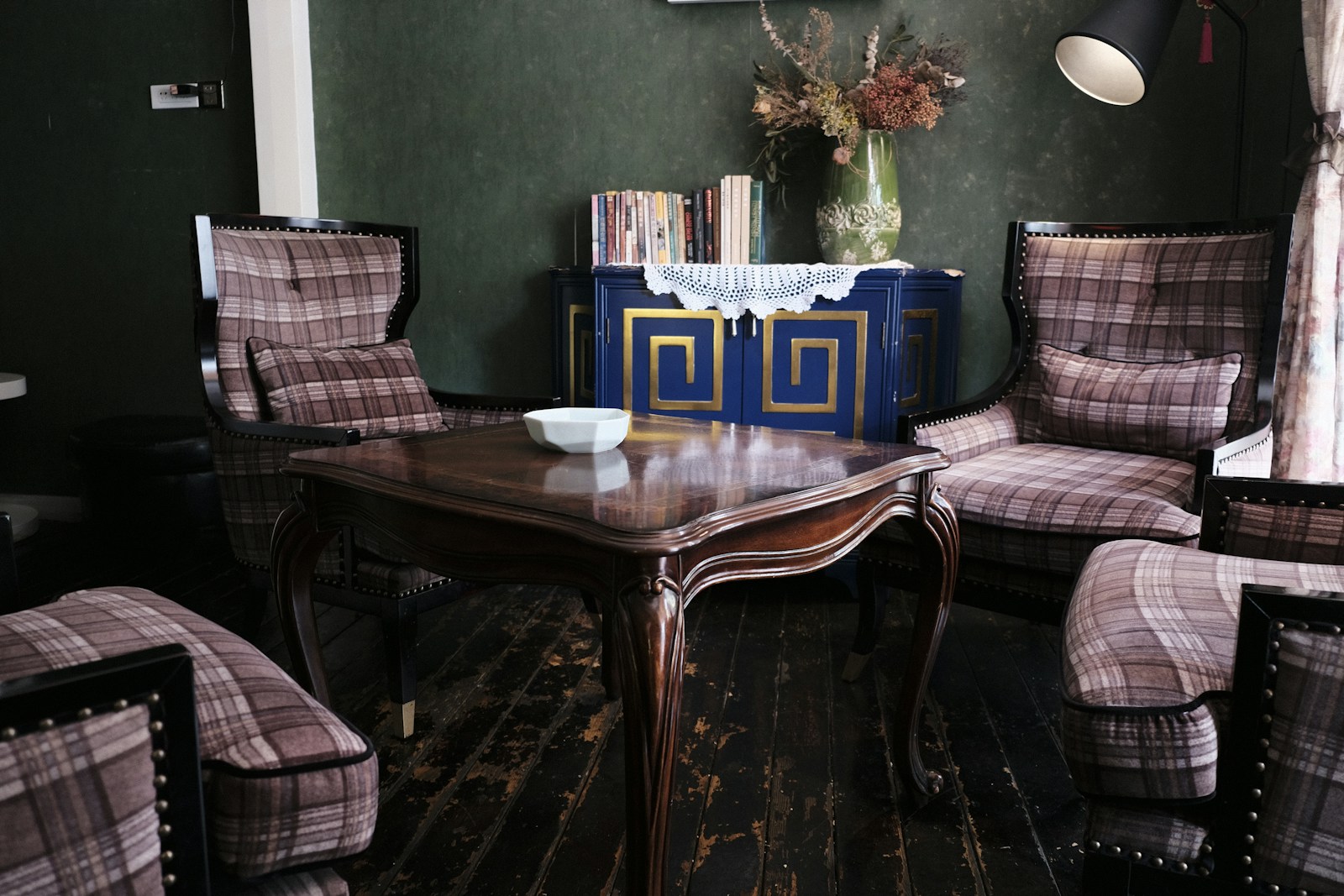
Matching furniture sets, from bedroom suites to living room groupings, were a 1950s staple that gave spaces instant structure. A coordinated sofa, armchair, and coffee table, or a bed with matching nightstands and dresser, created a clear focal zone and made rooms feel complete. Even if the pieces were modest, the repetition of wood tone, fabric, and silhouette signaled that the layout was deliberate rather than improvised.
Today you might not want a perfectly matched set, but borrowing the habit of a consistent “family” of pieces still pays off. When your main seating, tables, and storage share similar lines or finishes, the room reads as organized and calm. That visual unity lets you layer in bolder art, lighting, or textiles without tipping into clutter, which is one reason 1950s rooms often look surprisingly tidy in old photos.
3) Patterned wallpaper that added depth and character
Patterned wallpaper was everywhere in the 1950s, from florals in dining rooms to atomic motifs in hallways, and it quietly solved the problem of flat, lifeless walls. Instead of relying on a single coat of paint, homeowners used repeating prints to add depth, movement, and personality. Even small-scale patterns helped disguise minor wall imperfections, so rooms looked more finished without expensive plaster work.
When you bring that habit forward, a wallpapered accent wall or powder room can instantly make your home feel more designed. The pattern acts like built-in art, giving your furniture a richer backdrop and making simple pieces feel intentional. Because wallpaper wraps around corners, it also visually enlarges tight spaces, which is why many 1950s entryways and corridors feel more interesting and welcoming than their plain-painted modern counterparts.
4) Layered window treatments that framed the view
Layered window treatments, typically a sheer curtain paired with heavier drapes, were a 1950s default that did more than just block light. The sheers softened daylight and protected privacy, while the outer panels framed the window like a picture, making the architecture feel grander. Hung slightly higher and wider than the glass, those drapes visually stretched the wall, so even modest rooms appeared taller and more elegant.
Adapting that habit now, you can combine a simple roller shade with side panels or use linen sheers under blackout curtains. The layers let you fine-tune brightness throughout the day, which is crucial if you work from home or share spaces with different schedules. They also add texture and vertical lines, both of which make a room feel more polished, echoing the tailored look that defined many 1950s living and dining rooms.
5) Statement light fixtures as true focal points
In the 1950s, statement light fixtures, from starburst chandeliers to sculptural pendants, often served as the main focal point in a room. Instead of relying on scattered lamps, homeowners centered a bold ceiling fixture over the dining table or seating area, which instantly organized the layout. That single visual anchor helped define where conversation, eating, or reading should happen, making even compact rooms feel purposeful.
When you choose a distinctive chandelier or pendant today, you recreate that sense of order and drama. A strong overhead piece draws the eye upward, making ceilings feel higher and distracting from less-than-perfect flooring or walls. It also encourages you to arrange furniture around the light, which naturally improves traffic flow and sightlines, just as it did in many midcentury ranches and bungalows.
6) Built-in storage that kept clutter out of sight
Built-in storage, from wall-to-wall bookcases to banquettes with hidden compartments, was a quiet hero of 1950s decorating. Many homes incorporated cabinetry around fireplaces, under windows, or along hallways, so everyday items had a permanent home. That habit reduced the need for extra freestanding furniture, leaving more open floor space and cleaner sightlines, which made rooms feel larger and more serene.
Even if you cannot add full custom built-ins, copying the principle of integrated storage still improves how your home looks. Low shelving that wraps a corner, a window seat with drawers, or a media wall that hides cords all echo that midcentury practicality. By giving books, games, and electronics a designated spot, you avoid the visual noise that can make modern spaces feel chaotic, and you recover the tidy, streamlined look many 1950s interiors achieved by default.
7) Defined conversation areas instead of scattered seating
Defined conversation areas were a hallmark of 1950s living rooms, where sofas and chairs faced each other rather than the television. Furniture was grouped tightly around a coffee table or rug, creating an obvious place to sit and talk. That arrangement made rooms feel welcoming and socially focused, and it also ensured that every seat had a clear view and comfortable reach to surfaces for drinks or books.
When you adopt that habit now, even in a TV-centric space, your living room instantly feels more intentional. Pulling seating closer together, angling chairs toward each other, and grounding everything on a single rug creates a cohesive zone instead of a ring of disconnected pieces. The result is a room that looks professionally planned and encourages real interaction, echoing the hospitality that defined many 1950s gatherings.
8) Coordinated table settings for everyday meals
Coordinated table settings, with matching dishes, glassware, and linens, were part of everyday life in many 1950s homes. Even simple weeknight dinners often involved a tablecloth or placemats, cloth or neatly folded paper napkins, and a consistent set of plates. That small ritual made the dining area feel special and visually unified, turning an ordinary meal into a moment that looked and felt more polished.
Bringing that habit back does not require formal china or elaborate centerpieces. Using the same plates and glasses most nights, adding a runner, and placing a small vase or candle in the center instantly elevates the room. The repetition of shapes and colors creates a styled vignette that remains attractive even when the table is not in use, which is why so many vintage dining rooms appear camera-ready in old photographs.
9) Symmetrical arrangements that calmed busy rooms
Symmetrical arrangements, such as matching lamps on either side of a sofa or twin nightstands flanking a bed, were a go-to 1950s strategy for making rooms feel orderly. By mirroring key pieces, decorators created balance that naturally soothed the eye, especially in spaces filled with pattern or color. That symmetry also highlighted the central element, whether it was a headboard, fireplace, or picture window, giving the room a clear visual hierarchy.
Using symmetry today, even in small doses, can instantly tidy a space without buying anything new. Pairing similar lamps, aligning artwork in even grids, or centering a bench under a window restores that sense of calm structure. The human brain reads these mirrored setups as harmonious, which is why so many midcentury rooms still look composed and inviting, even when the decor itself is very different from current trends.
Leave a Reply