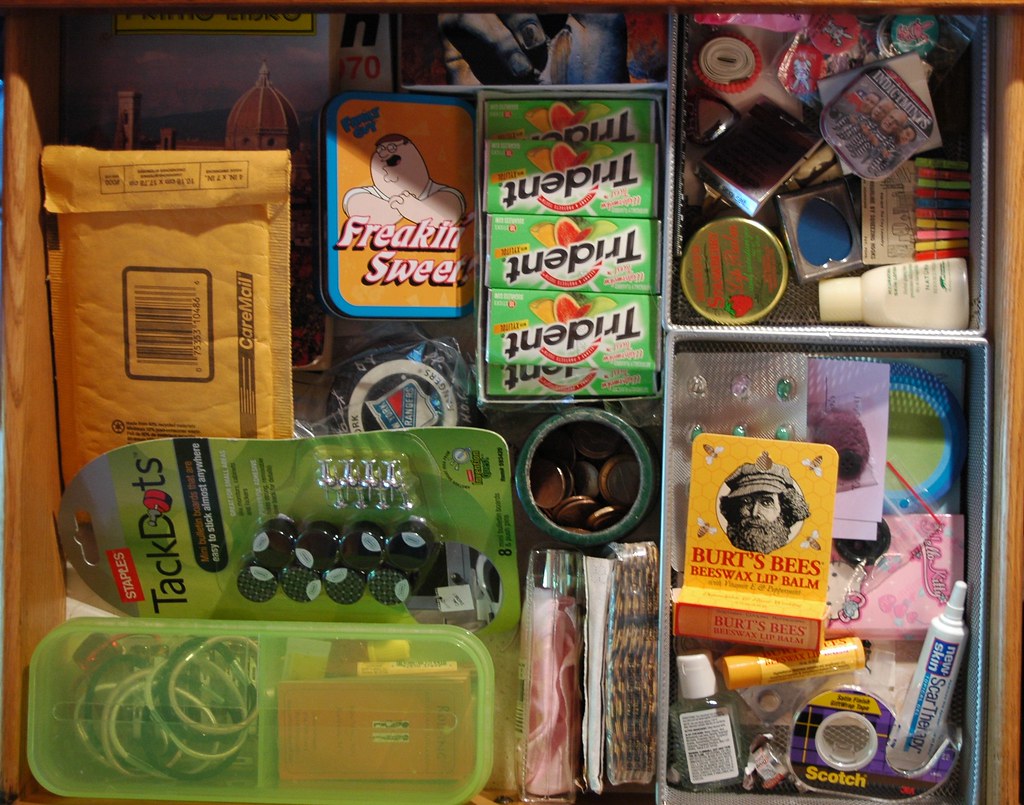
Your junk drawer is supposed to be helpful, not a black hole of mystery objects you are afraid to touch. Clearing out a few common culprits can instantly make that space more functional and less stressful to open. Start by targeting the “why do I still have this?” items, and you will free up room for tools and supplies you actually use.
1) Dried-Out Pens and Markers
Dried-out pens and markers are classic mystery items that quietly multiply in a junk drawer. Guidance on what to toss during a deep clean stresses that anything that no longer works should be discarded instead of shuffled from drawer to drawer. When you keep nonfunctional pens, you waste time testing them every time you need to jot down a phone number or sign a permission slip. That small frustration adds up, especially in a busy household where you rely on quick access to working writing tools.
Once you remove the dead pens, you can see how many reliable ones you actually own and store them tip-down in a small cup or tray. This simple reset turns your junk drawer into a dependable mini office instead of a graveyard of dried ink. It also makes it easier to spot when you are running low, so you buy replacements intentionally instead of grabbing random packs that end up scattered and unused.
2) Mystery Keys You Cannot Identify
Mystery keys are another category that lingers long after their purpose is forgotten. Advice on what to toss from a junk drawer highlights that unidentified keys are prime clutter, because you are unlikely to suddenly remember what they open after years of guessing. Keeping them “just in case” turns your drawer into a metal tangle that snags fingers and hides more useful tools. Every time you dig for a tape measure or screwdriver, you end up sifting through a pile of cold, clinking question marks.
A practical approach is to test any key you suspect might belong to a current lock, then label the ones you confirm and store them on a dedicated key ring. The rest can go, or at least move to a small envelope marked “unknown” that lives somewhere less central. That way, your main drawer holds only keys you actively use, and you reclaim space for essentials like a flashlight, measuring tape, or spare batteries.
3) Random Cables and Old Chargers
Random cables and outdated chargers often sprawl across the bottom of a junk drawer, even when the devices they belonged to are long gone. Organizing advice on how to streamline a junk drawer emphasizes sorting by current use, which means separating cords that fit your present phone, laptop, or tablet from those that match nothing in your home. When you keep every cable “just in case,” you create a confusing tangle that makes it harder to grab the one you actually need in a hurry.
Start by matching each cord to a device, then coil and label the keepers with painter’s tape or small tags. Anything that does not have a clear match, or belongs to electronics you have already recycled, can be donated to an e-waste program or discarded according to local rules. The result is a drawer where one neatly labeled charging cable is easy to find, instead of a knot of mystery wires that never see real use.
4) Expired Coupons and Gift Cards
Expired coupons and spent or outdated gift cards are paper clutter that quietly eats up valuable drawer space. Guidance on decluttering a junk drawer points out that old paper items are some of the fastest things to purge, because their usefulness is tied to clear expiration dates or balances. When you keep them anyway, you create a stack that you have to flip through every time you look for a current coupon, only to discover that most of them are no longer valid.
Set aside a few minutes to check dates and, when possible, verify remaining balances online or through store apps. Keep only the cards and coupons you can realistically use within the next month, and corral them in a small envelope or clip so they do not migrate all over the drawer. This simple habit reduces visual noise and makes it more likely you will actually redeem the savings you have, instead of letting them disappear into a messy pile.
5) Single Socks and Orphaned Gloves
Single socks and orphaned gloves sometimes end up in junk drawers when you are tidying in a hurry and hope their mates will turn up later. Advice on what not to stash in hidden storage spots underscores that clothing items quickly become forgotten clutter when they are separated from their usual home. When you tuck lone socks or gloves into a catchall drawer, you are unlikely to reunite them with their partners, and they simply become soft, space-hogging mysteries.
A better strategy is to keep a small basket in your laundry area specifically for single socks and unmatched gloves, then review it periodically before each new season. Anything that remains unmatched after a reasonable time can be repurposed as cleaning rags or donated to textile recycling. Clearing these strays from your junk drawer opens room for items that truly belong there, such as scissors, tape, or a small toolkit you reach for every week.
6) Broken Tools and Hardware Bits
Broken tools and random hardware bits, like bent nails or stripped screws, often migrate into junk drawers after small home projects. Guidance on tossing worn-out household items notes that damaged tools rarely get repaired and instead sit unused, taking up space. When you keep a cracked screwdriver handle or a tape measure that no longer retracts, you risk grabbing it in a rush and discovering it fails at the exact moment you need it, which can delay repairs or even cause minor injuries.
Sort through your drawer and test each tool, setting aside anything that does not function smoothly. Keep a small, curated set of reliable basics, such as a working screwdriver, a sturdy pair of pliers, and a functional measuring tape. Corral loose nails, screws, and wall anchors in a labeled container, and discard the bent or rusted pieces. This shift turns your junk drawer into a mini hardware station that actually supports quick fixes instead of sabotaging them.
7) Useless Freebies and “Just in Case” Trinkets
Useless freebies and “just in case” trinkets, like logo keychains, flimsy bottle openers, or novelty magnets, are prime junk-drawer offenders. Commentary on hanging on to just-in-case items highlights how easy it is to rationalize keeping low-value objects because they were free or might be useful someday. In practice, these items rarely earn their keep, and they crowd out the genuinely helpful tools you reach for regularly, such as a reliable lighter or a compact flashlight.
Lay out every small trinket from your drawer and ask whether you have used it in the past year or would actually buy it if it were not free. Keep only the pieces that pass that test, and consider donating or recycling the rest where possible. By letting go of the guilt around discarding freebies, you create a drawer that reflects your real habits instead of your hypothetical future needs, making everyday tasks faster and less frustrating.
8) Duplicates of Items You Rarely Use
Duplicates of items you rarely use, such as multiple identical bottle openers or several tape measures, quietly inflate clutter in a junk drawer. A guide to stocking actually useful junk-drawer essentials focuses on a small, intentional set of tools, which implies that more is not always better in a confined space. When you keep three or four versions of the same item, you make it harder to see everything at a glance, and you may still end up grabbing the least effective option out of habit.
Audit your drawer for duplicates and decide how many you realistically need based on your household size and routines. One sturdy pair of scissors, a single reliable lighter, and one well-made bottle opener are usually enough for most homes. Extras can be relocated to a toolbox, picnic kit, or donation box. This simple edit keeps your junk drawer lean and purposeful, so every item you see has a clear job and earns its spot.
Leave a Reply