You probably have a quiet stash of “someday” items you never use but feel strangely guilty tossing. That guilt keeps drawers jammed, closets overflowing, and your brain subtly stressed. Using the same spirit as expert advice on sentimental clutter in pieces like letting go of emotional keepsakes, here are 10 common things you are saving out of guilt and should finally throw away.

1) Gifts You Never Liked
Gifts you never liked sit in closets because you feel obligated to “honor” the person who gave them. You might keep a scratchy sweater from a relative or a décor piece that never fit your style, just in case they visit. Yet the gift has already done its job, which was to express care at the moment it was given. Keeping it forever does not deepen that relationship, it only clutters your space and quietly reminds you of a mismatch between your taste and someone else’s.
Letting these items go respects your current needs and boundaries. You can remember the person without storing the object, especially if you take a quick photo before donating it. When you release guilt-based gifts, you make room for belongings that genuinely support your daily life. That shift also reinforces a healthier idea of generosity, where love is measured by connection, not by how long you warehouse unwanted presents.
2) Clothes That Do Not Fit Anymore
Clothes that no longer fit often linger because you feel guilty about your body changing or about the money you spent. Jeans from five sizes ago or a “goal dress” can turn your closet into a museum of past selves. Every time you see them, you may feel pressure to shrink back into an old size instead of dressing the body you have now. That emotional friction is a hidden cost of keeping them, even if they are neatly folded on a shelf.
Donating or recycling these pieces is not giving up, it is acknowledging reality with kindness. When your wardrobe only contains items that fit and feel good today, getting dressed becomes faster and less emotionally loaded. Others can benefit from clothes you are not using, while you reclaim space and self-respect. Over time, this choice supports a healthier relationship with your body and your budget, because you stop punishing yourself with fabric reminders of “before.”
3) Expired Beauty and Skincare Products
Expired beauty and skincare products often hang around because you feel guilty about the price tag or the waste. Half-used serums, old mascara, and dried-out nail polish can accumulate in bathroom drawers long after their safe-use window has closed. Once formulas break down, they can irritate your skin or eyes, clog pores, or simply stop working. The money you spent is already gone, and continuing to store them does not bring it back, it only increases the risk of breakouts or infections.
Checking expiration dates and texture or smell is a practical way to decide what to toss. When you clear out expired items, you see what you actually use, which helps you buy less and choose better in the future. A streamlined routine also saves time each morning because you are not digging through clutter to find the one product that still works. The real value lies in products that support your health now, not in bottles that only trigger guilt.
4) Old Paperwork You Do Not Need
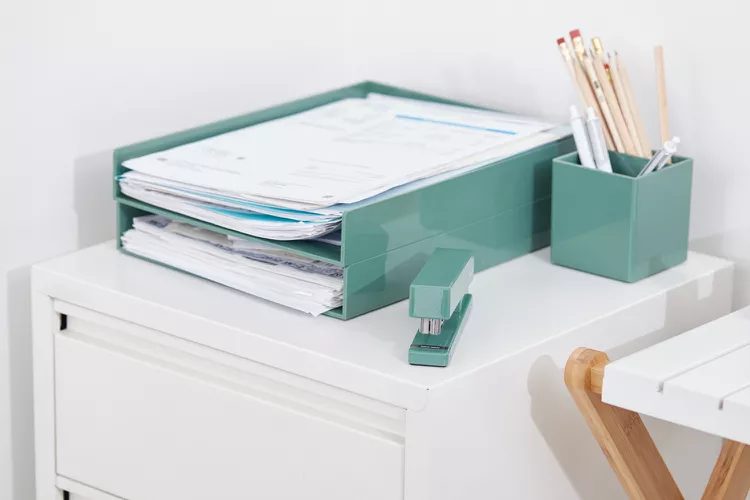
Old paperwork, from outdated bills to long-paid-off loan statements, often survives in boxes because you worry you might “need it someday.” That fear can keep you hauling heavy folders from home to home, even when most documents are available digitally or have passed any realistic audit window. Stacks of paper also make it harder to find the few records that truly matter, such as current tax documents, warranties, or legal papers. The result is a filing system that feels overwhelming instead of reassuring.
Shredding what you no longer need is both secure and liberating. You can follow basic retention guidelines, keeping recent tax returns and critical contracts while letting go of routine statements that serve no ongoing purpose. Once the excess is gone, a slim, clearly labeled file box or digital archive is easier to maintain. That clarity reduces stress during life events like moves, job changes, or financial reviews, because you can actually locate what counts.
5) Sentimental Childhood Items from Your Past
Sentimental childhood items, such as stuffed animals, trophies, and school projects, often survive purely because you feel guilty discarding “memories.” Over time, those boxes can swell into a mini-archive of your early life, even if you never open them. The emotional weight comes from the story you tell yourself, that throwing away a faded ribbon or broken toy somehow erases the experience. In reality, the memory lives in you, not in every physical object tied to it.
A thoughtful edit lets you keep a small, meaningful selection instead of everything. You might choose one favorite stuffed animal, a single trophy, and a few representative drawings, then photograph the rest before recycling. This approach preserves the emotional highlights while freeing closets and attics from low-value clutter. It also models for younger relatives that it is healthy to honor the past without being buried under it, which matters as they accumulate their own keepsakes.
6) Broken Electronics You Plan to Fix “Someday”
Broken electronics, from cracked-screen tablets to dead laptops, often pile up because you feel guilty about the original cost or the environmental impact of tossing them. You may tell yourself you will repair or repurpose them, but months or years pass without action. Meanwhile, they occupy shelves and drawers, and technology keeps advancing, making older devices less practical to revive. That gap between intention and reality turns your home into a quiet storage unit for obsolete gear.
Setting a clear deadline for repair is a practical way to break the stalemate. If you do not schedule a fix within that window, responsibly recycling or donating for parts becomes the better choice. Many communities offer e-waste programs that handle materials safely, easing the guilt of disposal. Once the backlog is gone, you are more likely to be intentional about future tech purchases, buying what you will truly use instead of stockpiling “maybe” projects.
7) Extra Kitchen Gadgets You Never Use
Extra kitchen gadgets, like single-use avocado slicers, novelty waffle makers, or duplicate spatulas, often linger because you feel guilty about buying them or because they were gifts. They crowd cabinets and drawers, making it harder to reach the tools you actually rely on every day. When you have to move three unused appliances to find a single pot, cooking becomes more frustrating and time-consuming. That friction can even discourage you from preparing meals at home, which affects your budget and nutrition.
A realistic audit of what you use in a typical week reveals which gadgets earn their space. If an item has not touched your countertop in a year, it is a strong candidate for donation. Passing these tools to someone who will actually cook with them turns guilt into usefulness. A leaner kitchen setup also simplifies cleanup and storage, supporting a more sustainable cooking routine that fits your real habits instead of your aspirational ones.
8) Old Hobby Supplies from Abandoned Projects
Old hobby supplies, such as unused yarn, scrapbooking paper, or model kits, often sit untouched because you feel guilty about quitting a project or outgrowing an interest. Those bins can represent past versions of yourself, from the aspiring painter to the would-be guitar player. Keeping everything “just in case” you return to it can block you from embracing new passions that fit your current life. The clutter also makes it harder to find the materials you do use, if you are active in other creative pursuits.
Being honest about which hobbies still excite you is the first step. You can keep a small starter set for any activity you truly plan to revisit and let the rest go to schools, community centers, or friends. Donating supplies gives them a second life and reduces the guilt of waste. With fewer abandoned projects staring at you, your space becomes a better reflection of who you are now, not who you once thought you might be.
9) Duplicates of Everyday Items “Just in Case”
Duplicates of everyday items, like multiple sets of measuring cups, extra phone chargers, or stacks of spare blankets, often accumulate because you feel guilty about not being prepared. That “just in case” mindset can spiral into owning three or four versions of the same thing, even though you only use one. The result is crowded drawers and closets where essentials get lost among backups. Ironically, over-preparing in this way can make you feel less organized and more anxious.
Setting reasonable limits on how many duplicates you truly need restores balance. For example, two phone chargers per person or one extra set of sheets per bed is usually enough for most households. Donating or recycling the rest frees up storage and makes it easier to see what you actually have. This shift also encourages more mindful consumption, so you stop buying replacements “just in case” and start trusting the systems you already maintain.
10) Freebies and Promotional Swag
Freebies and promotional swag, such as branded tote bags, pens, lanyards, and keychains, often survive purely because they were free. You may feel guilty tossing something that seems “perfectly good,” even if you never use it. Over time, these items infiltrate drawers, glove compartments, and office spaces, adding visual noise without real value. The hidden cost is the time you spend sorting, storing, and moving things that do not actually serve you.
A simple rule is to keep only the freebies you use weekly and release the rest. One sturdy tote bag or a couple of reliable pens might earn their place, while the rest can be donated or recycled where possible. By curbing the automatic impulse to accept every giveaway, you reduce future clutter at the source. Your environment becomes calmer and more intentional, which supports better focus and a clearer sense of what you genuinely need.
More from Willow and Hearth:
Leave a Reply