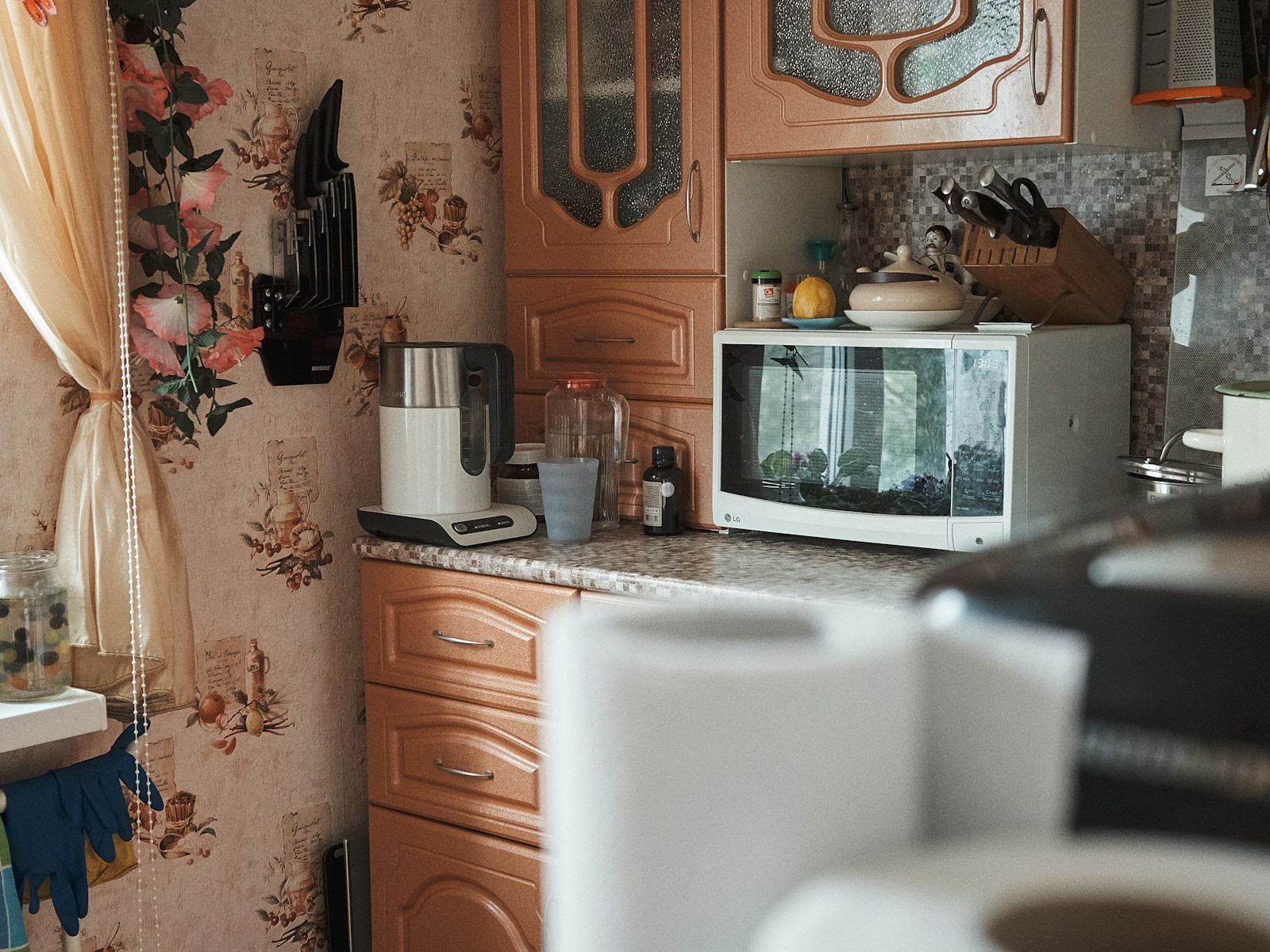
If you are like most people, your microwave is the workhorse of your kitchen and a magnet for splatters. Cleaning it should be simple, but the wrong products can quietly wreck the interior, cloud the door, or even mess with how safely it runs. Before you grab whatever is under the sink, here are eight things you should never use to clean a microwave, plus what those choices can cost you over time.
1) Vinegar
Vinegar sounds harmless, but it is still an acid, and that matters inside a microwave. Guidance on things you should with vinegar notes that this ingredient can etch or dull sensitive finishes. When you try to steam clean by blasting straight vinegar, the hot acidic vapor can hit painted interiors, decorative trims, or rubbery door seals and slowly rough them up. Over time, that can turn a smooth, easy-wipe surface into one that grabs stains and smells.
Some tutorials even tell you to “Steam Clean Microwave With Vinegar” as if more acid automatically means more clean. That ignores warnings in lists of “Things You Should Never Clean With Vinegar, According” that certain surfaces simply are not built for repeated acid baths. If the enamel or paint inside your microwave starts to pit, food residue clings harder, and you may trap moisture around the door where it should stay dry. For a safer routine, use plain water or a tiny splash of vinegar heavily diluted, then wipe quickly instead of letting it sit.
2) Distilled White Vinegar
Distilled white vinegar gets marketed as a miracle cleaner, but using it aggressively in a microwave can be rough on hidden parts. Advice on distilled white vinegar warns that repeated exposure can corrode metal components and gaskets. Inside a microwave, that means hinges, latches, and tiny screws around the cavity can slowly oxidize if you constantly soak the area with strong vinegar and leave it to dry in place. Once those parts weaken, doors may not seal as tightly, which is a basic safety issue.
There are also concerns about gaskets and seals that keep steam and splatter from seeping into the electronics. When distilled white vinegar seeps into those joints, it can stiffen or crack flexible materials that were never tested for long-term acid contact. Lists that mention “Microwave, Heat, ACV” and “Things You Should Never Clean, Vinegar” highlight that you should heat a bowl of water with just a splash, not scrub every inch with straight acid. If you want a non-toxic option, use that mild steam, then follow with a soft cloth and neutral soap instead of more vinegar.
3) Paper Towels
Paper towels feel like the easiest grab for splatters, but they are not great for the inside of a microwave. Advice on things not to points out that they shed lint and do a poor job with greasy messes. Inside a microwave, that lint sticks to damp walls and the ceiling, then bakes on the next time you reheat leftovers. You end up with fuzzy residue in corners and around the vents, which looks dirty even right after you wipe.
There is also a fire angle that often gets overlooked. One cleaning tools roundup warns that “They can catch fire in the microwave!” when misused, and that is not something you want to test. If you leave a dry paper towel in there while you run a quick “Steam Clean Microwave With Vinegar” cycle, the edges can scorch. Lint that clings near vents can brown too. A reusable microfiber cloth handles grease better, leaves no fibers, and avoids turning your cleaning routine into a small safety risk.
4) Dishwasher Detergent Pods
Dishwasher detergent pods are designed for a sealed, high-water environment, not for scrubbing a microwave. Guidance on items you should in the dishwasher explains that harsh, enzyme-based cleaners can damage delicate surfaces when they are used the wrong way. Those same concentrated ingredients can etch a microwave’s glass turntable or cloud plastic vents if you smear a pod around with a wet sponge. Unlike dish soap, pods are meant to be fully diluted in gallons of water, not smeared in a thin film and left to sit.
Social posts that mention “Microwave turn table 8. Recycling cans and jars 9. Kitchen sponges” and “Items You Should Never Put, Dishwasher, Roger” underline how easily heat, detergent, and fragile materials can clash. If you rub a pod directly on the turntable, you risk tiny scratches that weaken the glass, especially once you keep heating it. Residue that seeps into vent holes can also dry into a chalky crust, which is hard to rinse away without soaking areas that should stay dry. Stick to mild dish soap and water, applied with a soft cloth, so you clean without grinding in abrasive particles.
5) Dollar Tree Sponges
Dollar Tree sponges are tempting when you are trying to save money, but not all of them are gentle enough for a microwave interior. A rundown of items you would to find at Dollar Tree notes that low-cost, untested tools can be surprisingly flimsy. When a sponge starts to disintegrate as you scrub, little chunks can wedge into door seams or vents. Those damp bits become a perfect home for bacteria every time you reheat something steamy.
There is also the texture problem. Some bargain sponges hide a rough, almost sandpaper-like side that can scratch enamel coatings and plastic trims. Once you gouge that smooth finish, stains sink deeper and smells linger longer, which means you scrub harder and do even more damage. Lists that mention “Microwave turn table 8. Recycling” and “Kitchen sponges” show how cleaning tools themselves can be part of the problem. A higher-quality, non-scratch sponge or cloth costs a little more up front but protects the interior so your microwave lasts longer.
6) Recycled Paper Towels
Recycled paper towels sound eco-friendly, but their texture can be rougher than you think. Advice on Things You Should and related lists about paper products highlight how certain fibers can scratch shiny surfaces. Inside a microwave, that means the clear door panel and glossy control area are at risk. When you scrub dried sauce with a stiff recycled towel, you can leave behind fine swirl marks that catch the light every time you open the door.
Those towels also shed more visible fibers, especially when they get soaked with greasy splatter. As one set of tips puts it, “Need to clean your microwave and make it smell great at the same time?” you should focus on gentle methods, not scratchy wipes. Fibers that cling to the door glass attract more grime, so fingerprints and steam streaks build up faster. Over months, that cycle makes the microwave look older and hazier, which is not just cosmetic, since it can make it harder to see if food is boiling over inside.
7) Generic Dishwasher Rinse Aid
Generic dishwasher rinse aid is engineered to sheet water off dishes, not to coat the inside of a microwave. Advice that limits items you should of the dishwasher explains how certain additives can damage surfaces when they are not rinsed thoroughly. If you wipe rinse aid across the microwave walls or turntable, you leave behind a slick, invisible film. The next time you heat a plate, that film can warm up and release a faint chemical smell into your food.
Posts that mention “Vessels mentioned microwave safe but nothing mentioned about dishwasher safe” and “Items You Should Never Put, Dishwasher, Roger, Berton” show how safety labels do not always cover every cleaning product you might try. Rinse aid is meant to be heavily diluted and then washed away, not baked repeatedly in a small box where you cook. That slippery coating can also make glassware slide more easily on the turntable, raising the odds of spills or breakage. A simple mix of mild dish soap and water gives you the same streak-free look without the mystery additives.
8) Dollar Tree Abrasive Pads
Dollar Tree abrasive pads might look like a quick fix for baked-on splatter, but they are one of the fastest ways to ruin a microwave’s finish. The same overview of cleaning technique that stresses matching tools to surfaces also applies here. Rough pads can gouge enamel coatings, scratch stainless trims, and leave permanent scuffs on the door. Once that protective layer is compromised, rust and discoloration can creep in around edges and seams.
Lists that call out “8 Items You Would Never Expect To Be Sold At Dollar Tree (But They Are)” and “items-never-expect-dollar-tree” warn that some of these pads are far harsher than they look in the package. When you drag them across the interior, you are not just removing sauce, you are sanding the cavity. That kind of damage can void warranties and shorten the life of the appliance, which costs far more than a gentler scrubber. If you are facing stubborn splatter, let a bowl of hot water loosen it first, then wipe with a soft cloth instead of grinding away the surface.
More from Willow and Hearth:
Leave a Reply