So, you’ve decided to tackle that mountain of clutter that’s been patiently waiting in the corner of your room, and while you’re at it, you stumble upon a stash of important documents. Maybe it’s your birth certificate, that old tax return, or a letter from a long-lost friend. Whatever it is, it probably feels like you’ve struck gold amid the dust bunnies and expired coupons. But what now? What do you do with these newfound treasures? Let’s chat about it.
Take a Deep Breath: It’s All Good!
First things first—don’t panic! You’ve just discovered documents that could be super important, but it’s a common scenario. Many of us have boxes or drawers filled with papers we’ve forgotten about, and finding them can feel overwhelming. So, grab your favorite cup of coffee (or tea!) and let’s sort this out together.
Assess What You’ve Found
Now that you’ve unearthed these documents, it’s time to take stock. Lay everything out so you can see what you’ve got. Are they tax documents, legal papers, medical records, or maybe some sentimental items like old letters? Categorizing them helps you figure out what’s crucial and what can, frankly, hit the recycling bin.
If you find anything that looks vaguely important, consider its purpose. Is it something you need to keep for legal reasons, or is it just a nostalgic trip down memory lane? Spoiler alert: if it’s a receipt from that one time you bought too many donuts, you can probably let that one go.
Decide What to Keep
Once you’ve sorted your stash into “keep” and “toss,” it’s time to make some decisions. Here are some things you definitely want to hang on to:
- Legal Documents: Birth certificates, marriage licenses, and wills fall into this category. Keep them safe.
- Tax Returns: It’s recommended to keep these for at least seven years. You never know when the IRS might want to have a chat.
- Medical Records: Important for your health history, especially if you change doctors.
On the flip side, if you find anything outdated or irrelevant, it’s time to say goodbye. Shred confidential documents to protect yourself, and toss the rest with a clear conscience. Seriously, that expired warranty on your blender? Let it go!
Organize Like a Pro
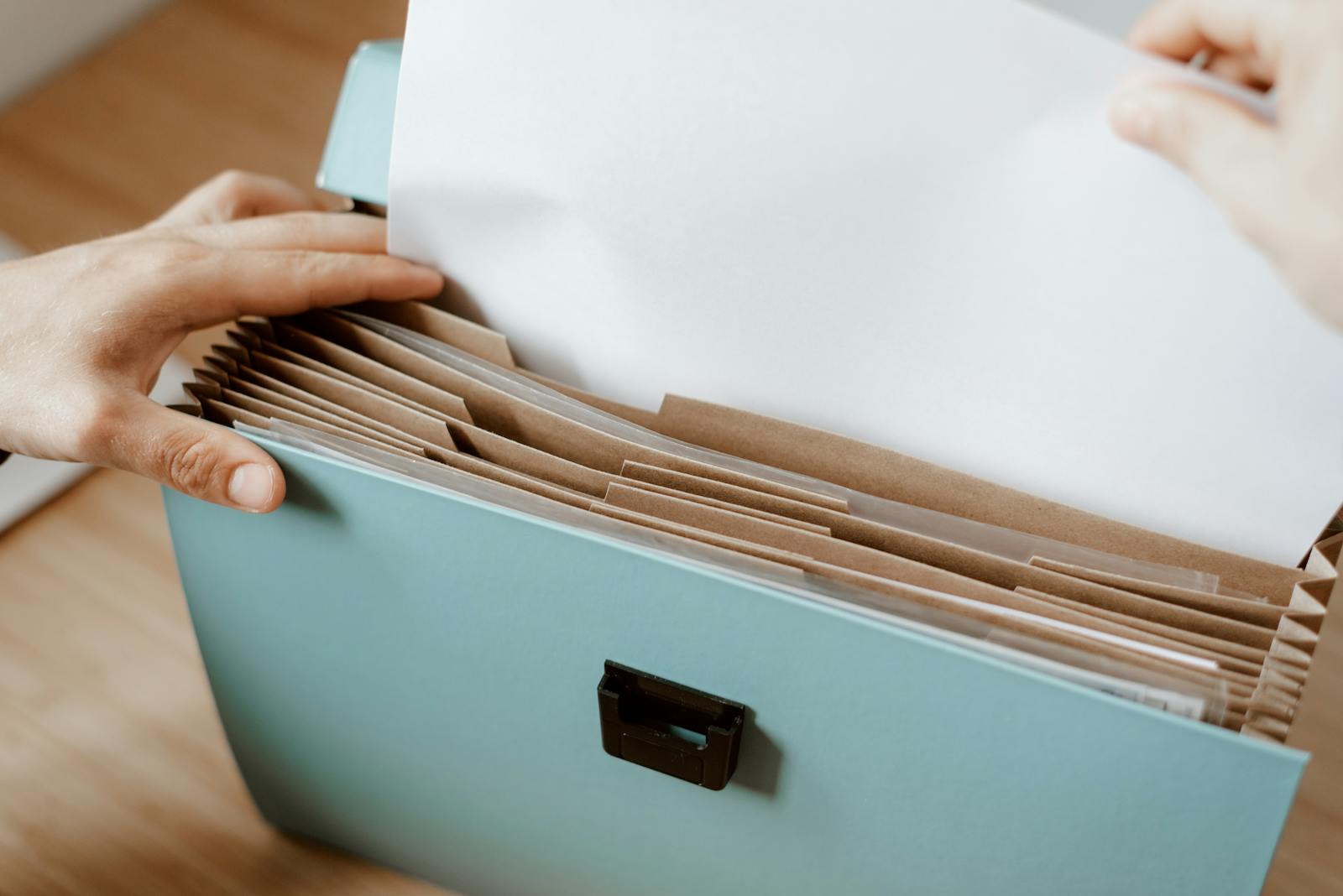
Now that you know what to keep, let’s talk organization. The goal here is to make sure you can find these documents again without playing hide and seek. Invest in some sturdy folders or a filing cabinet if you don’t have one already. Label everything clearly. You might feel a bit like a schoolteacher, but trust me, future you will thank you for this.
Consider creating digital copies of important documents, too. Scanning them can save physical space and serves as a backup in case something gets lost or damaged. Just make sure you use a secure cloud service or store them on an encrypted drive to keep them safe.
Where to Store Your Important Papers
Now that your documents are categorized and organized, you’ll need to decide where to keep them. A fireproof safe is a solid choice for storing really crucial documents, especially those legal ones you just can’t risk losing. For less critical items, a well-organized file box in a closet can do the trick.
Remember, you want to keep these documents somewhere easily accessible, but not so accessible that anyone can just waltz in and grab them. Security is key here, folks!
Keep It Up!
Alright, you’ve done the hard work, and now it’s time to make sure it doesn’t all pile up again. Set a reminder on your phone to check your important documents once a year. This way, you can toss anything outdated and keep everything fresh. Think of it as a little annual spring cleaning for your papers—without the dust bunnies!
Share Your Findings
Finally, if you find anything that might be of interest to family members, like old photos or letters, consider sharing those. It can be a beautiful way to reconnect with loved ones and reminisce about the good ol’ days. Just be prepared for the flood of “Wow, I forgot about that!” comments.
More from Willow and Hearth:
Leave a Reply