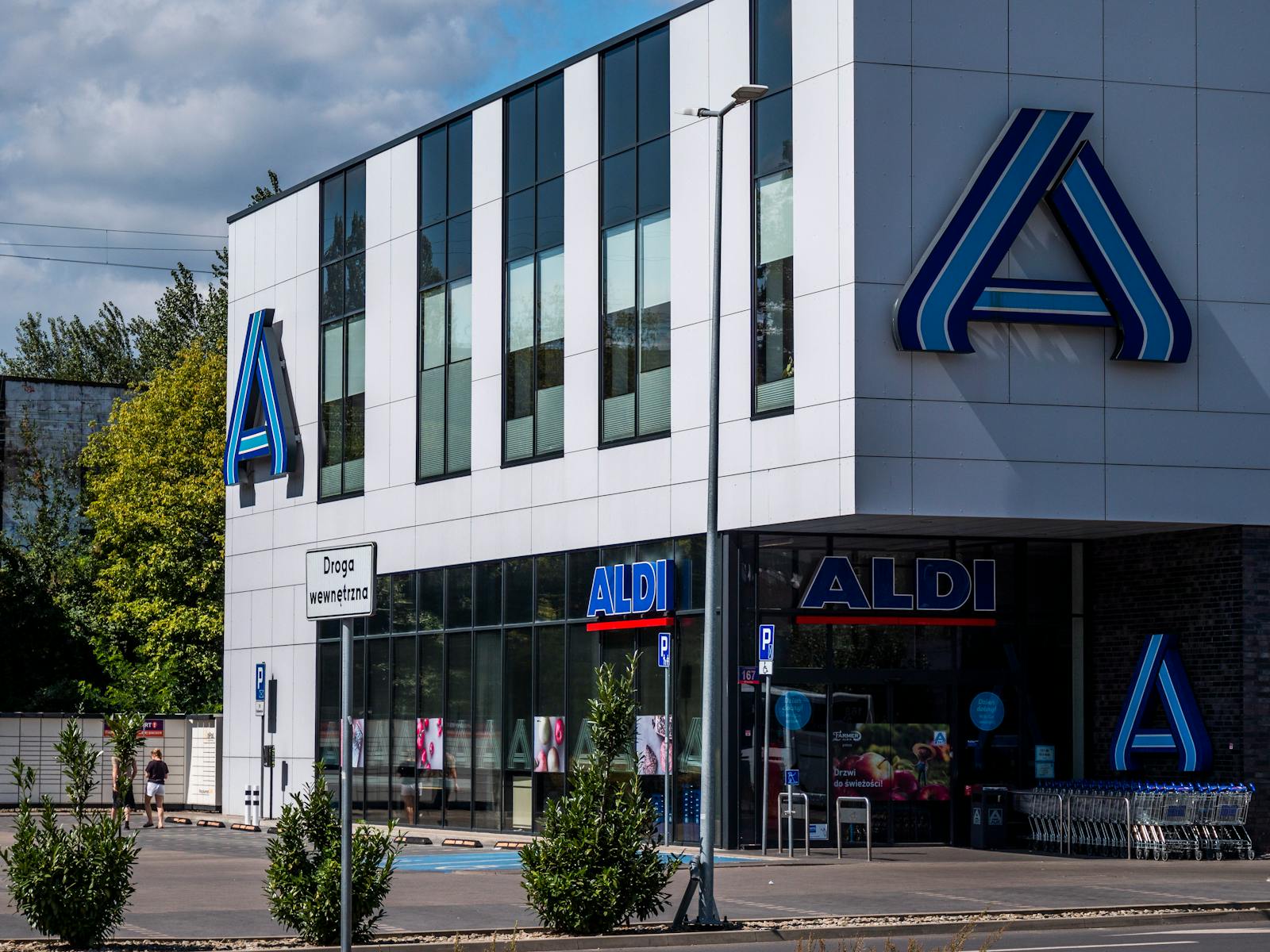
Aldi shoppers are about to see two of the biggest shifts in the chain’s modern history, and both will be in full view by 2026. One change will reshape how its shelves look and how its private labels compete with national brands, while the other will determine where, exactly, more Americans can shop the discount grocer’s aisles. Together, they signal how aggressively Aldi is positioning itself for the next phase of budget grocery shopping in the United States.
The private-label overhaul that will dominate Aldi aisles by 2026
The most visible change coming to Aldi in 2026 is a sweeping redesign of its private-label packaging, a project that has already started to roll out and will keep gathering steam into next year. The retailer has long leaned on exclusive brands as its core strategy, and it estimates that over 90% of the goods sold in its locations are exclusive brands, which means any change to labels and branding touches almost every shelf. Reporting from Nov 27, 2025, describes how this refresh is not a quick swap but a multi-year effort, with Aldi acknowledging that updating such a large share of its assortment will take time to complete and will still be unfolding as 2026 begins.
Earlier in the fall, Aldi detailed how this makeover will work in practice, explaining that all of the chain’s exclusives, which again represent 90% of the products it sells, will now carry clearer branding and more prominent product information. The company has described a shift toward packaging that makes it easier to identify flavors, ingredients, and nutrition details at a glance, a change that is especially important in a store where private labels dominate the assortment and shoppers often compare them directly with national brands. Because the redesign is being phased in across categories, customers will see a mix of old and new packaging through 2025, but by 2026 the updated look is expected to define the in-store experience.
New labels and “New Look for Favorite Products” aimed at winning brand loyalty
Underneath that broad overhaul is a second, more specific change that will be impossible to miss on the shelf: Aldi is giving its private labels a stronger identity and a more polished presentation. On Sep 24, 2025, the company highlighted that its new labels feature bolder, brighter colors and clearer product descriptions, all designed to improve the user experience and make it easier for shoppers to choose Aldi’s brand over others. Those details, including the Sep timeline and the focus on more readable packaging, were laid out in coverage of the new labels, which emphasized that the redesign is not just cosmetic but meant to help customers navigate crowded shelves more quickly.
Just days earlier, on Sep 23, 2025, Aldi had already framed this shift as a “New Look for Favorite Products,” underscoring that its private label brand will now feature the brand’s name more prominently on the front of the package. The company has described how items may be labeled as an “ALDI Original” or similar phrasing, signaling to shoppers that they are buying a house-brand product that the chain stands behind. By tightening up naming conventions and visual cues, Aldi is effectively turning what used to be a quiet cost-saving tactic into a front-and-center selling point, a strategy that will matter even more in 2026 as inflation-sensitive shoppers scrutinize every price tag.
Store expansion sets the stage for a bigger 2026 footprint
The second major shift that will shape Aldi shopping in 2026 is not on the label but on the map. Earlier in the year, the company described what it called the biggest change to its business in its 50-year history, announcing plans to open more than 225 new stores in the coming year. That expansion plan, reported on Mar 2, 2025, positioned Aldi as one of the fastest-growing grocery chains in the U.S., with leadership framing the move as part of a long-term push to reach more communities with quality groceries for less. Because store openings and remodels typically roll out over many months, the effects of that 225-store commitment will continue to be felt into 2026 as new locations open and existing markets become more saturated.
Later in the year, Aldi added more detail to how that growth would play out on the ground, outlining plans to open 35 new stores across 9 states and explaining that it would convert select Winn, Dixie and Harveys Supermarket stores to its own format. That Sep 16, 2025, update made clear that Aldi is not only building from the ground up but also taking over existing supermarket real estate, a strategy that can accelerate its presence in regions where land and construction costs are high. For shoppers, the practical impact is straightforward: more neighborhoods will have an Aldi within a short drive in 2026, and some will see a familiar Winn or Harveys sign replaced by the Aldi logo, often with a different layout and a heavier emphasis on private-label goods.
How the two shifts intersect for shoppers in 2026
By 2026, these two changes, the private-label overhaul and the rapid expansion of the store network, will intersect in ways that reshape the Aldi experience for both longtime fans and first-time visitors. In markets where Aldi is new, customers walking into a converted Winn or Harveys location will likely encounter shelves dominated by exclusive brands that already account for over 90% of the chain’s assortment, but now presented with the refreshed packaging and “New Look for Favorite Products” styling that began rolling out in Sep 2025. That means the first impression for many new shoppers will be a store where the house brand does not feel like a compromise but a deliberate, clearly labeled choice.
For existing Aldi shoppers, the story is more about continuity and refinement than disruption. The same low-price model and familiar product lines will still anchor the weekly shop, but the combination of bolder labels, clearer descriptions, and more consistent branding across categories should make it easier to spot favorites, compare options, and notice new items as they arrive. As the 225-store expansion and the 35 additional locations across 9 states come online, Aldi’s bet is that this polished private-label presentation will help it stand out in increasingly crowded grocery corridors, especially in regions where it is going head-to-head with traditional supermarkets that rely more heavily on national brands.
More from Willow and Hearth:
Leave a Reply