Everyone has that mental snapshot of Grandma’s house, where the kitchen drawers stuck a little and the living room smelled faintly of furniture polish and Sunday roast. Those memories are stitched together by stuff, the housewares that quietly did their job for decades. Here are 10 classic pieces almost every grandma owned, and why they still matter in homes, collections, and even resale listings today.
1) Fiesta Tableware
Fiesta Tableware was the color bomb in Grandma’s otherwise neutral kitchen, stacked in cabinets like a rainbow you could eat off. Vintage fans still recognize the saturated glazes from photos credited as Fiesta Tableware Credit Getty Images Headquartered, proof that these plates and bowls have become shorthand for nostalgic family meals. The sturdy ceramic felt almost indestructible, which is why so many sets survived endless potlucks and holiday dinners. For collectors, the fact that the brand is still headquartered in the same tradition-rich region only adds to the appeal.
Those bright dishes did more than hold meatloaf, they set the mood. A stack of mismatched Fiesta on a kitchen table signaled that guests were welcome and seconds were expected. Today, younger homeowners hunt down older colorways to recreate that easygoing vibe, mixing them with modern pieces for a lived-in look. The staying power of Fiesta shows how a simple dinner plate can become a family heirloom, carrying stories from one generation’s kitchen to the next.
2) A China Collection
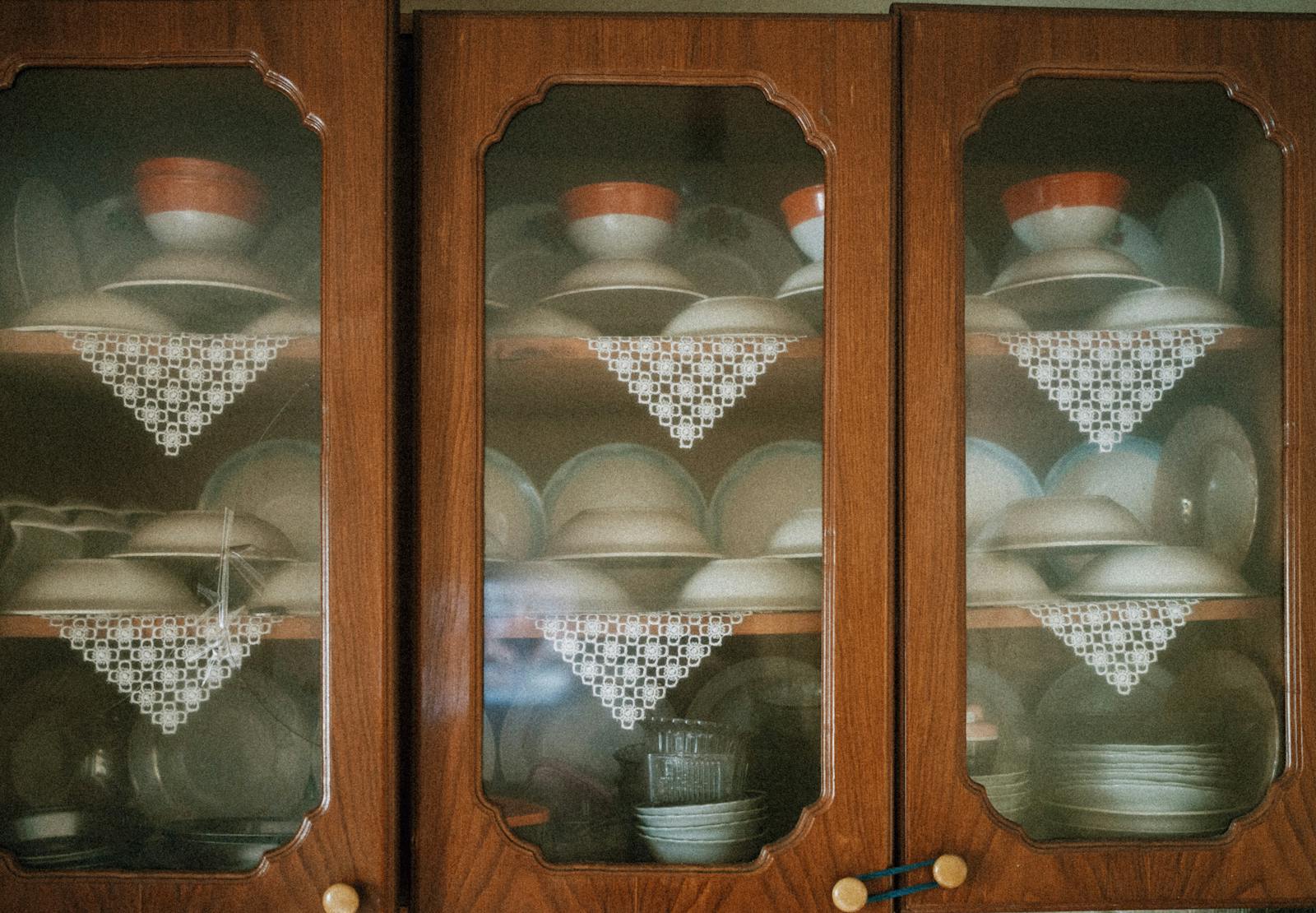
A china collection was practically a requirement in Grandma’s dining room, even if it only came out for Thanksgiving. Cabinets glowed with delicate satsuma ware and blue-and-white Delft patterns, each piece looking too pretty to risk in the dishwasher. Kids were warned not to slam the doors, because one wrong move could chip a plate that had survived three weddings and a silver anniversary. The collection was less about daily use and more about pride, proof that the family had “nice things” for special occasions.
Those shelves of china also taught an early lesson in value. Even if Grandma never said the word “investment,” she knew certain marks on the bottom of a plate meant it was worth more than the grocery-store set. Today, resellers and estate buyers still scan for those same patterns, and families debate whether to keep or sell. Either way, the china cabinet stands as a reminder that grandparents often measured stability in porcelain, not portfolios.
3) Cast-Iron Skillets
Cast-iron skillets were the workhorses of Grandma’s stove, blackened from years of cornbread, fried chicken, and Sunday bacon. Modern cooks are rediscovering that Cast iron is known for being top quality and standing the test of time, which is exactly why Grandma never threw hers out. Don Gatewood and other kitchen pros point out that these pans often become “kitchen heirlooms,” passed down with the family biscuit recipe and a lecture on proper seasoning.
Beyond nostalgia, there is real money and craftsmanship tied up in those heavy skillets. Certain brands and older molds heat more evenly, which is why collectors scour flea markets instead of buying new. For families, the skillet is often the one item everyone wants to claim when a kitchen is packed up. It represents countless meals, late-night grilled cheese, and the unspoken rule that whoever inherits the pan also inherits the responsibility to keep everyone fed.
4) Antique Copper Pots
Antique copper pots hung like jewelry in Grandma’s kitchen, catching the light even when the stove was cold. Recent valuations note that Here are the 12 vintage kitchen items that might actually be valuable, and antique copper pots are high on that list. Designers and appraisers point out that well-made copper, especially with original tin lining, can be worth far more than the stew it once simmered. For Grandma, though, the value was practical, copper heats quickly and evenly, which made it perfect for candy, sauces, and careful recipes.
Those gleaming pots also signaled a certain seriousness about cooking. A wall of copper said this was not a microwave-only household, it was a place where fudge, jam, and gravy were treated like small works of art. Today, younger homeowners often keep inherited copper on display even if they rarely cook with it, using it as a visual link to a more hands-on era. The market interest in these pieces shows how Grandma’s everyday tools have quietly crossed into the world of collectible design.
5) Cabbageware Dishes
Cabbageware dishes, those leafy green plates and bowls shaped like vegetables, were the playful side of Grandma’s table. Recent trend reports point out that Cabbageware, described as “your grandmother’s dinnerware, drinkware,” has come a long way in today’s kitchens, popping up again in stylish tablescapes. What once felt a little kitschy now reads as charming and ironic, especially when mixed with plain white plates. Grandma might have used the big cabbage bowl for coleslaw, but modern hosts fill it with citrus or bread as a conversation starter.
The resurgence of cabbageware shows how taste cycles back around. Pieces that were once relegated to the back of the cupboard are now photographed for social feeds and design blogs. For families sorting through old cabinets, that means the odd green platter is no longer an automatic donation-box item. Instead, it becomes a bridge between generations, a way to bring Grandma’s sense of fun into a more minimal, modern dining room without losing the original personality.
6) Griswold Cast-Iron Skillets Everyone Knew
Griswold Cast-iron Skillets Everyone recognized in Grandma’s kitchen have taken on almost mythic status among collectors. Detailed guides on valuable cookware explain that Griswold Cast pieces are especially prized, and that Iron Skillets Everyone knows from childhood breakfasts can be worth serious money. Appraiser Clark notes that these pans are often saved for “future generations,” which is exactly how Grandma treated them, as something to be used but never abused.
In practical terms, Griswold skillets were just the best pan in the house, lighter than some modern cast iron and incredibly smooth. That made them ideal for eggs, pancakes, and anything that needed a gentle flip. The fact that collectors now chase specific logos and sizes only confirms what Grandma already knew, quality tools earn their keep. When a family finds a Griswold in the back of a cabinet, they are not just uncovering a pan, they are finding a small piece of industrial and domestic history.
7) Copper Mugs and Barware
Copper mugs and barware often lived in Grandma’s dining room or tucked into a basement bar, waiting for holidays and card nights. Modern price guides point out that Copper drinkware, especially matching coupes or highballs in excellent condition, can raise the overall value of a set significantly. For grandparents who came of age when home entertaining was an art form, investing in a full bar set made sense. It meant they were always ready to pour a highball for guests or mix a celebratory drink.
Those shiny mugs and shakers also marked a shift in social life. Instead of going out, friends gathered around Grandma’s dining table or in a paneled den, with the “good” glasses brought out of hiding. Today, younger generations might repurpose the same pieces for mocktails or display, but the social function is similar. The barware signals hospitality, a promise that anyone who walks in the door will be offered something cold, sparkling, and served with a story.
8) Heavy Vintage Kitchen Tools
Heavy vintage kitchen tools, from hand-crank grinders to metal sifters, were standard issue in Grandma’s drawers long before electric gadgets took over. Collectors now Read lists of classic tools that are as beloved and practical as they are valuable, with items like the Cast iron skillet and old pastry cutters topping the charts. These pieces were built to last, often with solid wood handles and steel mechanisms that could survive decades of dough and coffee beans. For Grandma, they were simply reliable, no batteries, no fuss.
In a world of single-use appliances, those multi-purpose tools feel refreshingly straightforward. A sturdy whisk or masher did not just save counter space, it taught kids how to cook by feel instead of pushing buttons. Today, home bakers and chefs hunt for similar tools at estate sales, knowing that older steel often outperforms newer versions. The renewed interest underscores a broader trend, a move back toward tactile, durable gear that connects cooks to the process instead of just the outcome.
9) Curio Cabinets Filled With Books
Curio cabinets in Grandma’s living room were more than dusting nightmares, they were mini museums of family life. Detailed breakdowns of valuable living room items note that Books Scan the Check the shelves carefully, because old armoires and curio cabinets, especially those packed with first editions, can be worth a lot. Grandma might not have thought of herself as a collector, but she knew which volumes never left the house and which glass-front cabinet came from “the good furniture store.”
Beyond monetary value, those cabinets shaped how kids saw reading and memory. Photo albums, travel souvenirs, and hardcovers all shared the same protected space, sending a clear message that stories mattered. Today, when many people read on screens, inheriting a curio cabinet full of books feels like receiving a physical archive of family taste. It also raises practical questions about preservation, from humidity control to whether to keep or donate, turning a simple piece of furniture into a small curatorial project.
10) Grandparents’ House-Only Oddities
Finally, there were the oddities that seemed to exist only in a grandparents’ house, from plastic-covered sofas to avocado-green phones. Nostalgia deep dives remind viewers that 20 Things you ONLY found in your grandparent’s house made the whole place feel like a different world. Doilies on every surface, decorative plates on the wall, and that one lamp no one was allowed to touch all contributed to the vibe. These items were not always expensive, but they were consistent, forming a visual language kids instantly recognized as “Grandma’s.”
Those quirks now influence everything from retro-inspired decor lines to social media trends that celebrate “grandmillennial” style. Younger homeowners borrow elements like floral curtains or needlepoint pillows, mixing them with modern furniture to create a cozy, layered look. The stakes are more than aesthetic, it is about deciding which parts of that older domestic world are worth carrying forward. In choosing a crocheted throw or a vintage lamp, people are quietly voting for continuity, keeping a thread of Grandma’s house woven into their own.
More from Wilder Media Group:
Leave a Reply