Your storage closet is supposed to work for you, not hide piles of expired, worn out, or forgotten stuff. A focused clear out, guided by what organizing experts say to toss immediately, can reclaim that space fast. Use this list of 20 specific items as a checklist so you can declutter confidently and keep only what is safe, useful, and truly worth storing.
1) Expired Prescriptions
Expired prescriptions are one of the most urgent storage items to remove, whether they are in a hallway closet or tucked into a bathroom shelf. Guidance on medicine cabinet cleanouts stresses that outdated pills and syrups lose effectiveness and can even become unsafe, especially for children or anyone who might grab the wrong bottle in a hurry. When these medications drift into “overflow” storage, they quietly turn your closet into a health risk instead of a backup pharmacy.
Professional organizers and home-health experts also warn that keeping old prescriptions encourages self-dosing without medical advice. That habit can mask new symptoms, interact badly with current treatments, or tempt teens to experiment. Instead, you should bag up expired prescriptions and follow local take-back or pharmacy disposal programs. Clearing them from your storage closet not only frees space, it also reduces accidental poisoning risks and keeps powerful drugs out of household circulation.
2) Worn-Out Clothing
Worn-out clothing is classic storage closet clutter, and pro organizers consistently flag it as a first-round toss. Advice on closet clean-out tips points out that stretched necklines, thinning elbows, and permanently pilled fabrics rarely get worn, yet they occupy prime shelf and rod space. When you stash these pieces in a secondary closet “just in case,” you are really postponing a decision and crowding out items you actually use.
Letting go of worn clothing also protects the rest of your wardrobe. Frayed seams and broken zippers can snag better garments, and lingering body oils in old fabrics can attract pests. Instead of keeping these pieces in storage, sort them into textile recycling, donation bins that accept damaged items, or trash if they are beyond recovery. The more ruthlessly you remove worn-out clothing, the easier it becomes to see what still fits your style and what gaps you genuinely need to fill.
3) Old Shoes
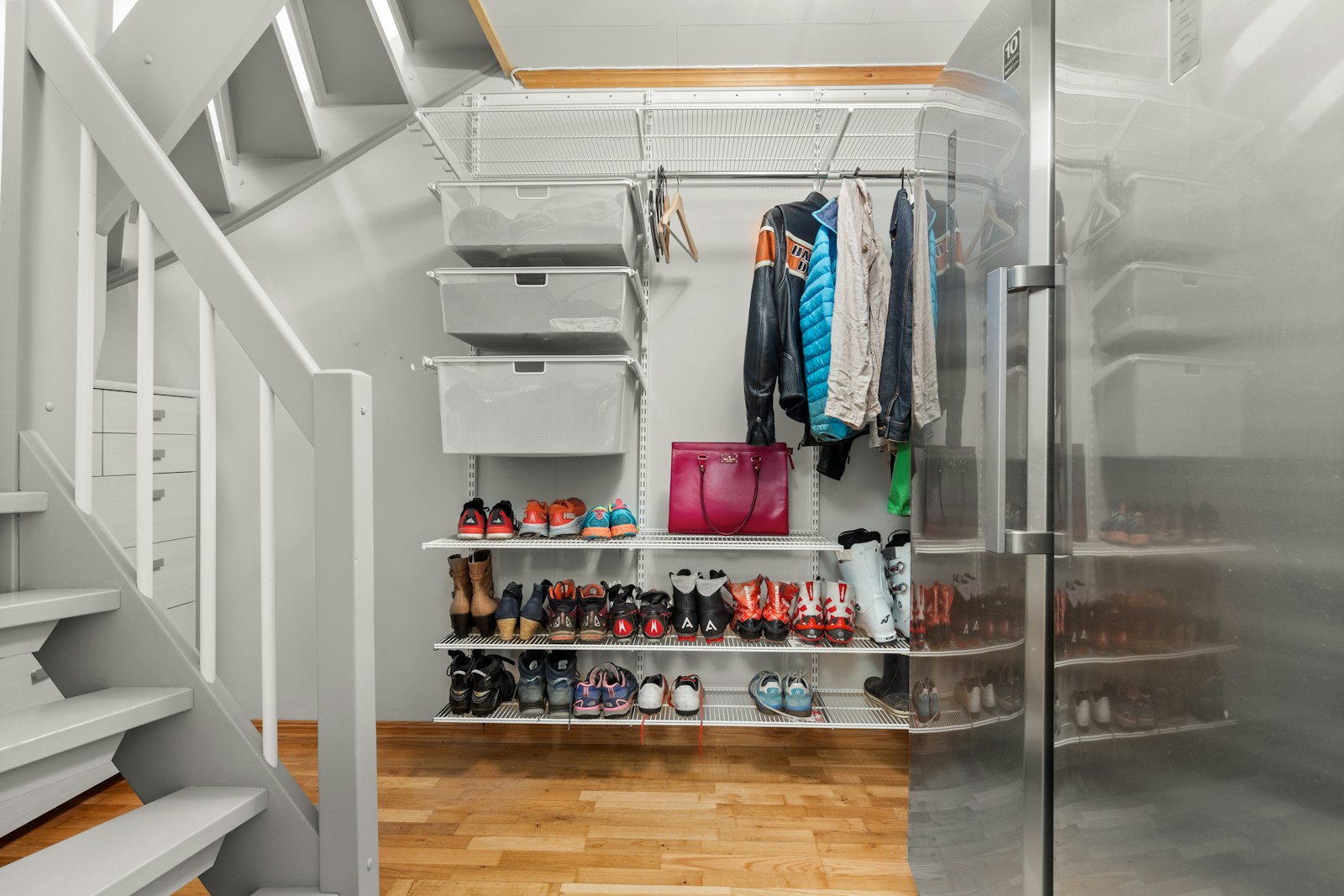
Old shoes that no longer support your feet or match your lifestyle are another must-toss category hiding in storage closets. Professional organizers who compile lists of items you “absolutely must” remove from your wardrobe emphasize that broken heels, peeling faux leather, and flattened sneakers are not worth saving. One widely shared guide on must-toss closet items groups tired shoes with other space-wasters that quietly undermine a functional wardrobe.
Keeping these pairs boxed up in a hall or guest-room closet does not make them more wearable. Insoles harden, glues dry out, and odors intensify over time, so that “backup” pair of pumps or running shoes is often unusable when you finally reach for it. Removing old shoes also reduces tripping hazards and makes it easier to clean closet floors. After discarding damaged pairs, you can donate gently worn shoes that still have life left, then store the remaining ones in clear, labeled containers so you actually see and use what you own.
4) Unused Clothing per Rule of 3
Unused clothing that fails the “Rule of 3” is a prime candidate for removal from any storage closet. In guidance on the Rule of 3 for cleaning a closet, the writer explains that if you have not worn an item in the last three seasons, or it does not work with at least three outfits, it probably does not belong in your wardrobe. When those borderline pieces migrate into a spare closet, they become long-term clutter rather than real options.
Applying this rule to storage spaces gives you a clear, emotion-light test. Pull out each jacket, dress, or pair of pants and ask when you last wore it and how many ways you realistically style it. If you cannot name three uses or three recent seasons, it goes into the donation or resale pile. This approach protects you from keeping “someday” clothes that never leave the hanger, and it keeps your storage closet from turning into a graveyard of forgotten trends and sizes.
5) Duplicate Accessories
Duplicate accessories, from nearly identical black belts to stacks of similar beanies, quietly eat up shelf and drawer space in storage closets. Organizing experts who share lists of items to save also imply that what you keep should be distinctive or genuinely useful, not one of five interchangeable versions. When you own multiple copies of the same accessory, you usually reach for a favorite and ignore the rest.
Sorting duplicates is straightforward. Line up scarves, hats, belts, and costume jewelry, then choose the one or two you actually wear. The rest can be donated, sold, or recycled if damaged. This matters for storage closets because accessories are small, so they accumulate quickly in bins and boxes that feel “organized” but are really just hiding excess. By trimming duplicates, you make it easier to see the pieces that truly complete outfits and reduce the temptation to buy yet another similar item.
6) Faded Linens
Faded linens, including sheets, pillowcases, and duvet covers, often linger in linen or hallway closets long after they stop feeling fresh. Professional organizers who compile lists of items you must toss from your closet highlight discolored fabrics as a clear sign that something has reached the end of its useful life. When colors are washed out or yellowing, the fibers are usually weakened as well, which means more rips and thinning spots ahead.
Keeping these linens in storage also lowers the overall standard of your home. Guests notice when spare bedding looks tired, and you are less likely to enjoy your own space if every backup set feels dingy. Instead of stacking faded linens at the back of the closet, repurpose the best pieces as cleaning rags or pet bedding and discard the rest. This makes room for a smaller, higher quality rotation of sheets and towels that you actually want to use and display.
7) Old Belts and Scarves
Old belts and scarves are classic “just in case” items that pro organizers repeatedly flag as clutter. In detailed closet clean-out advice, they are grouped with other accessories that people rarely edit, even when they are cracked, stretched, or hopelessly dated. When these pieces migrate into a storage closet, they often end up tangled in bins or draped over hangers, making it harder to access items you truly wear.
Editing this category is less about minimalism and more about function. Belts with peeling edges or warped holes will not hold trousers properly, and scarves with snags or stains will not elevate an outfit. By removing old belts and scarves, you reduce visual noise and make it easier to spot the few high quality pieces that still work with your current wardrobe. That clarity helps you shop more intentionally and prevents your storage closet from becoming a dumping ground for forgotten accessories.
8) Unused Handbags
Unused handbags often occupy entire shelves or storage bins, yet many have not left the house in years. Professional organizers who compile lists of items you absolutely must toss from your closet call out neglected bags as a major space hog. Structured totes lose shape when they are stacked, and coated fabrics can crack or stick if they sit untouched in a dark closet for too long.
To reclaim that storage, pull every bag from the closet and check when you last carried it. If you cannot remember using a purse for recent errands, workdays, or events, it belongs in the donation or resale pile. Keeping only a small rotation of everyday, travel, and special-occasion bags makes it easier to store them properly with tissue or bag shapers. That protects the pieces you truly love and prevents your storage closet from turning into an archive of outdated or impractical handbags.
9) Seasonal Clothing Outside Rule of 3
Seasonal clothing that fails the Rule of 3 is another category that clogs storage closets. The same guidance that explains the things to toss from a closet and the Rule of 3 principle applies directly to off-season bins. If a heavy coat, holiday sweater, or beach cover-up has not been worn in the last three relevant seasons, it is unlikely to earn a spot in your future rotation.
Storage closets often hide these pieces in vacuum bags or plastic tubs, which makes them easy to forget. When you finally open those containers, treat each item like an in-season garment and ask whether it fits, flatters, and works with at least three outfits or occasions. Anything that fails goes straight to donation. This keeps your seasonal storage lean, reduces the time you spend swapping wardrobes, and ensures that what you unpack each year actually excites you.
10) Stained Towels
Stained towels are another low-value item that tends to accumulate in storage closets and linen cupboards. Organizing advice that lists things to toss from your closet immediately often includes towels with bleach marks, makeup stains, or frayed edges, because they rarely get used for guests and do not feel good for everyday bathing. When you stack them “for cleaning” or “for emergencies,” they usually sit untouched for years.
Keeping these towels has hidden costs. They crowd out fluffy, intact sets and make it harder to see what you actually have, which can lead to unnecessary purchases. Instead, keep a small, clearly labeled stash of older towels for messy projects or pet care and discard the rest. If your storage closet doubles as a laundry hub, this edit will instantly make shelves look neater and more intentional, reinforcing a standard that only clean, comfortable textiles deserve long-term space.
11) Expired Cleaning Supplies
Expired cleaning supplies often migrate from under-sink cabinets into storage closets when you buy replacements, but they should not stay there. The same safety logic that applies to expired pills and syrups in a bathroom cabinet also applies to old sprays and solutions. Over time, formulas can separate, lose potency, or become unstable, which means they either do not clean effectively or may irritate skin and lungs.
Storing these products in a closet also increases the risk of leaks that damage floors, linens, or seasonal clothing. You should check labels for expiration dates or changes in color and consistency, then follow local hazardous waste guidelines for disposal. Clearing out expired cleaners frees up space for a streamlined set of products you actually use and reduces the chemical load in your home. It also prevents you from grabbing an ineffective bottle during a deep-cleaning day and wondering why nothing looks or smells fresh.
12) Rusty Tools
Rusty tools are another category that does not deserve a long-term home in your storage closet. Lists of essential household items emphasize the value of having functional tools on hand, which implies that damaged or corroded versions are not worth keeping. A rusted screwdriver, bent hammer, or seized-up pair of pliers will not help in an emergency repair and can even cause injury if metal flakes or parts snap under pressure.
When tools live in a closet instead of a garage or toolbox, they are often forgotten until you urgently need them. That is the worst time to discover that a wrench is frozen or a tape measure no longer retracts. Sorting through your tool stash and discarding rusty or broken pieces ensures that what remains is reliable. It also opens up space for a compact, well-organized toolkit that you can actually carry to the task at hand instead of rummaging through a cluttered shelf.
13) Old Batteries
Old batteries, especially loose ones rolling around in bins or drawers, are common storage closet clutter. Guidance on essential household gear notes that batteries are important to keep on hand, but only when they are fresh and properly stored. Expired or partially used batteries may leak, which can corrode flashlights, remotes, or small electronics you keep nearby.
To protect your devices and your closet, you should sort through any battery stash and check packaging dates where available. Remove corroded or clearly old batteries and take them to a recycling or hazardous waste drop-off rather than tossing them in regular trash. Then, store remaining batteries in their original packaging or a dedicated container, away from extreme heat or humidity. This simple edit prevents messes, ensures you actually have power when you need it, and keeps your storage closet from becoming a dumping ground for dead cells.
14) Unused Cables
Unused cables and cords are notorious for tangling up storage closets. Organizing checklists that focus on what to toss from your wardrobe often extend the same logic to tech clutter, because mystery cords rarely find a second life. If you cannot identify which device a cable belongs to, or the gadget itself is long gone, that cord is only taking up space.
Sorting cables is tedious but worthwhile. Lay them out, label the ones you recognize, and test any that might still be useful, such as USB-C or HDMI lines. Outdated connectors for old phones, printers, or DVD players can be recycled through electronics programs. Reducing this tangle makes it easier to find the few cords you truly need, prevents tripping hazards on closet floors, and keeps shelves from looking like a junk drawer exploded behind closed doors.
15) Outdated Manuals
Outdated paper manuals for appliances and electronics often end up stacked in storage closets “just in case,” but they rarely justify the space. Many modern devices have digital manuals available online, and older appliances you no longer own obviously do not need printed guides. When you keep these booklets, they usually sit in overstuffed folders or boxes that you never open.
Decluttering manuals is straightforward. Pull the stack, recycle anything for items you no longer have, and consider scanning or bookmarking digital versions for the rest. You can then keep a slim, labeled file for truly essential documents, such as warranty information or complex installation guides. This shift turns your storage closet from a paper archive into a functional space and reduces the time you spend hunting for instructions that could be found faster with a quick search.
16) Empty Boxes
Empty boxes, especially from shoes, small appliances, or online orders, are a major culprit in overstuffed storage closets. The mindset is familiar: you keep them “in case” you need to return something or move, but months later they are still there, stacked to the ceiling. Organizing strategies that rely on rules like the When sickness strikes, Toss expired meds approach emphasize acting promptly instead of letting clutter linger, and the same urgency applies to packaging.
Most product boxes can be broken down and recycled once you know you are keeping the item. Holding on to a few sturdy containers for holiday decor or long-term storage is fine, but set a firm limit and store them nested, not scattered. Clearing out the rest instantly opens up shelves and makes it easier to see what you actually own. It also prevents pests from nesting in cardboard and keeps your storage closet from feeling like a shipping warehouse.
17) Mismatched Socks
Mismatched or single socks are tiny items that create outsized chaos in storage closets and dresser drawers. Organizing advice that lists things you can toss from your closet right now often includes lone socks, because the missing partner rarely reappears after a full laundry cycle or two. When you toss these orphans into bins or baskets “to match later,” they simply multiply.
To break the cycle, set a short deadline. After your next couple of washes, match everything you can and then discard or repurpose the remaining singles as dust rags or craft material. Keeping only complete pairs in your closet makes it faster to get dressed and reduces the visual clutter of overflowing sock baskets. It also encourages you to buy socks in consistent colors or styles, so replacements blend in instead of creating more mismatched frustration.
18) Duplicate Hangers
Duplicate hangers, especially flimsy wire or dry-cleaner versions, can quietly crowd your storage closet. Professional organizers who share lists of items you absolutely must toss from your closet often recommend editing hangers so your wardrobe hangs at a consistent height and spacing. When you keep every spare hanger, rods become jammed, clothes wrinkle, and it is harder to slide items to see what you own.
Start by choosing one or two hanger styles that work best for your clothing, such as slim velvet for tops and sturdy wood for coats. Remove bent, rusty, or unused extras and recycle them where possible. This simple change instantly makes your closet look more streamlined and luxurious, even if you have not changed a single garment. It also prevents you from treating the storage closet as a dumping ground for hangers you do not want in your main wardrobe.
19) Faded Sunscreen
Faded or expired sunscreen is another item that should not linger in a storage closet or bathroom cabinet. Guidance on what to throw out of a medicine cabinet highlights that sun protection products lose effectiveness over time, which means they may no longer shield you from UV damage. Changes in color, texture, or smell are clear warning signs that a bottle has passed its prime.
Stashing old sunscreen in a closet “for emergencies” is risky, because you might grab it before a long day outside and assume you are protected. Instead, check expiration dates at the start of each warm season and discard anything questionable. Keeping only current, broad-spectrum formulas in an easy-to-reach spot encourages daily use and reduces the chance of painful burns. It also prevents sticky leaks from staining linens or clothing stored nearby.
20) Old Vitamins
Old vitamins and supplements are often relegated to storage closets when you buy new formulas, but they should not stay there. The same safety principles that apply to expired medications in a bathroom cabinet apply to supplements, as explained in guidance on tossing outdated health products. Potency declines over time, so you may not get the intended nutritional benefit, and certain ingredients can degrade in ways that upset your stomach.
Keeping these bottles in a dark closet also increases the risk that someone will take them without checking dates, especially if labels are faded. You should review your stash periodically, discard anything past its expiration, and store current vitamins in a cool, dry place where you can see them. This habit keeps your wellness routine accurate, prevents clutter from spreading into storage spaces, and ensures that every bottle in your home is something you actually use and trust.
Leave a Reply