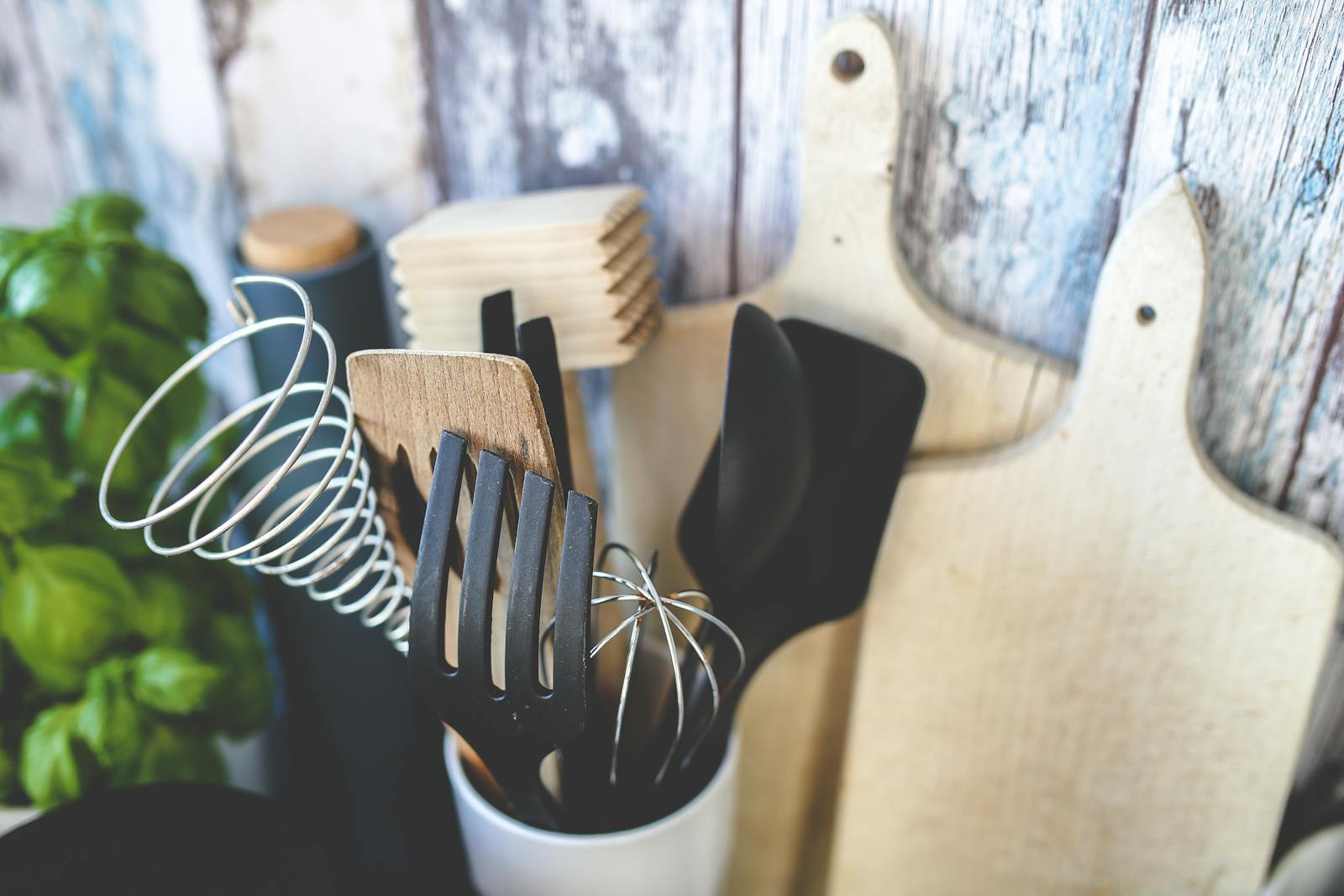
Your kitchen drawers are probably hiding tools you have not touched in years, quietly stealing space and making everyday cooking more frustrating than it needs to be. Clearing out those relics is one of the fastest ways to streamline meal prep and keep your counters calmer. Use this list as a nudge to finally toss the gear that no longer earns its keep and make room for tools you actually reach for.
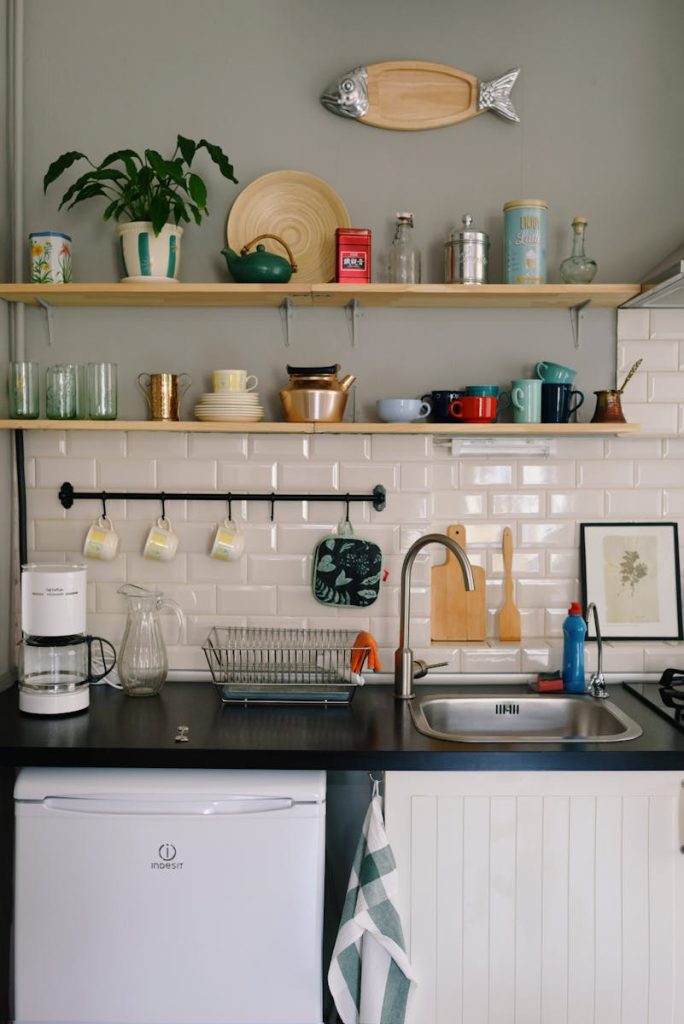
1) Cracked Plastic Cutting Boards
Cracked plastic cutting boards are one of the first tools you should retire, especially if you have not used them in years but still let them crowd your cabinets. Deep grooves trap moisture and food residue, which makes it harder to clean the surface thoroughly and easier for bacteria to linger. Professional organizers point out that once a board is scarred or warped, it no longer functions safely or efficiently, and it often just sits unused while you reach for a better option.
Instead of hanging on to old plastic, keep one or two sturdy boards you actually use and discard the rest. Guidance on tossing worn-out kitchen basics stresses that tools in poor condition can undermine food safety and clutter your space at the same time. Clearing these boards opens up room for a single high quality board that is easier to sanitize and more pleasant to cook on, which directly improves your daily routine.
2) Duplicate Wooden Spoons
Duplicate wooden spoons tend to multiply over time, especially if you have received them in gift sets or picked them up on sale. If you have a whole jar of spoons but always grab the same two, the rest are just visual noise. Organizing experts consistently recommend editing down duplicates, because every extra utensil you never use makes it harder to find the one you actually want when a pot is boiling.
Wooden spoons also absorb odors and oils, so older ones that sit untouched can become discolored or musty. Keeping only a small rotation of spoons that you wash and dry regularly is better for hygiene and storage. When you pare back to a few favorites, you free up drawer or crock space and make it easier to see at a glance what you have, which cuts down on overbuying and keeps your counters from feeling crowded.
3) Single-Purpose Avocado Slicers
Single-purpose avocado slicers are classic examples of tools you were excited about for a month and then stopped using. They take up space, yet a simple chef’s knife and spoon can handle the same job with less cleanup. Organizers who evaluate cluttered kitchens often flag these novelty gadgets as prime candidates for donation or the trash, because they rarely justify the drawer real estate they occupy.
When you keep a slicer you never reach for, you are effectively storing a duplicate function instead of a truly useful tool. Over time, that habit leads to jammed drawers and frustration every time you cook. Letting go of the slicer and relying on a knife you already own simplifies your workflow and reinforces a more intentional approach to buying tools, which saves both money and storage space in the long run.
4) Old Nonstick Pans With Peeling Coating
Old nonstick pans with peeling coating are not just unsightly, they are also less effective and can raise concerns about what is flaking into your food. Once the surface is scratched or bubbling, food sticks more easily and you end up using more oil, which defeats the purpose of nonstick in the first place. Professional organizers who work inside crowded kitchens often find entire stacks of these pans that no one uses anymore but no one has bothered to discard.
Keeping damaged pans also makes it harder to store the cookware you do rely on, because warped or unstable pieces do not nest neatly. Replacing a pile of worn nonstick with one or two high quality pans you actually cook with improves performance and frees cabinet space. It also encourages you to maintain those new pans properly, instead of letting another stack of half-usable cookware accumulate over the next few years.
5) Freebie Mugs You Never Reach For
Freebie mugs from events, offices, or gift baskets have a way of filling entire shelves, even if you always drink from the same favorite cup. Organizing pros routinely identify mismatched, sentimental mugs as a hidden source of clutter, because people feel guilty tossing them even when they never use them. If you have not reached for a particular mug in years, it is effectively just a ceramic billboard taking up space.
Editing your collection down to a small set of mugs you genuinely enjoy using makes your cabinets easier to navigate and your morning routine calmer. It also reduces the risk of precarious stacks that can chip or break when you pull one out. By letting go of the extras, you create room for neatly spaced dishes and glassware, which makes unloading the dishwasher faster and keeps your shelves from feeling overstuffed.
6) Cloudy Plastic Food Containers
Cloudy plastic food containers, especially those stained with tomato sauce or warped from the microwave, are another category that lingers long after their useful life. Organizers who audit kitchen storage often find entire drawers of mismatched lids and bottoms, many of which have not been used in years. Once plastic becomes cloudy or misshapen, it is harder to see what is inside and more likely to leak, so you avoid it without quite admitting it is time to toss it.
Clearing out those old containers and keeping only a consistent set with matching lids makes meal prep and leftovers much easier to manage. You spend less time hunting for the right top and more time actually cooking or eating. It also encourages better food safety habits, since you are more likely to store food in containers that seal properly and are easy to clean, instead of defaulting to whatever is left in the back of the drawer.
7) Rusty Sheet Pans
Rusty sheet pans are another tool that often lingers in the oven drawer even after you have replaced them with newer versions. Once a pan is pitted or rusted, it can affect how evenly food cooks and make cleanup more difficult. Organizing guidance on what to discard in the kitchen frequently highlights damaged bakeware, because people tend to stack it under better pieces and forget it is there, even though they never actually use it.
Holding on to rusty pans also makes it harder to store cooling racks, cutting boards, or newer baking sheets in an orderly way. By recycling or discarding the worst offenders, you can keep a small, functional set of pans that slide easily in and out of the oven. That streamlined setup encourages you to roast vegetables or bake more often, since you are not wrestling with a heavy, unstable stack every time you preheat.
8) Extra Water Bottles With Missing Lids
Extra water bottles with missing or mismatched lids are a common frustration, especially in households that collect them from sports teams, conferences, or travel. Professional organizers often find cabinets overflowing with bottles that no one uses because the tops are lost or the seals no longer work. If a bottle has been sitting untouched for years, it is effectively clutter, not a backup you might someday need.
Sorting through your collection and keeping only bottles with intact lids and reliable seals instantly frees up shelf or pantry space. It also makes it easier to grab a bottle on your way out the door, since you are not digging through a jumble of unusable pieces. This small edit supports better hydration habits, because you are more likely to carry and clean a bottle that is easy to find and actually works.
9) Novelty Ice Cube Trays
Novelty ice cube trays shaped like stars, hearts, or cartoon characters are fun for a season, then quietly migrate to the back of the freezer. When organizers evaluate what to toss, they often point to these trays as classic examples of tools that were used once for a party and then never again. If you have not pulled out a particular tray in years, it is simply taking up valuable freezer real estate that could hold actual food.
Standard trays or an ice maker handle everyday needs more efficiently, and they stack or store more neatly. Letting go of novelty trays you no longer use makes it easier to slide in sheet pans for freezing berries, store meal prep containers, or keep frozen vegetables visible. That extra space can directly support better cooking and budgeting habits, since you can see and use what you have instead of letting items get buried and wasted.
10) Old Plastic Measuring Cups
Old plastic measuring cups that are faded, cracked, or missing key sizes are another tool you may not have used in years but still keep out of habit. Once the markings wear off, it becomes harder to measure accurately, so you probably reach for a newer set anyway. Organizing advice on clearing kitchen clutter often singles out incomplete or damaged measuring sets, because they create confusion every time you bake or cook.
Replacing a jumble of old cups with one clear, complete set simplifies your workflow and improves recipe accuracy. It also reduces drawer chaos, since nested cups take up less space than a scattered mix of odd pieces. When you can quickly grab the exact size you need, you are less likely to make mistakes, which leads to more consistent results and less frustration in the kitchen.
11) Unused Small Appliances
Unused small appliances, such as a bread maker, single-use smoothie blender, or electric quesadilla press, often occupy entire shelves despite not being touched for years. Organizers who specialize in kitchen makeovers routinely find these bulky items hidden in corners, kept out of guilt rather than genuine need. If you have to think hard to remember the last time you plugged in a particular appliance, it is a strong sign it no longer deserves prime storage space.
Letting go of appliances you never use opens up room for tools that truly support your current cooking habits, such as a reliable food processor or stand mixer. It also makes cabinets safer and easier to access, since you are not lifting heavy, awkward machines just to reach something behind them. Donating or discarding these relics can feel like a big step, but it directly supports a more functional, less cluttered kitchen that matches how you actually live now.
More from Willow and Hearth:
Leave a Reply