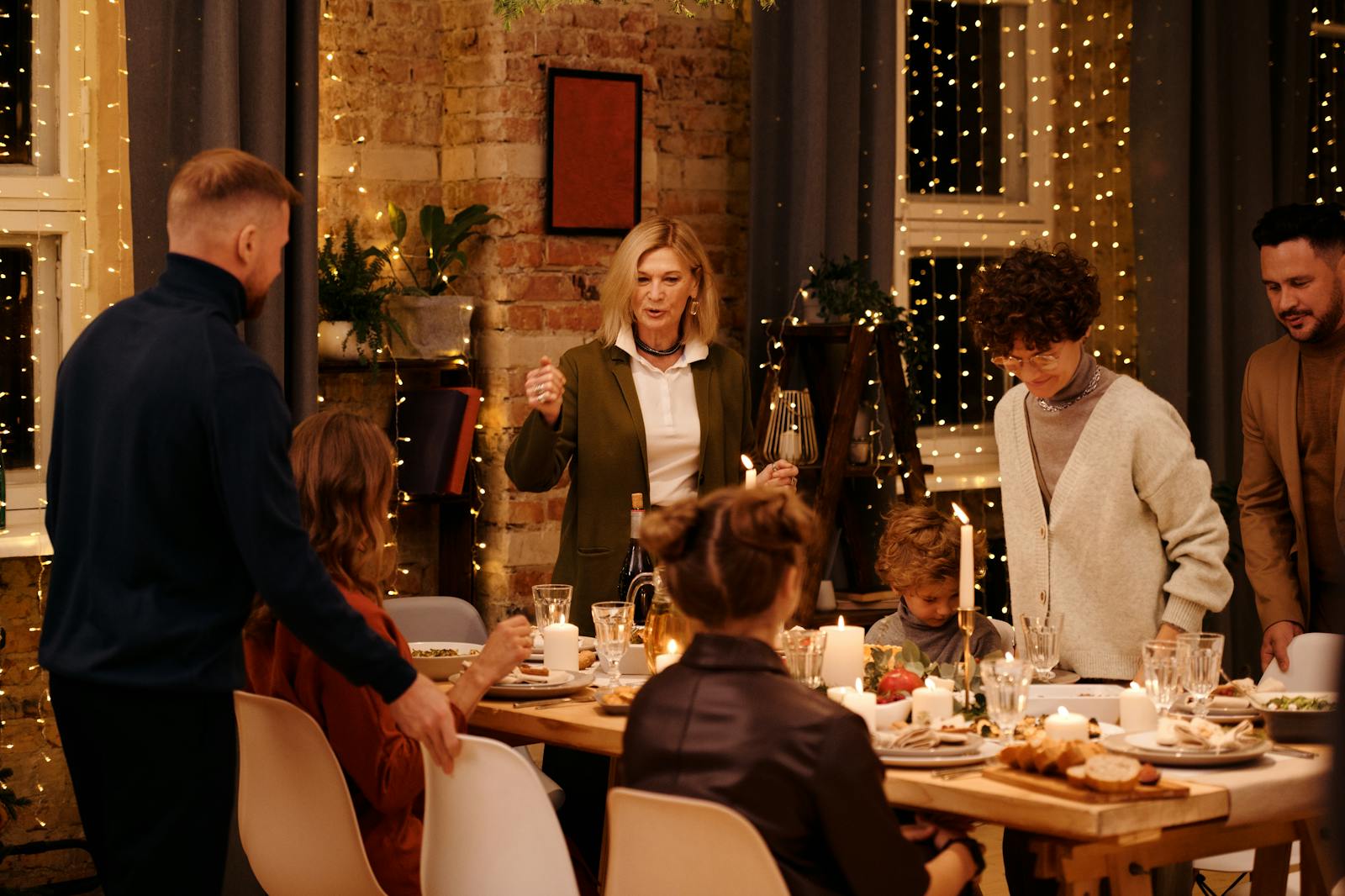
Families often walk into the Christmas season carrying invisible scripts about how everyone should behave, what traditions must happen, and who is responsible for making the magic. When those expectations collide, relationships absorb the stress. By naming and dropping a few of the most common holiday demands, you can protect time for your marriage, ease pressure on twins and siblings, and let this season feel more honest and humane for everyone.

1) Expecting Your Spouse to Carry Every Holiday Demand Alone
Expecting your spouse to shoulder every party, gift list, and travel plan quietly in the background is a fast way to drain the joy from the Christmas season. Guidance on managing expectations in your marriage warns that when one partner absorbs all the pressure, “time for your marriage in the Christmas season” gets swallowed by logistics. That imbalance can leave the planner resentful and the other partner confused about why tension is so high.
Instead of assuming one person will “just handle it,” treat holiday work like any other shared responsibility. Sit down together, list what actually matters, and decide what you will drop. When you divide tasks and agree on limits, you protect your connection from becoming collateral damage. The stakes are simple but serious: if you do not manage expectations in your marriage, the season built to celebrate love can quietly erode it.
2) Assuming Extended-Family Invitations Always Come Before Your Marriage
Assuming every invitation from parents, in-laws, and cousins automatically outranks your marriage is another expectation that quietly strains families. Reporting on how couples navigate “the Christmas season” notes that many spouses feel compelled to meet extended-family demands, even when those plans squeeze out intentional “time for your marriage in the Christmas season.” When you never question that hierarchy, your relationship becomes the flexible piece that always bends.
Reordering those priorities does not mean cutting off relatives, it means recognizing that your household needs a voice. You might alternate years, shorten visits, or set clear arrival and departure times. When you and your spouse decide together which gatherings you can realistically attend, you send a powerful signal to everyone watching, including children, that your marriage is not an afterthought. Over time, that boundary can reduce resentment and make each visit more relaxed instead of obligatory.
3) Clinging to Childhood Traditions Without Discussing Them
Clinging to childhood traditions without ever talking about them sets couples up for conflict the first time December rolls around. Analysis of how spouses handle “the Christmas season” shows that people often import family-of-origin patterns into marriage, assuming their way is simply “how it is done.” When those unspoken scripts collide, each partner can feel that the other is rejecting not just a ritual, but their entire history.
The healthier move is to treat traditions as stories you share, not rules you enforce. Explain why certain foods, songs, or church services matter to you, and invite your spouse to do the same. Then build a blended calendar that honors both backgrounds while leaving room for new rituals that belong only to your household. The stakes are emotional as much as practical, because unexamined nostalgia can turn a season of gratitude into a tug-of-war over whose past wins.
4) Demanding a Picture-Perfect Christmas Instead of a Realistic One
Demanding a flawless, movie-worthy Christmas sets everyone up to fail. Reporting on holiday expectations in marriage describes how pressure to create an idealized “Christmas season” can distract couples from prioritizing their relationship. When the goal is a perfectly decorated home, impeccably behaved children, and a conflict-free dinner table, any normal human moment starts to feel like a crisis or a personal shortcoming.
Letting go of that fantasy means accepting that some cookies will burn, some relatives will be late, and some conversations will be awkward. A realistic plan focuses on what you can actually enjoy and sustain, not what will look best in photos. When you lower the bar from perfection to presence, you free your spouse, children, and yourself to show up as real people. That shift often reveals that the most meaningful memories come from the unscripted, imperfect moments you never planned.
5) Treating Time Together as Optional Once the Calendar Fills Up
Treating time together as optional once the calendar fills up is another expectation that quietly hollows out the season. Guidance on protecting “time for your marriage in the Christmas season” stresses that couples need to set limits on activities that erode their connection. If every open evening is handed to work events, school concerts, and neighborhood parties, your relationship becomes the leftover space instead of the starting point.
Guarding even one or two nonnegotiable blocks of time for just the two of you can change the tone of the entire month. That might be a simple walk to look at lights, a late-night cup of tea after guests leave, or a standing breakfast date. The specific ritual matters less than the message: your bond is not seasonal decor that gets packed away until January. When you treat your marriage as a priority appointment, the rest of the schedule has to adjust around it.
6) Expecting Your Partner to Read Your Mind About Holiday Plans
Expecting your partner to read your mind about holiday plans is a recipe for disappointment. Insights on navigating “the Christmas season” in marriage warn that unspoken assumptions about travel, gift budgets, and religious observances often lead to conflict when spouses do not communicate clearly. One person may assume you will attend every church service, while the other expects a quieter, home-centered celebration.
Spelling out your hopes early, even if it feels awkward, is far kinder than waiting to see whether your partner guesses correctly. Talk about what you want to repeat from last year, what you hope to change, and what you absolutely cannot manage. Clear conversation does not guarantee you will get everything you want, but it does prevent the sting of feeling blindsided. In the long run, that honesty builds trust, because each of you knows the other is choosing, not just complying.
7) Idealizing Twin Harmony at Every Gathering
Idealizing twin harmony at every gathering places a unique burden on siblings who already share a complicated bond. Analysis of why the holiday season is hard for families with twins explains that “high expectations for harmony” can increase stress for twins and their relatives. When parents and extended family assume twins will always get along, any disagreement can feel like a failure rather than a normal part of growing up.
Recognizing that twins are two distinct people, not a single unit, helps everyone relax. Give them permission to sit separately at dinner, choose different activities, or spend time with different cousins. When you stop treating perfect harmony as the goal, you reduce the pressure on twins to perform closeness they may not feel in every moment. That shift protects their mental health and allows more authentic, less scripted connection.
8) Assuming “The Holiday Season Is Hard for Families with Twins” Only Because of Logistics
Assuming the holiday season is hard for families with twins only because of logistics misses a deeper emotional layer. Reporting on twin dynamics notes that relatives often expect twins to present a united front, which is framed as one reason “the holiday season is hard for families with twins.” The challenge is not just double car seats or matching pajamas, it is the constant assumption that two individuals will always share the same preferences and moods.
When you recognize that strain, you can start asking better questions. Instead of planning every activity around what “the twins” want, ask each child separately what would make gatherings more comfortable. That might mean different gift choices, separate sleeping arrangements, or staggered social time. By treating emotional needs as seriously as logistics, you show twins that their individuality is welcome, not a problem to be managed.
9) Pressuring Twins to Hide Disagreements to Keep the Peace
Pressuring twins to hide disagreements to keep the peace teaches them that harmony matters more than honesty. Analysis of “high expectations for harmony” during the holiday season notes that this pressure can make it difficult for twins to voice individual needs or conflicts. When adults praise them only when they appear inseparable and aligned, any sign of tension becomes something to conceal rather than work through.
Allowing respectful disagreement in front of family sends a different message. You can coach tone and timing, but you do not need to erase every sign of friction. When twins see that their relationship can survive conflict, they gain skills they will need in friendships, workplaces, and future partnerships. For the wider family, accepting occasional discord as normal reduces the brittle, performative calm that often cracks under stress.
10) Overlooking the Emotional Labor Twins Do to Maintain Family Calm
Overlooking the emotional labor twins do to maintain family calm ignores a hidden cost of holiday gatherings. Reporting on why “the holiday season is hard for families with twins” emphasizes that parents and relatives often underestimate how much effort twins invest in smoothing over awkward moments and meeting others’ expectations. They may coordinate stories, manage jealous siblings, or absorb jokes about their closeness without ever admitting it feels heavy.
Noticing and naming that labor can be a powerful relief. You might privately thank them for helping younger cousins feel included, or explicitly say they do not have to entertain every guest. When you give twins permission to step back, you model a healthier boundary for everyone in the room. That awareness also challenges the broader family pattern of relying on certain children, often the most responsible ones, to carry the emotional weight of gatherings.
11) Ignoring Anxiety When You Expect Twins to Perform Harmony
Ignoring anxiety when you expect twins to perform harmony treats mental health as a side issue instead of a central concern. Research on twin relationships links “high expectations for harmony” with increased anxiety, especially when “the holiday season” brings together extended family who idealize the twin bond. If every visit is framed as proof that the twins are still perfectly in sync, any private tension can spiral into dread.
Paying attention to signs of stress, like withdrawal, irritability, or physical complaints before gatherings, allows you to intervene early. You might shorten visits, build in quiet breaks, or agree on a signal they can use when they need space. Taking anxiety seriously does not weaken family ties, it strengthens them by showing that well-being matters more than appearances. Over time, that shift can make holidays feel safer and more sustainable for everyone.
12) Refusing to Adjust Expectations When Twins Say the Season Is Hard
Refusing to adjust expectations when twins say the season is hard keeps everyone stuck in the same painful loop year after year. Reporting that “the holiday season is hard for families with twins” underscores that simply acknowledging this reality can help relatives soften their demands. When adults insist that gatherings are “fun for everyone” despite clear feedback, twins learn that their experience does not count.
Listening, then changing something concrete, is what breaks that pattern. You might scale back the number of events, drop a tradition that consistently sparks conflict, or rotate which household hosts. Broader guidance on family relationships, including resources like How to Strengthen Your Marriage by Loving Your Mother-In-Law and three tips to help you work together for a blessed Christmas season, highlights how flexible expectations protect relationships. When you let real people, not idealized images, shape your plans, the holidays become kinder for twins and for every other member of the family.
More from Willow and Hearth:
Leave a Reply