Old change in a dresser drawer or coffee can is usually treated as clutter, but a handful of familiar U.S. coins have quietly turned into serious money. From copper pennies to state quarters, pieces that once bought gum or a bus ride now trade for hundreds or even hundreds of thousands of dollars when the date, mintmark, and condition line up. For anyone sitting on decades of loose change, a closer look can be worth far more than face value.
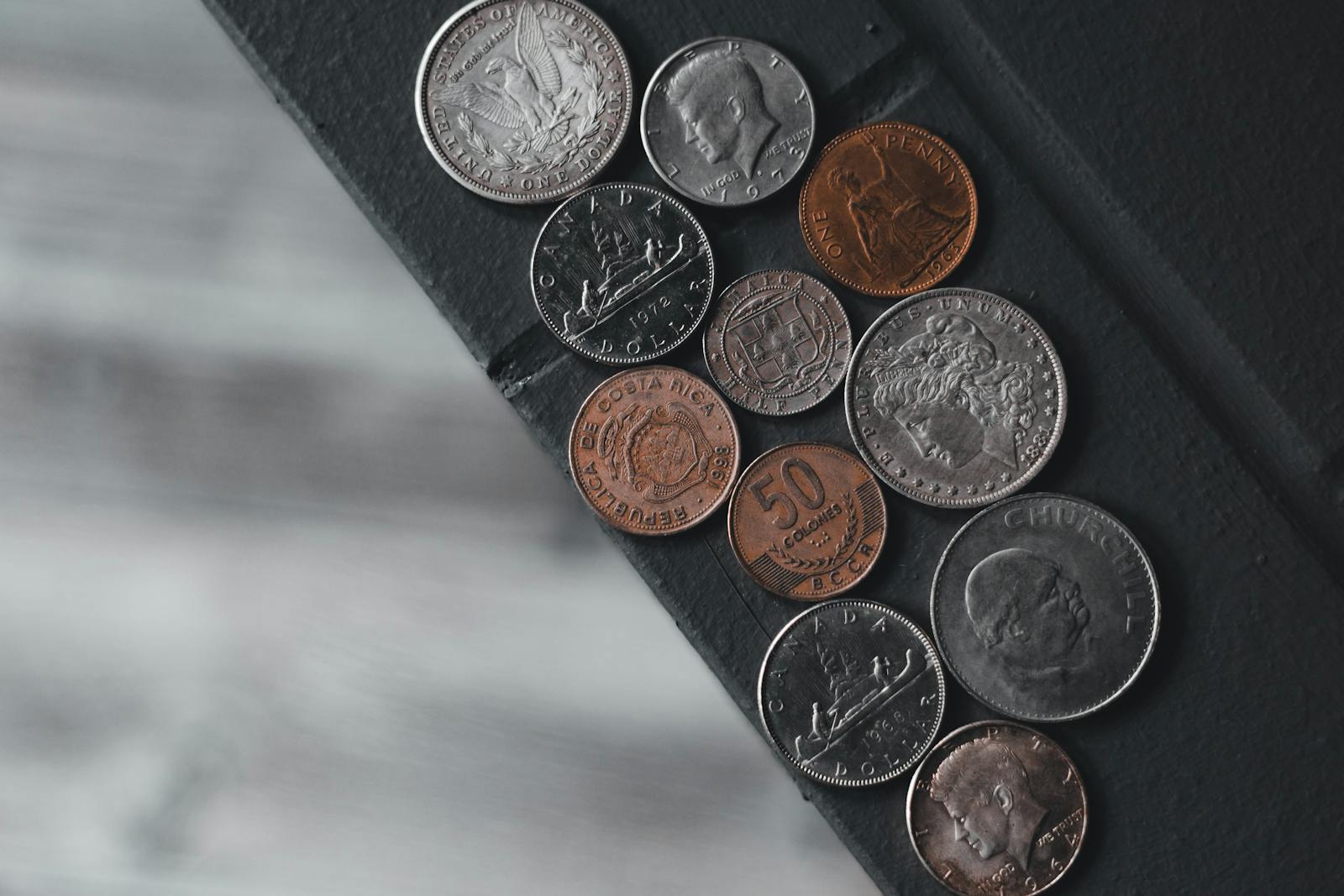
Collectors focus on specific designs, years, and mint errors, which means the same denomination can be either pocket change or a windfall depending on tiny details. Five types of coins in particular keep surfacing in household stashes and inherited jars, and recent auction results show why specialists are still hunting them aggressively.
How collectors decide which old coins are worth real money
Before zeroing in on individual pieces, it helps to understand why some coins are suddenly treated like miniature blue-chip assets. Specialists look at rarity, demand, and condition together, so a coin that is common in worn grades can become valuable in pristine form if few high-end examples survived. Guides used by hobbyists highlight entire categories that are almost always worth a second look, including early copper like the Half Cent, classic issues such as All Pennies from 1792 to 1958, and obsolete denominations like the 2 Cent and 3 cent pieces in both Nickel and Silver. Even early 5 cent coins and half dimes fall into the “do not spend” category, because their survival numbers are low and collector interest is high.
Market demand is not static, which is why some modern coins are now forecast to climb in price over the next several years. Analysts tracking auction records have highlighted a group of ten standout pieces, including five that still turn up in circulation, and argue that the more common examples in that list already trade in the $30 to $300 range. That kind of performance for coins that once cost a few cents over face value explains why casual savers are suddenly rechecking their jars and rolls.
1909 VDB Lincoln cent: the first presidential penny that still turns heads
Among everyday pocket change, few coins have a story as compelling as the 1909 VDB Lincoln cent. It was the first U.S. one-cent piece to feature a president’s portrait, and the initials of designer Victor David Brenner, “VDB,” on the reverse became a flashpoint that led to a limited production run. Hobbyists often single it out as a starting point for serious collecting, noting that the 1909 VDB issue is both historically important and surprisingly scarce in top condition.
Guides aimed at beginners even suggest, “Let’s start out with 1909 VDB penny,” underscoring how central it is to modern U.S. coinage. That same guidance stresses that its price varies widely with grade, from modest premiums for circulated examples to much stronger figures for unblemished pieces, and recommends a specialized reference sometimes described as “the bible of coins” to sort out the nuances. Because it sits within the broader category of Let collectors prize, anyone who finds a 1909 cent with bold “VDB” initials at the bottom of the reverse should think twice before dropping it back into circulation.
1943 Lincoln cents: steel workhorses and ultra-rare copper errors
The 1943 Lincoln cent is a reminder that the same date can hide both common coins and life-changing rarities. During the Second World War, the Mint shifted most cent production to zinc-coated steel to conserve copper, so the typical 1943 penny is a silvery steel piece that is interesting but not especially valuable. The real prizes are the few 1943 cents accidentally struck on leftover copper planchets, which specialists treat as classic errors and chase aggressively at auction.
Price records for those copper 1943 cents are eye-catching even by numismatic standards. Reporting on the market notes that in rare cases some 1943 pennies have sold for $1 million, and that one example brought more than $200,000 at a 2019 auction. Depending on grade, experts quoted in that same coverage place the likely range for a genuine copper 1943 cent between $100,000 and $250,000, which is why any brown 1943 penny that sticks to a magnet or shows unusual color deserves professional authentication.
Key-date Washington quarters: from 1932 classics to modern state rarities
Quarters are often overlooked because they still buy parking meters and vending machine snacks, yet certain dates have become trophies. Specialists emphasize that Many of the most desirable pieces are “key dates,” where a low mintage or special mintmark makes a coin far scarcer than its neighbors in the series. A classic example is the 1932 Washington quarter, which was issued to mark the bicentennial of George Washington’s birth and, in certain mintmark combinations, is considered a tremendous find in pocket change.
Modern research into quarter values shows that scarcity still drives prices. Analysts who track the series point out that the 1932-D Washington quarter had a relatively low mintage of 436,800 pieces, which helps explain why high-grade examples can command strong premiums. One breakdown of modern quarter values even notes that some pieces in this category can bring around $200 or more, and that the very finest survivors can significantly exceed $2,000, turning a single coin into a meaningful asset.
State quarters with hidden varieties: the Delaware example and beyond
The 50 State Quarters program flooded pockets with commemorative designs starting in the late 1990s, and most of those coins remain worth face value. A handful of varieties, however, have emerged as sleeper hits because of small design quirks and limited production. Coverage of the series singles out the 1999-S Delaware quarter, noting that in perfect condition it can go for over $1,000 at auction when the right combination of grade and variety is present.
Further reporting on the same group of eight standout state quarters explains why these pieces are so closely watched. One account notes that this coin was among the first state quarters to be released and that Finance Buzz highlighted it as a potential high-dollar find. Some variations, including those with extra spikes or other die markers, are reported to be worth up to $1,000, which is why collectors now scrutinize the horse and rider design under magnification instead of tossing every Delaware quarter into a change jar.
Modern rarities still in circulation: five coins experts expect to climb
Not every valuable coin is a century-old relic. Market watchers have identified a set of ten rare pieces, including five that still show up in everyday transactions, that they expect to increase in value over the next five years. Their analysis stresses that demand for the more common examples in this group already supports an approximate value of $30 to $300, a striking return for coins that might still be pulled from a bank roll.
Within that same analysis, one modern issue is described as a good example of a recent coin that will increase in value over the next five years and a perfect starter piece for new buyers. The commentary notes that this standout is the only specimen of its kind, underscoring how a unique error or limited release can transform an otherwise ordinary design into a high-demand collectible. The report frames these pieces as part of a broader group of ten rare coins that are “certain to increase in value in the next five years,” and introduces them with the simple cue Here, a reminder that the next big winner might already be sitting in a change tray.
Why collectors are hunting these coins right now
The surge of interest in specific old coins is not happening in a vacuum. Commentators observing the hobby point out that Collectors Are Actively U.S. issues right now, driven by a mix of nostalgia, investment potential, and the thrill of discovery. They emphasize that understanding Why Rare Coins requires looking at both the limited supply of key dates and the growing pool of buyers who want a tangible hedge against inflation or market volatility.
Within that framework, analysts highlight specific Coins Currently in High Demand, many of which overlap with the five types of pieces that still turn up in household stashes. The same coverage notes that collectors are not just chasing headline-grabbing million-dollar errors, but also mid-range coins that can be bought and sold more easily, such as scarce state quarters, early Lincoln cents, and low-mintage Washington quarters. That broad base of interest helps support prices across multiple tiers of the market, which is why even modest finds can add up for someone who has been quietly saving change for decades.
New 2026 designs and how they could affect older change
While attention often focuses on vintage pieces, upcoming design changes can also reshape what people notice in their pockets. The U.S. Mint has outlined a program of Circulating Coins to mark America’s Semiquincentennial in 2026, updating the designs on nickels, dimes, quarters, and half dollars. That kind of refresh tends to push older designs out of daily use, which can, over time, make earlier issues feel more distinctive and collectible to new generations of hobbyists.
Separate previews of New 2026 U.S. pieces have already circulated, with short videos noting that the Mint just had Coins Revealed for the dime, quarter, and half dollar that feature the number 177 in their anniversary motif. When new designs hit cash registers, they often spark fresh interest in what came before, prompting people to sift through older rolls and jars. That renewed attention can be especially helpful for the five categories of coins discussed here, which are already on specialist watchlists.
How to check your own coins: practical steps and value factors
For anyone ready to inspect their own change, a structured approach can keep the process manageable. Seasoned hobbyists often start by pulling out anything that matches the broad “keep” categories, such as early copper, obsolete denominations, and pre-1960 cents, following the kind of Simple guide that flags Half Cent, All Pennies from 1792 to 1958, and 2 and 3 cent pieces as automatic saves. From there, they look for specific dates and mintmarks, like 1909 VDB cents, 1932 Washington quarters with “D” or “S” marks, and state quarters with known varieties such as the highlighted Delaware issue.
Understanding what drives price is just as important as spotting the right date. Specialists break a coin’s worth into several components, including its Coin Metal Value This, often called melt value, which reflects the raw worth of its gold, silver, or copper. On top of that base, collectors pay premiums for rarity, demand, and condition, which is why a steel 1943 cent is usually worth only a small premium while a copper 1943 error can reach six figures. Educational resources from groups like the American Numismatic Association stress that Many key-date coins also involve a mintmark, and that a simple magnifying glass and a bit of patience can turn an overlooked drawer of change into a surprisingly valuable mini-collection.
More from Willow and Hearth:
Leave a Reply