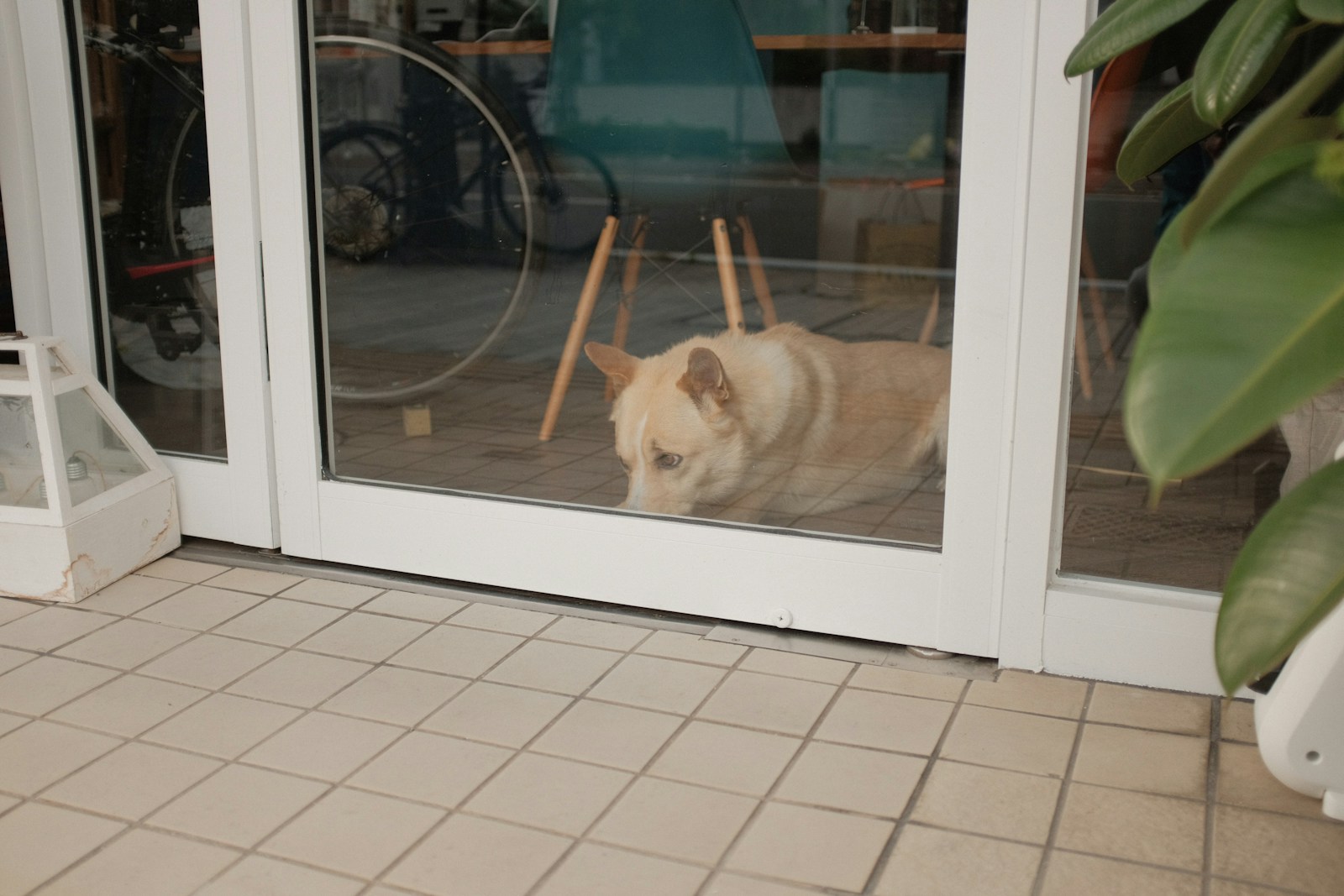
When a family dog plants himself in front of the front door and refuses to budge, it can look like stubbornness or separation anxiety. In one recent case, that insistent blockade turned out to be a warning that something was very wrong outside, and a mother only understood his urgency after she saw what he had been trying to stop. The story has resonated widely because it captures a familiar tension for dog owners: deciding when a pet’s dramatic behavior is just quirky, and when it is a genuine alarm.
Across social media, training guides, and security advice, a consistent picture emerges of dogs that use their bodies to control access to the home, sometimes out of fear, sometimes out of protectiveness, and sometimes with life changing consequences. The incident at the front door is not an isolated oddity but part of a broader pattern in which canine instincts intersect with human safety, domestic conflict, and the everyday choreography of family life.
The Morning A Dog Refused To Let Mom Leave
The turning point in this story begins at exactly 7:00 a.m., when a woman named Jan tried to head out the door and found her dog physically blocking her path. She described how he planted himself in front of the entrance, shifting his weight every time she tried to sidestep, as if he had decided that no one was going anywhere. What initially looked like a frustrating delay quickly took on a different tone when she realized how deliberate and focused he was, his eyes fixed on the street beyond the glass rather than on her or the treats she offered.
Jan later shared that about half an hour after her dog stopped her from leaving, police cars sealed off her street and officers ordered residents to stay inside their homes. The timing made her rethink the entire episode, because the dog’s blockade had effectively kept her away from a scene that was serious enough to require the road to be closed and neighbors to shelter indoors. In her account, she emphasized that he had never behaved like that before, which made the precise moment he chose to intervene, at exactly 7:00 a.m., feel less like coincidence and more like a pointed act of protection that unfolded just before the street was sealed.
Inside The Struggle At The Front Door
What made the scene so striking was not just that the dog stood in the way, but how far he went to keep Jan from crossing the threshold. As she reached for the handle, he lunged forward, and His teeth caught the sleeve of her jacket, yanking her backward across the tile. She reacted instinctively, shouting “Hey, stop!” as she tried to pull free, but he held on just long enough to break her momentum and force her to step away from the door. For a few seconds, the hallway turned into a tug-of-war between a determined owner and an even more determined animal.
Jan later described the moment as both frightening and oddly precise, because the dog did not bite her arm, only the fabric, and released as soon as she stumbled back from the entrance. That detail, that His teeth caught the sleeve but not her skin, has fueled speculation among readers who have been closely reading the comments about whether he understood he needed to be forceful without actually hurting her. For Jan, the memory of shouting “Hey” at a dog who refused to obey has become inseparable from the later realization that his resistance may have kept her out of harm’s way.
From Annoyance To Alarm: When The Blockade Made Sense
In the moment, Jan interpreted the blockade as a burst of misbehavior from a dog who did not want to be left alone. She tried the usual tactics, from firm verbal commands to luring him away with food, and felt her frustration spike as each attempt failed. Only after the sound of sirens grew louder, and she saw patrol cars racing past the window, did the mood in the house shift from irritation to unease. The dog, still stationed near the door, seemed to track the commotion outside with a tense, unwavering stare.
When officers eventually closed off the street and instructed residents to remain indoors, Jan replayed the previous half hour in her mind and realized that her dog had been agitated long before any human in the neighborhood knew what was unfolding. The sequence, from his sudden refusal to let her leave at exactly 7:00 a.m. to the moment police activity intensified, left her convinced that he had sensed something she had not. That conviction has echoed through the online discussion around her post, where readers have connected her experience to a broader pattern of dogs reacting to subtle cues, from distant engines to raised voices, long before people recognize that a situation outside the front door is about to escalate.
Why Some Dogs Turn Doorways Into Checkpoints
Behavior specialists note that many dogs treat thresholds as critical territory, using their bodies to manage who comes and goes. Training guides describe how a combination of natural instincts and learned behaviour can lead a pet to stand squarely in a doorway, chest out and muscles tense, whenever they sense a potential threat or disruption. In some households, this pattern starts with small victories, such as successfully blocking a delivery driver or startling a visitor, and gradually evolves into a default response whenever the door opens.
Experts caution that what looks like a heroic act in one context can be a daily challenge in another, especially when a dog’s protective streak morphs into chronic obstruction. Owners are encouraged to distinguish between a one off, high intensity incident like Jan’s and a recurring habit of blocking guests or family members. Structured training, including teaching a reliable “place” command and rewarding calm behavior away from the entrance, is often recommended to prevent dogs from turning the front door into a permanent checkpoint driven by a combination of instincts and reinforcement.
Protective Breeds And The “Human Shield” Instinct
Jan’s experience also aligns with what security focused dog owners see in large, protective breeds that are bred to guard property and people. These dogs are often described as “hands on” protectors that use their size as a physical barrier, stepping in front of family members or planting themselves in doorways whenever they perceive a risk. Their instinct is not only to bark or posture, but to occupy space in a way that makes it difficult for an unwanted person to cross a threshold or for a loved one to move toward perceived danger.
Guides to home security breeds emphasize that this behavior is not random; it is part of a broader pattern in which such dogs constantly scan the environment with a sharp, calculating gaze and then position their bodies accordingly. Owners of these breeds frequently report that their pets will quietly slide between them and a stranger, or stand broadside in a hallway to slow someone’s approach. In the context of Jan’s story, her dog’s decision to block the front door and physically pull her back fits neatly into this profile of large dogs that tend to use their bodies to prevent unwanted people or risky movements through key entry points.
Another Home, Another Dog Watching Every Move
The idea of a dog monitoring the front door is mirrored in quieter, more domestic scenes where pets shadow their owners from room to room. In one widely shared video, This Pit Bull spends the day tracking his owner’s activities, from the kitchen to the nursery, rarely letting her out of his sight. As the camera follows him, it becomes clear that his focus is not only on her but also on the two babies crawling around the room, his head swiveling between the adults and the children as if he is mentally mapping every movement.
As the footage continues, the owner jokes that she cannot take a step without feeling a paw or a nose touching her, a comment that underscores how constant the dog’s presence has become. Viewers see him lie down between the babies and the doorway, effectively turning his body into a soft barrier that keeps the children from wandering while also giving him a vantage point on anyone who might enter. The clip has been cited as a vivid example of how a dog’s curiosity about “Mom’s activities” can blend seamlessly into a protective posture, especially when, as the video notes, both babies are crawling and Pit Bull’s life is clearly centered on keeping them within reach.
When Blocking The Door Collides With Real World Danger
Not every doorway drama involves a dog, but real world incidents show how quickly a threshold can become the focal point of a crisis. In one case, a woman accused of ramming a gate and damaging property with a truck drew police to a scene that escalated from property damage to a tense confrontation. When officers were investigating, she ran to a patrol car, reached through the open driver’s side window, and told the officer to get out of the car and leave, according to the complaint. The interaction unfolded in the narrow space around the vehicle, where a few steps forward or back could change who controlled the situation.
For dog owners reading Jan’s account, such episodes highlight why an animal might react strongly to unusual activity near the home, from raised voices to the sound of engines revving at a gate. A dog that has learned to treat the front door as a line that must be defended may respond to the early signs of conflict long before a person recognizes the stakes. In that light, a pet that refuses to let someone step outside just as a dispute involving a truck and a damaged gate is drawing police attention can look less like an obstacle and more like an early warning system that is responding to the kind of disturbance described when police were investigating a damaged property complaint.
Balancing Gratitude And Boundaries After A Close Call
For Jan, the aftermath of that morning has involved a complicated mix of gratitude and the practical need to set boundaries. On one hand, she credits her dog with keeping her away from a police sealed street at a moment when officers were instructing residents to stay inside. On the other, she recognizes that allowing a pet to decide when a family member may leave the house is not sustainable, especially if the behavior starts to repeat in less urgent circumstances. The challenge is to honor the instinct that may have protected her without letting it harden into a pattern of uncontested control over the doorway.
Trainers often advise owners in similar situations to reinforce calm, cooperative behavior around exits while still acknowledging the dog’s role as a guardian. That can mean teaching the animal to move to a designated spot whenever the door opens, rewarding compliance, and reserving praise for moments when the dog alerts without physically blocking or grabbing. In Jan’s case, the memory of His teeth on her sleeve and the shout of “Hey” that followed will likely shape how she approaches that training, reminding her that the same dog who once dragged her away from danger also needs clear guidance about when to step aside.
What Other Families Can Learn From A Dog At The Door
The story of a dog that refused to let his owner step outside until after police had sealed off the street has struck a chord because it captures both the promise and the complexity of living with an animal that takes its protective role seriously. It suggests that when a normally calm dog suddenly escalates to blocking, grabbing, or dragging at a very specific moment, it may be worth pausing to look and listen before brushing the behavior aside as simple disobedience. At the same time, it underscores the importance of training that channels that intensity into safer forms of alerting, so that a pet does not have to resort to desperate measures to be heard.
More from Willow and Hearth:
Leave a Reply