When a dog abandons its plush bed to curl up in a hallway corner or wedge itself under a chair, it is rarely random. Canine sleep spots are shaped by instinct, comfort and health, so a sudden preference for odd locations can be an early signal that something in a dog’s world has changed. Reading those choices with the same care given to diet or exercise can help guardians catch stress and medical problems before they escalate.
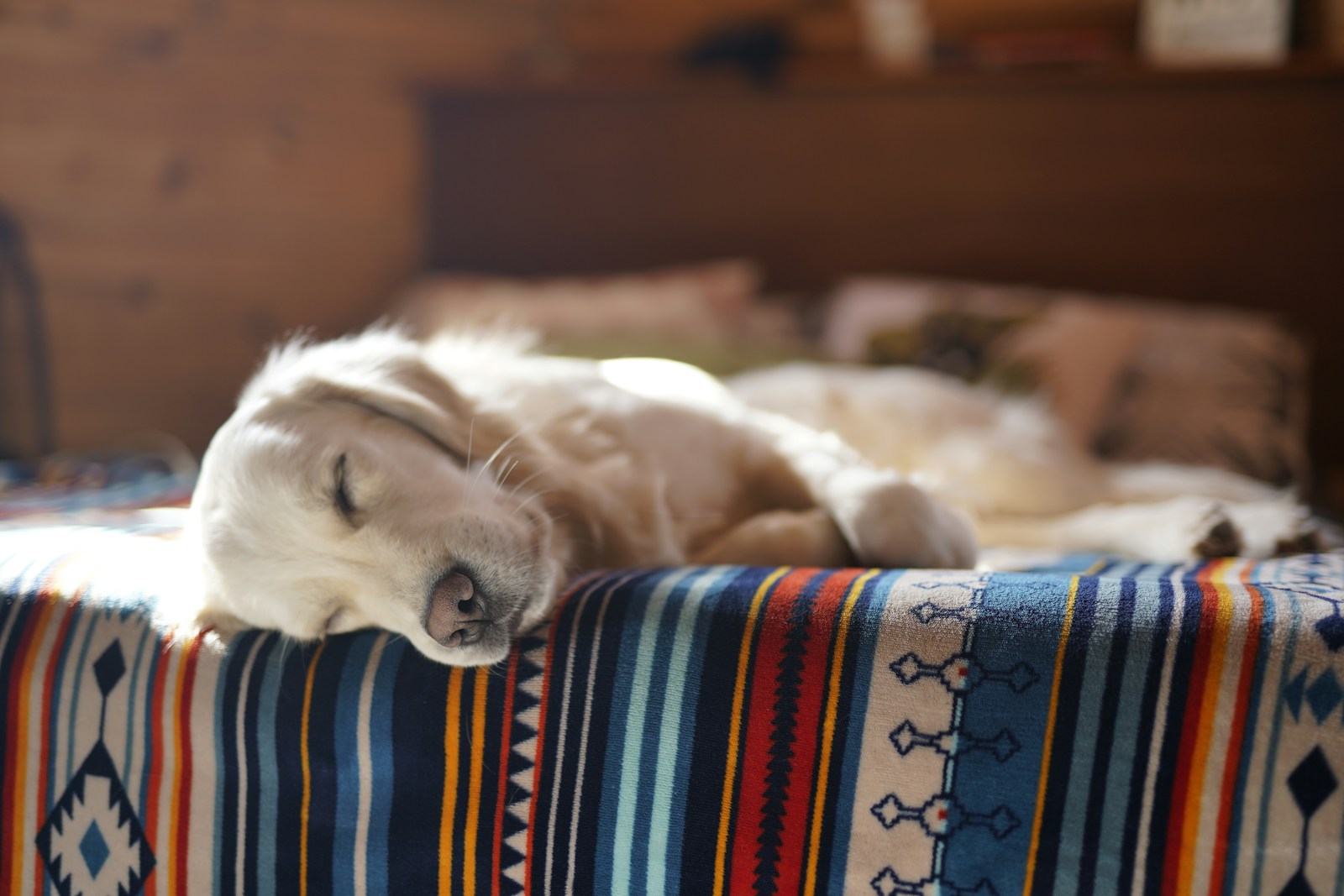
Researchers and veterinarians increasingly treat sleep as a vital sign for animals, not just a cute quirk. From the way a dog sprawls on its side to the decision to hide under a bed, patterns at night and during naps can reveal how safe, relaxed or unwell a dog feels. Paying attention to those “weird” places is less about policing the couch and more about listening to what the animal is trying to say.
Sleep spots as canine body language
Behavior specialists describe sleeping positions and locations as a form of body language that reflects a dog’s comfort level, trust and even potential health issues. Guides to Dog Sleeping Positions and What They Mean note that a relaxed “side sleeper” often signals a dog that feels safe and at a comfortable temperature, while more guarded postures can hint at anxiety or pain. When that body language is paired with unusual locations, such as tight gaps or distant rooms, it can sharpen the picture of what the dog is experiencing.
Experts on Strange Positions stress that dogs are creatures of instinct whose sleep choices often mirror their emotional state. A dog that suddenly abandons open, sprawled poses for more confined or curled positions in hidden corners may be seeking extra protection or relief from environmental stress. When those shifts appear alongside other changes, such as sleeping more than usual or avoiding family members, they can be early clues that something in the dog’s health or home life needs attention.
Normal positions versus truly odd behavior
Not every unconventional pose is a red flag. Many dogs naturally favor “The Side Sleeper,” with guides noting that, just like humans, dogs love to lie on their side with legs extended when they are relaxed and at ease, a pattern highlighted in explanations of The Side Sleeper. Other common postures, such as curling into a tight ball or stretching out flat on the belly, often reflect temperature control or readiness to spring into action rather than distress.
Veterinary clinics that catalogue Odd Dog Sleeping point out that behaviors like Curling Up In a Ball have deep evolutionary roots, helping wild canids conserve heat and shield vital organs. Similarly, behavior guides on Common Dog Sleeping describe “The Burrower,” a dog that dives under blankets or laundry, as a normal expression of den-seeking comfort. The line between endearing and concerning is usually crossed when a dog abandons its usual habits for new, more extreme locations or when restlessness prevents it from settling anywhere for long.
Why the hallway, bathroom or under the bed suddenly feels “right”
When a dog starts sleeping in the bathroom, behind the sofa or under the bed, it is often following a denning instinct that favors small, enclosed spaces. Behaviorists who examine Why Does My note that, due to their den animal heritage, many dogs feel safest in low, covered areas that mimic a natural hideout. Those spots can also be cooler, darker and quieter than the center of a busy living room, which makes them appealing when a dog is tired or overstimulated.
At the same time, hiding under furniture or in distant rooms can signal more than a preference for peace and quiet. Guides on Seeking Comfort and explain that Dogs instinctively hide when they feel anxious, threatened or unwell, using secluded spaces to cope. Broader discussions of Dog Hiding add that dogs may retreat under furniture in response to loud noises, new people or animals, or household conflict. When a dog that once slept happily in the open begins to vanish into tight corners, it is worth asking what in the environment might suddenly feel unsafe.
When “weird” sleep is a stress or anxiety signal
Changes in sleep location are often intertwined with emotional strain. Behavior therapists who study seclusion note that a dog’s isolation can be a sign of stress, fear or overstimulation, especially when it chooses distant rooms or hard-to-reach spots over its usual bed. In analyses of withdrawal, the Author and Evie Van Hove describe how some dogs seclude themselves after conflicts with other pets, changes in family composition or frightening events, using sleep as both escape and coping mechanism.
Guides on Why Do Dogs in Strange Positions add that anxious Dogs often favor more confined or curled positions, even in awkward places, to feel protected. Hiding resources on Reasons Why They emphasize that Sometimes dogs go off on their own, crouching behind furniture when they are afraid of new people or animals. When a dog’s odd sleep spot coincides with pacing, panting, startle responses or avoidance of interaction, it is reasonable to interpret the new location as a stress barometer rather than a quirky preference.
Health problems that show up first in the bedroom
Veterinarians increasingly warn that disrupted sleep can be one of the earliest signs of illness. Guides on How to tell if a dog has a problem sleeping highlight red flags such as an inability to stay in one position, frequent shifting between different sleeping positions unusually often and difficulty settling. These patterns can reflect joint pain, digestive discomfort or neurological issues that make it hard for the dog to find a comfortable posture, which may drive it to experiment with new surfaces or corners in search of relief.
Broader health monitoring tools that analyze WHAT YOUR DOG SLEEP PATTERN SAYS about its health note that if a dog sleeps in unusual positions or locations, or if its resting heart and respiratory rate change significantly during sleep, it can indicate underlying cardiac or respiratory disease. Veterinary overviews on Decoding Pet Sleep add that duration matters too: if a pet is sleeping far more or far less than usual, or waking frequently and moving to new spots, clinicians consider possibilities ranging from pain to endocrine disease to respiratory or cardiovascular problems. In that context, a dog that abandons its usual bed to sleep sitting up against a wall or on a cool tile floor may be trying to ease breathing or joint strain.
How much sleep is normal, and when location changes matter
Before sounding the alarm about a dog’s new favorite corner, it helps to understand what normal sleep looks like. Overviews of canine rest cycles that ask How Long Do report that adult dogs typically sleep about 12 to 14 hours a day, while puppies and senior dogs may sleep even more. Within that window, it is common for dogs to rotate between a few preferred spots, such as a crate, a sofa and a sunny patch of floor, depending on time of day and household activity.
Sleep experts who outline Signs Your Dogt Sleeping Well emphasize that quality matters as much as quantity. Dogs, like people, rely on consolidated deep sleep for physical recovery and mental processing, and frequent awakenings or restlessness can undermine that, even if total hours look normal. When a dog that previously slept soundly in one place begins waking repeatedly, moving from room to room and choosing odd surfaces, it can be a sign that something in the environment or the dog’s body is preventing restorative rest. In those cases, the new locations are less a personality quirk and more a symptom of disrupted sleep architecture.
Specific positions that change the meaning of a weird spot
Location and posture often need to be read together. Behavior guides on Dog Sleeping Positions describe Sleeping On Their Side as the most common posture, associated with a relaxed, trusting dog that feels safe enough to expose its vital organs. If a dog chooses a strange location, such as the middle of a hallway, but remains a loose side sleeper, it may simply be chasing a draft or a vantage point rather than signaling distress. By contrast, a dog that curls tightly with paws tucked and tail over the nose in a cramped corner may be trying to conserve heat or shield itself from perceived threats.
Other positions can hint at energy levels and readiness. Descriptions of “The Superman” in The Burrower and related poses note that dogs stretched flat on their bellies with legs extended are often in light sleep, ready to jump up at a moment’s notice. Analyses of Just how dogs choose between these positions suggest that temperature, trust and fatigue all play a role. When a dog that once sprawled on its side on a bed begins sleeping upright, facing away from people in a doorway, resources on underlying issues caution that such a shift from its natural sleeping position to a completely different style can be a telltale sign of discomfort or emotional distance.
Patterns over time: when to call the vet
Isolated nights in a new spot are usually less concerning than sustained patterns. Health monitoring platforms that analyze DOG SLEEP PATTERN SAYS that once a baseline is established, deviations in duration, position and location can help identify problems early. Veterinary teams who focus on Sleep Patterns Say advise that if a pet is suddenly sleeping much more or much less, or if it repeatedly chooses hard, cool surfaces and seems reluctant to lie down fully, respiratory or cardiovascular problems should be considered. In that context, a dog that starts sleeping propped against furniture or with its head elevated on a step may be trying to ease breathing.
Sleep specialists who answer Just how to tell if a dog has a problem sleeping recommend watching for an inability to stay in one place, repeated attempts to get comfortable and vocalizing during the night. Broader guides on Sleeping Well add that daytime lethargy, irritability and reduced interest in play can all stem from poor sleep. When those signs accompany a new habit of sleeping in odd, isolated locations, veterinarians generally advise a checkup, since pain, cognitive decline and systemic disease can all present first as nighttime restlessness and relocation.
Helping a dog feel safe enough to sleep in healthier places
Once medical issues are ruled out or treated, guardians can often improve sleep simply by making rest spots feel safer and more appealing. Behaviorists who study The Perfect Hideout explain that many dogs gravitate under beds because those spaces function as improvised dens, so offering a covered crate or tent-like bed in a quiet corner can meet the same need in a more accessible location. Resources on Let dogs seek comfort and security also stress the importance of predictable routines, gentle handling and positive associations with designated sleep areas, especially for anxious animals.
For dogs whose odd sleep spots are driven by stress, addressing triggers is as important as rearranging furniture. Guides on How To Deal recommend gradual desensitization to noises, careful introductions to new people or animals and the use of calming aids when appropriate. Behavior therapists who analyze dog secludes itself advise that if isolation persists despite environmental changes, professional guidance can prevent entrenched fear. Sleep pattern analysts who note that dog’s sleep patterns can be a window into overall well-being argue that, over time, a dog that feels physically comfortable and emotionally secure will naturally gravitate back toward open, relaxed rest, turning “weird” sleep spots from a warning sign into just one more harmless quirk.
More from Willow and Hearth:
Leave a Reply