The discovery of a man and his dog dead inside a mobile veterinary van in Queens has shaken a neighborhood already battling brutal cold. As freezing temperatures pressed in, what should have been a routine day of animal care turned into a fatal mix of snow, machinery, and an enclosed space.
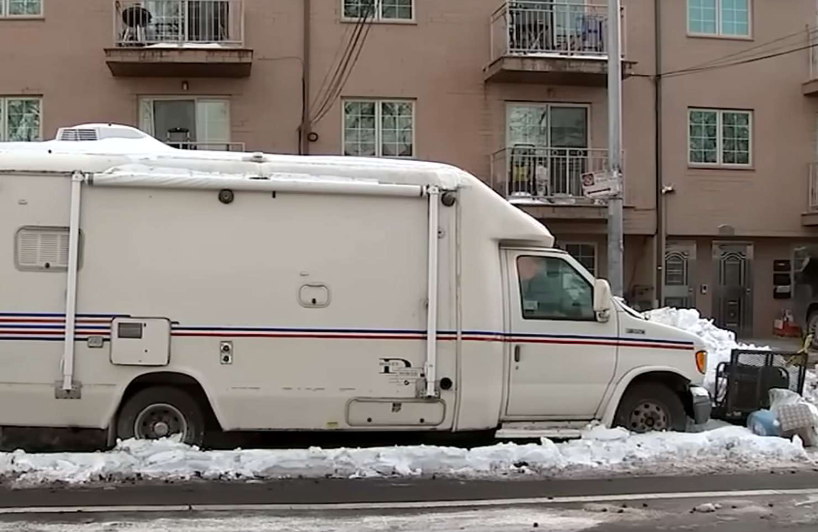
Investigators say the deaths do not appear suspicious, but the circumstances are chilling in their own right: a parked clinic, a clogged exhaust, and a community now asking how something so preventable could happen in the middle of a city that knows winter all too well.
The scene in Flushing on a bitterly cold day
The mobile clinic was found in Flushing, a dense pocket of Queens where narrow residential streets and small businesses share the same curb space. The van, a mobile veterinary setup, had pulled up along a thick snowbank after a winter storm left the area coated and icy. Neighbors later described seeing the vehicle parked for hours, its presence familiar enough that no one initially thought anything was wrong.
Inside, Man and dog were eventually found unresponsive, while another man was discovered unconscious outside the van, according to early reports from the scene. That third person was rushed to a hospital, where he was treated for what authorities believe was exposure to the same deadly conditions that built up inside the vehicle. Residents who watched the emergency response unfold described a chaotic, heartbreaking scene, with first responders working quickly but arriving too late to save two of the victims.
How snow, a generator, and a closed van turned lethal
Investigators are focusing on a simple but deadly chain of events: heavy snow, a running generator, and a sealed mobile clinic. A generator was seen just outside the front of the Ford E350, positioned near a snowbank that had built up along the driver’s side of the van. With the exhaust apparently clogged by snow, fumes had nowhere to go except back toward the vehicle and, ultimately, inside the workspace where the veterinary team and the dog were located.
Reports indicate that the men had been performing an operation on the dog when the trouble began, with one account noting that the animal was already under care when the van filled with what is believed to be carbon monoxide. One detailed report cited a source who said the victims may have been exposed to carbon monoxide for as long as four hours, a span that would have quietly overwhelmed anyone inside without proper ventilation or alarms. The combination of a running generator, blocked exhaust, and freezing weather created a perfect storm inside a space designed to be warm and sealed.
A respected veterinarian, a loyal dog, and a community in shock
The man who died inside the van has been identified as veterinarian Ashraf Hussein, a 57-year-old whose colleagues say devoted his life to animal care. In a statement shared after his death, the animal hospital where he worked said, “His dedication to veterinary medicine touched countless lives,” a simple line that captures how deeply he was woven into the lives of pet owners who trusted him with their family members. Friends and co-workers described him as calm, patient, and endlessly willing to squeeze in one more appointment for a worried owner.
The dog that died alongside him has not been publicly identified, but reports describe the animal as a patient in the middle of a procedure when the van became a trap. One account notes that the men were performing an operation when the exhaust became clogged, turning what should have been a controlled medical setting into a silent hazard. A colleague named David shared that the loss felt personal not just to staff but to the wider circle of clients who had come to see the veterinarian as part of their extended family, especially those who relied on the mobile clinic because they could not easily travel.
What investigators say so far, and what remains unclear
Police have been careful in how they describe the case, but they have been clear on one point: the deaths are not being treated as suspicious. Police sources say the working theory is accidental carbon monoxide poisoning tied to the generator and snow-clogged exhaust. The mobile clinic, which carried out routine procedures in different neighborhoods, was registered with out-of-state plates, a detail that has raised questions about how often it operated in Queens and whether it had been inspected under local guidelines.
Authorities have identified the victim as a 57-year-old man and confirmed that the second man found outside the van survived after being taken to a hospital. Authorities in New York City are still piecing together the exact timeline, including when the generator was turned on and how long the van had been parked before someone called for help. One detailed account notes that the case was highlighted in a segment called The Brief, underscoring how quickly the story resonated beyond the immediate neighborhood.
Neighbors’ grief, winter safety lessons, and a city on edge
For people living on the block, the tragedy feels both deeply personal and uncomfortably close to home. One neighbor told reporters that the scene was “horrible,” describing how they watched paramedics work on the unconscious man outside the van and then realize there was nothing they could do for the others. Another neighbor, quoted in a separate report, called the veterinarian a “nice guy,” the kind of person who would chat on the sidewalk and reassure anxious pet owners. Those raw reactions have filtered into local conversations about how fragile safety can be when winter storms hit hard.
The case has also become a cautionary tale about cold-weather survival in tight urban spaces. Coverage has emphasized that the van was a mobile veterinary unit in Queens, operating in a borough where many people rely on generators, space heaters, and improvised setups when temperatures plunge. One detailed breakdown framed the story as “Here’s what we know,” a phrase that captures how residents are still trying to make sense of what happened while also looking for practical takeaways. Safety experts often warn that generators should never run close to enclosed spaces or blocked vents, and this case is now a stark real-world example of why those guidelines matter.
More from Willow and Hearth:
Leave a Reply