It started the way these things always do: a “quick” basement clean that somehow turns into an archaeological dig. One dusty plastic tote led to another, and suddenly we were surrounded by a little cardboard time machine—board games from the 70s, 80s, and 90s, stacked like a miniature skyline. The smell alone was enough to bring back memories of slamming the lid shut after losing at Monopoly.
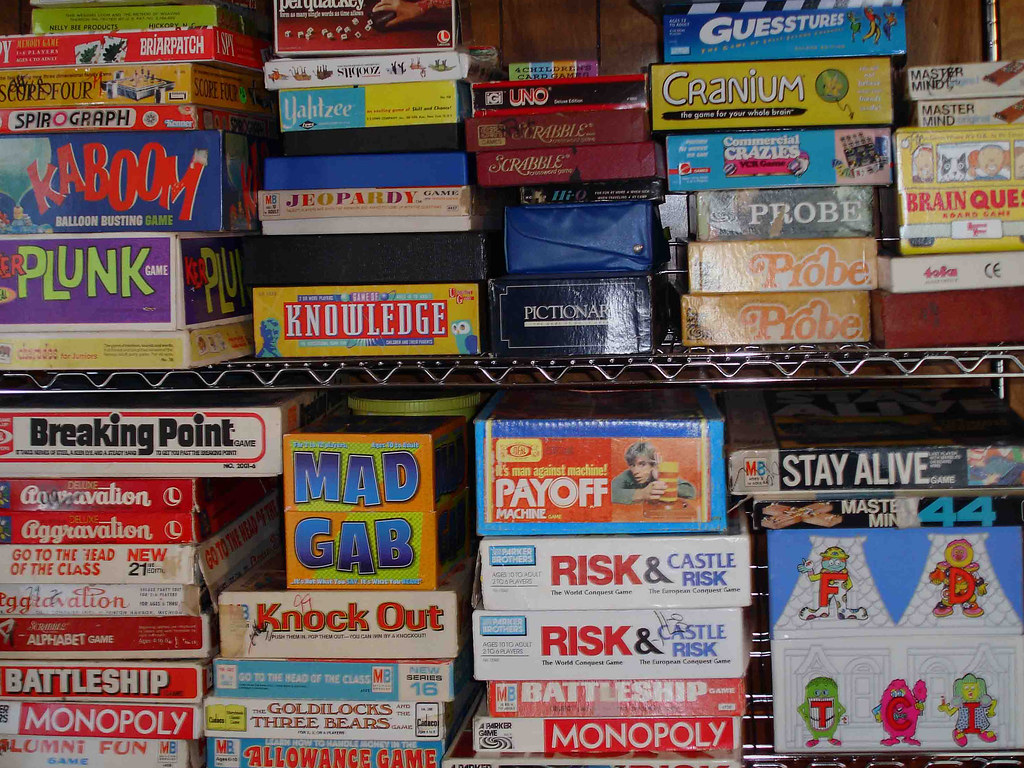
At first, it was pure nostalgia. Then we did the thing you’re not supposed to do while cleaning—pulled out our phones and searched what some of these titles were going for online. That’s when the mood changed from “aw, cute” to “wait… people pay how much for this?”
The surprise wasn’t the games—it was what “complete” means
Retro board games aren’t exactly rare, but complete sets can be. The listings that made our eyebrows jump weren’t just “good condition.” They were “complete,” “all pieces accounted for,” “includes original instructions,” sometimes even “includes inserts” like those flimsy cardboard organizers everyone used to throw out.
That’s when I realized something important: the value isn’t always in the box art or the title. It’s in the tiny plastic parts that roll under furniture, the paper money that gets folded into confetti, and the one weird token that no one remembers until it’s missing. A vintage game with one missing pawn can go from “collector-worthy” to “parts lot” really fast.
A basement clean turned into a checklist operation
We changed tactics immediately. Instead of tossing games into a “donate” pile, we started opening every box like a careful museum curator—except our white gloves were just old sweatshirt sleeves. Each lid came off slowly, and each game got a quick inventory: boards, cards, tokens, dice, spinners, instruction booklets, and any odd extras.
It sounds dramatic, but it wasn’t hard once we got a rhythm. We’d spread a towel on the floor, pour pieces into a shallow tray (a baking sheet worked great), and compare what we had to the components list in the instructions. When instructions were missing, we looked up a PDF or photos of the contents online to confirm what should be there.
The tiny parts are where the money hides
Some games are famous for having pieces that vanish over time. Miniatures, unique dice, plastic weapons, cardboard chits, and those little “mystery” tokens that only matter on turn 14. One game we found had everything except a single spinner arrow, and it was almost funny how quickly that turned into a research mission.
Collectors and resellers aren’t being picky for sport—completeness affects whether a buyer can actually play the game as designed. And because replacement parts can be hard to find, even one missing component can knock the price down a lot. If you’ve ever tried to substitute a random pawn for a custom sculpted figure, you already know the vibe: it works, but it’s not the same.
Condition counts, but it’s not just “looks good”
Once we started paying attention, we noticed condition is its own little universe. Box corners matter, yes, but so do split seams, water stains, moldy smells, warped boards, and cards that have been “customized” with someone’s childhood doodles. (We found at least one scorepad filled out in pencil from what looked like 1994, and honestly, it was kind of charming.)
That said, the market can be surprisingly forgiving if the game is complete and presentable. Slight shelf wear is normal; missing pieces is harder to overlook. If you’re deciding whether something is worth selling, you’re usually balancing completeness, condition, and demand—not perfection.
How we figured out what was worth checking twice
We didn’t become instant experts, but we learned how to spot what deserved extra attention. First, we searched sold listings, not just asking prices—because anyone can list a game for a wild number and hope for a miracle. Sold listings show what people actually paid, which is the difference between a fun fantasy and real market value.
Second, we looked for editions. The same title can have different printings, different art, and different components depending on the year. Sometimes the “vintage” version is the one people want; other times it’s the later edition with a specific expansion or a corrected ruleset. If a box had a date, a publisher name, or an edition marker, we snapped a photo before moving on.
Our quick, real-world system for checking boxes
After a few games, we got tired of the “dump pieces on the floor and hope” method. So we made a simple system: photograph the contents, photograph the rules, and bag the loose parts. Zip-top bags are basically insurance for your future self, especially if you’re storing games again or considering selling later.
We also labeled bags with the game name and any notes like “missing 1 red pawn” or “no instructions.” That one step saved us from reopening boxes over and over. It’s amazing how similar a pile of tiny plastic bits can look once you’ve checked five games in a row.
What to do if something’s missing (because something usually is)
When we found incomplete sets, we didn’t automatically give up. Some missing pieces are replaceable: standard dice, generic pawns, play money, even certain tokens if you can find a parts lot. Other pieces—custom miniatures, branded tokens, unique cards—can be harder and may change whether it’s worth selling as-is.
In a couple cases, we found the missing parts in totally unrelated boxes. One stray die was hiding in a puzzle tin, and a handful of cards had slipped into a rulebook like accidental bookmarks. If you’re cleaning out a storage area, it’s worth checking nearby bins before declaring a game incomplete forever.
The unexpected lesson: don’t rush the donate pile
We still donated plenty of things, and we’re not trying to turn the basement into a warehouse. But the experience changed how we “let stuff go.” Now, anything that has small components—board games, LEGO sets, old toys, even craft kits—gets a quick completeness check before it leaves the house.
Not because everything is secretly worth a fortune, but because it’s frustrating to discover later that you donated a nearly complete set that only needed one card you had sitting in a random drawer. Also, it turns out counting tiny plastic cannons is weirdly satisfying, like a very nerdy form of meditation.
Why retro games are having a moment
Part of this is pure nostalgia. People want the version they grew up with, not just any modern reprint, and that demand pulls older editions out of closets and basements. Add in collectors, gift-buyers, and folks rebuilding childhood collections, and suddenly “old board game” stops sounding like clutter and starts sounding like a category.
And honestly, there’s something comforting about it. These games were built to be handled, argued over, repaired with tape, and played again. Finding them in storage felt like rediscovering a little social history—plus a reminder that the most valuable thing in the box might be the one piece everyone loses first.
More from Willow and Hearth:
Leave a Reply