The skillet was hiding behind a stack of paint cans and a box labeled “misc. cords,” which is basically garage code for “abandon all hope.” At first glance, it looked like a lost cause: dull gray, patchy, and a little rough to the touch. The handle was solid, though, and when I picked it up, it had that reassuring heft that makes cast iron feel like it could survive the apocalypse.
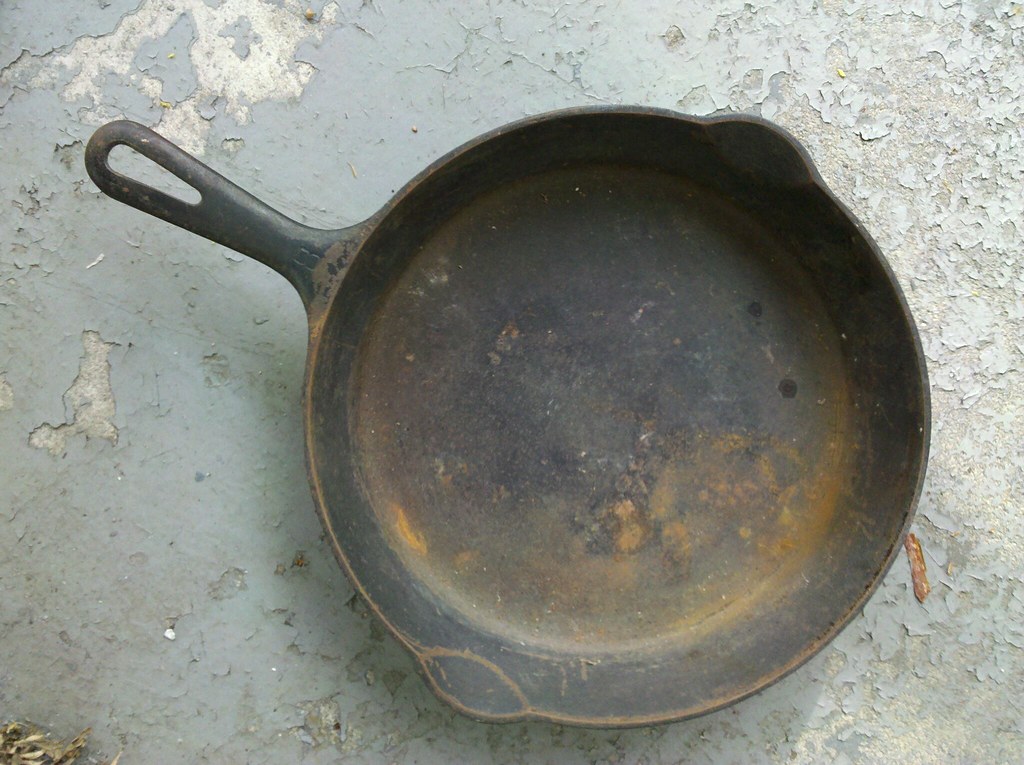
I was one step away from putting it in the donation pile, mostly out of guilt because it felt wrong to throw away something made of pure determination. Then I did the thing that always gets me in trouble: I looked it up. Five minutes later, I was staring at photos of vintage skillets selling for serious money, and I realized we might be holding something a lot more interesting than “old pan.”
The moment we realized “old” isn’t the same as “worthless”
Cast iron is weird that way: it can look terrible and still be perfectly usable, sometimes even better than new. Unlike nonstick pans that give up the ghost once their coating scratches, cast iron’s “damage” is often just neglect—rust, old seasoning, or years of baked-on mystery. Underneath, the iron is usually fine.
What surprised me wasn’t just that it could be saved. It was that certain makers—especially older American foundries—have a reputation for smoother cooking surfaces and better heat behavior than many modern pans. That’s where the collector buzz comes in, and suddenly a crusty skillet starts looking less like clutter and more like a small piece of kitchen history.
Why some vintage cast iron is a big deal
If you’ve ever heard someone talk about vintage cast iron with the intensity of a sports fan arguing playoffs, this is why. Many older skillets were machined or polished smoother than most mass-market pieces today, so they can feel almost satiny inside. That smoother surface can make cooking easier, and it also tends to season up beautifully over time.
Collectors often look for classic names like Griswold and Wagner, plus a handful of other regional foundries that built loyal followings. Some are prized because they’re lighter for their size, some because they’re older, and some because they have distinctive logos or markings that help date them. Even if you never plan to sell, it’s fun to know when you’ve got something with a story.
The quick clues that made us stop and inspect it
I flipped the skillet over and did what any reasonable person would do: squinted at the bottom like it might reveal a secret map. Vintage pieces often have maker’s marks, heat rings, or size numbers on the underside, and those details can help identify who made it and roughly when. In our case, there was faint lettering and a number that didn’t look like a modern model stamp.
There are also practical checks that don’t require a collector’s eye. Does it sit flat, or does it wobble on the counter? Any hairline cracks, especially around the handle or sidewall? A skillet can be rare and still not worth using if it’s cracked, but a little rust and ugliness is usually just cosmetic—and totally fixable.
The cleaning decision: restore, don’t “refinish”
Once I realized it might be vintage, I got cautious in a hurry. The goal with old cast iron isn’t to make it look brand new at any cost; it’s to clean it safely and rebuild seasoning without grinding away history. Some restoration methods can accidentally erase markings or change the surface, which is a bummer whether you care about resale value or just want to keep it authentic.
I also learned there are two lanes: “gentle cleanup” if the pan is basically okay, and “full strip” if it’s heavily rusted or the old seasoning is flaky and uneven. Ours was in the middle—gross enough to need real work, but not so far gone that it felt like a science project.
What I actually did to clean it up
First, I washed it with hot water and a little dish soap to remove surface grime, then dried it immediately. Yes, soap is fine on cast iron when you’re dealing with gunk and old residue—this isn’t a frontier homestead, and we’re not churning butter in the yard. The key is drying it thoroughly so rust doesn’t return while you’re still deciding what to do next.
For the stubborn rust patches, I used a scrubby pad and a bit of elbow grease, then wiped everything down until the surface felt more even. If the rust had been worse, a short vinegar-and-water soak can help, but you have to watch it closely so the acid doesn’t start attacking the iron. After that, I warmed the skillet to drive off any lingering moisture, because cast iron loves to hide water in its pores like it’s playing a prank.
Seasoning: the part that turns “rescued” into “ready to cook”
Once it was clean and dry, I rubbed on a very thin coat of oil—thin enough that it almost looked like I’d wiped it all back off. That’s the trick: too much oil turns sticky and uneven, and you’ll wonder why your “restoration” feels like flypaper. A few light seasoning rounds beat one heavy coat every time.
I baked it in the oven to set the seasoning, then let it cool down slowly. The finish didn’t look like a showroom skillet, but it looked alive again—darker, smoother, and less like it had been pulled from a shipwreck. More importantly, it felt like something you could actually cook with without fearing your eggs would fuse to the surface forever.
The collector angle (without turning your kitchen into a museum)
After cleaning it, I went back and tried to identify it more carefully. Maker’s marks, font styles, and even the shape of the handle can matter, and cast iron folks have documented an impressive amount of that trivia online. It’s a rabbit hole, but it’s a fun one, and it can help you avoid accidentally mistreating something special.
That said, the best part of owning a great vintage skillet isn’t bragging rights—it’s dinner. These pans were made to work, and there’s something satisfying about using a tool that’s already proven it can last decades. If collectors want to pay a premium for certain pieces, that’s interesting, but a pan that earns its keep on your stove is its own kind of value.
How it cooks now (and why I’m glad I didn’t donate it)
The first test was simple: onions and butter, because they’ll tell you pretty quickly if a pan is behaving. The heat spread evenly, the surface didn’t grab, and the whole thing felt steady in a way that lightweight pans don’t. It wasn’t magic, exactly—it was just a well-made hunk of iron doing what it was designed to do.
Now it’s the skillet I reach for when I want a good sear or when I’m making cornbread that needs a crispy edge. And every time I pick it up, I think about how close it came to being “someone else’s problem” at the donation center. Turns out the garage didn’t give us junk—it gave us a second chance at a really great pan.
More from Willow and Hearth:
Leave a Reply