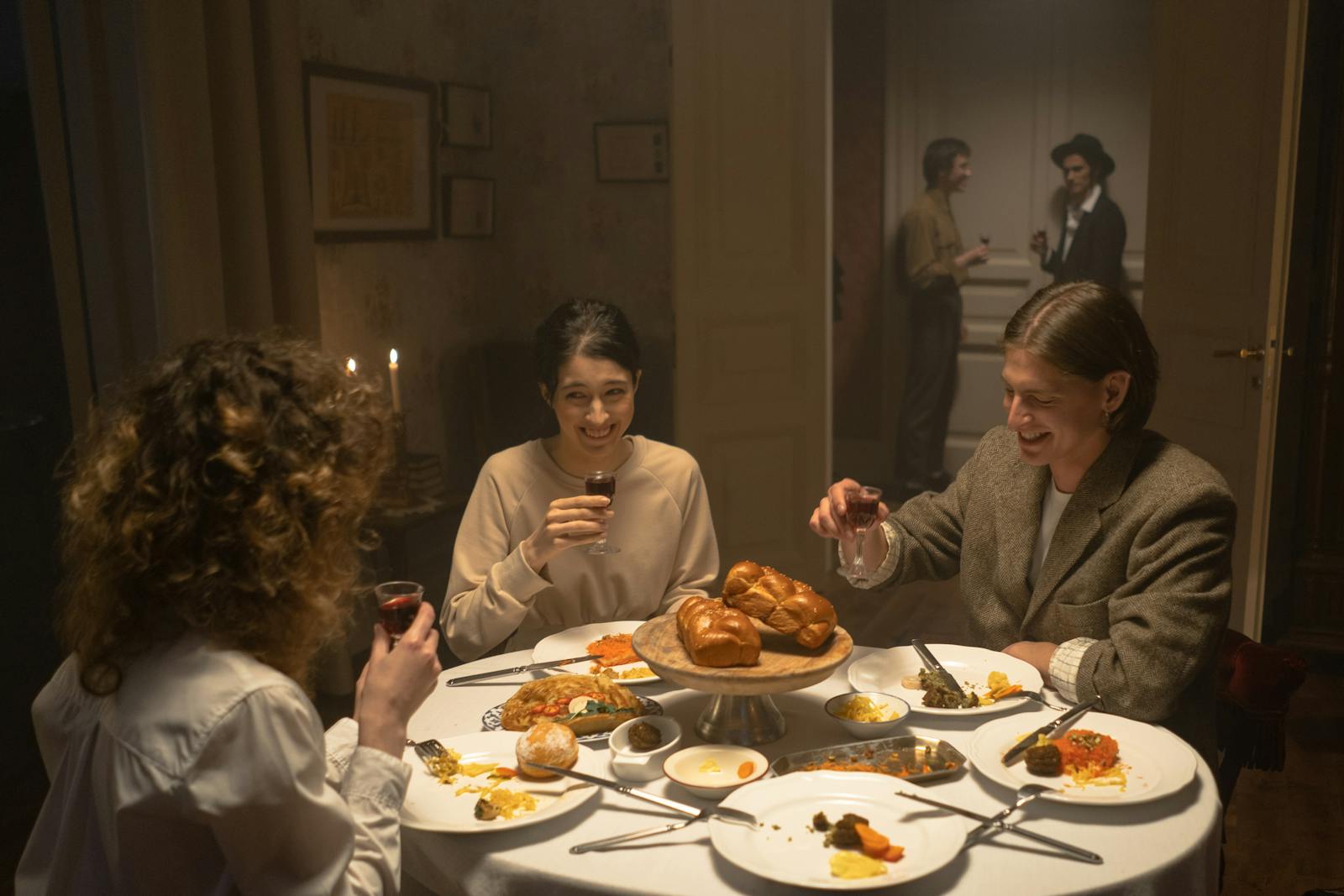
Picture it: you’re mid-story at dinner, everyone’s smiling, and you’re just getting to the good part. Then your spouse jumps in—“Actually, it was Tuesday, not Wednesday”—and suddenly the room’s energy shifts. You laugh it off, but inside you feel a little pinched, like you just got corrected by a very polite hall monitor.
This scenario is popping up in couples’ conversations everywhere, and it’s not hard to see why. It’s not just about the date or the color of the shirt; it’s about what that correction does to the moment. And when you bring it up later, the response lands like a brick: accuracy matters more than feelings.
A tiny correction that feels weirdly huge
On paper, a small fix sounds harmless. In real life, being interrupted can feel like being gently shoved out of your own chair while you’re still sitting in it. Even if your spouse isn’t trying to embarrass you, the social effect can be the same: your story loses momentum, and you feel like you’ve been demoted from “fun narrator” to “unreliable witness.”
Most people aren’t keeping score on whether your story was technically precise. They’re reacting to your vibe, the humor, the point you’re making, and the shared experience. So when someone corrects you in front of others, it can come off like they’re prioritizing being right over being connected.
Why some people can’t resist “fixing the details”
For a lot of detail-correctors, it’s not about power or humiliation—it’s reflex. Some people feel physical discomfort when a fact is wrong, even in a casual story, like an itch they can’t ignore. If they grew up in a household where mistakes were pounced on, they may have learned that “getting it right” equals safety.
There’s also the possibility that your spouse hears the story as shared property. If the story includes them, they might feel responsible for the record, like they’re the co-author and you’re changing the plot. And sure, sometimes it’s insecurity—if they worry they’ll look bad in the story, correcting details is their way of controlling the narrative without saying they’re anxious.
Accuracy vs. feelings is a false choice (and a pretty unromantic one)
When someone says accuracy matters more than feelings, it sounds principled, but it’s usually a dodge. It frames the situation like you’re asking them to lie, when what you’re really asking for is basic social teamwork. You’re not saying “Please spread misinformation at brunch.” You’re saying “Can you not step on me in public?”
In healthy relationships, accuracy and feelings aren’t enemies. You can care about truth and still care about timing, tone, and whether your partner feels supported. If your spouse only values correctness, the relationship turns into a courtroom, and nobody actually wants to date their cross-examiner.
What your friends are actually noticing
Your friends probably aren’t thinking, “Wow, thank goodness he clarified it was a Honda, not a Toyota.” They’re noticing the interruption, the shift in power, and the subtle message: one person gets to speak freely, and the other person gets edited. Even if they don’t say anything, it can make everyone a little more cautious.
And here’s the sneaky part: it can start to change how you show up. You might tell fewer stories, speak more carefully, or feel tense before social events. Over time, that’s not just embarrassing—it’s isolating.
A quick check: is this about facts, or about control?
Not every correction is controlling, but patterns matter. Does your spouse correct you more than they correct anyone else? Do they jump in even when the detail doesn’t change the point, or when everyone clearly gets what you mean?
Also pay attention to how they respond when you tell them it hurts. If they’re curious and willing to adjust, that’s clumsy-but-fixable. If they dismiss you, mock you, or insist your feelings are the problem, that’s a bigger issue than whether the story happened on Wednesday.
How to bring it up without it turning into a debate tournament
Pick a calm moment, not right after it happens when you’re both activated. Lead with the impact, not the accusation: “When I’m telling a story and you correct me in front of people, I feel embarrassed and interrupted.” Keep it specific, because “You always” is basically an engraved invitation to fight.
Then make a clear request that’s easy to follow: “If a detail is wrong, can you wait until later to tell me privately?” If your spouse truly cares about accuracy, this gives them an outlet—just not at the cost of your dignity. You can even add a little humor: “You can be my fact-checker after the show, not during the show.”
Practical compromises that actually work in real life
Some couples agree on a “public united front” rule: no corrections during social storytelling unless it’s genuinely important (like a safety issue or a serious accusation). Everything else can wait. If your spouse worries you’ll forget, they can make a quick mental note and bring it up on the way home.
Another option is a subtle signal. A hand squeeze or a keyword can mean, “I think that detail’s off, but I’ll hold it,” which gives them a sense of control without hijacking you. If they absolutely must clarify, they can do it in a supportive way: “Yeah, it was around that time—either Tuesday or Wednesday—but the best part was…”
If he insists feelings don’t matter, that’s the real story
The correction habit is annoying; the philosophy behind it is what determines whether this can improve. A partner who respects you will care that you’re embarrassed, even if they don’t fully understand why. They may still value accuracy, but they’ll recognize that kindness is also a value.
If your spouse doubles down—“I’m right, you’re too sensitive”—it may be time to zoom out. This isn’t just a dinner-party quirk; it’s about empathy, respect, and whether your emotional experience is taken seriously. That’s something you can work on together, and sometimes a couples therapist can help translate “Please stop correcting me” into the deeper message: “Please be on my team.”
The goal isn’t perfect storytelling—it’s partnership
Most people don’t want a spouse who’s never wrong; they want a spouse who’s kind in the moments that matter. Social settings are one of those moments because they’re public, and public dynamics stick. A small habit can quietly rewrite the story of your relationship in other people’s eyes—and in your own.
You deserve to tell a story without bracing for edits like you’re submitting a term paper. And your spouse deserves a clear roadmap for how to honor truth without turning your shared life into a fact-checking segment. The sweet spot is simple: save the corrections, keep the connection, and let the story breathe.
More from Willow and Hearth:
Leave a Reply