Some travel stories start with a delayed flight or a misplaced suitcase. This one starts with a stranger’s spine, moving steadily backward like a slow-motion landslide, straight into my economy-class meal tray. I was mid-bite, fork in hand, doing that polite airplane-eating thing where you try not to elbow your neighbor while also not wearing your pasta.
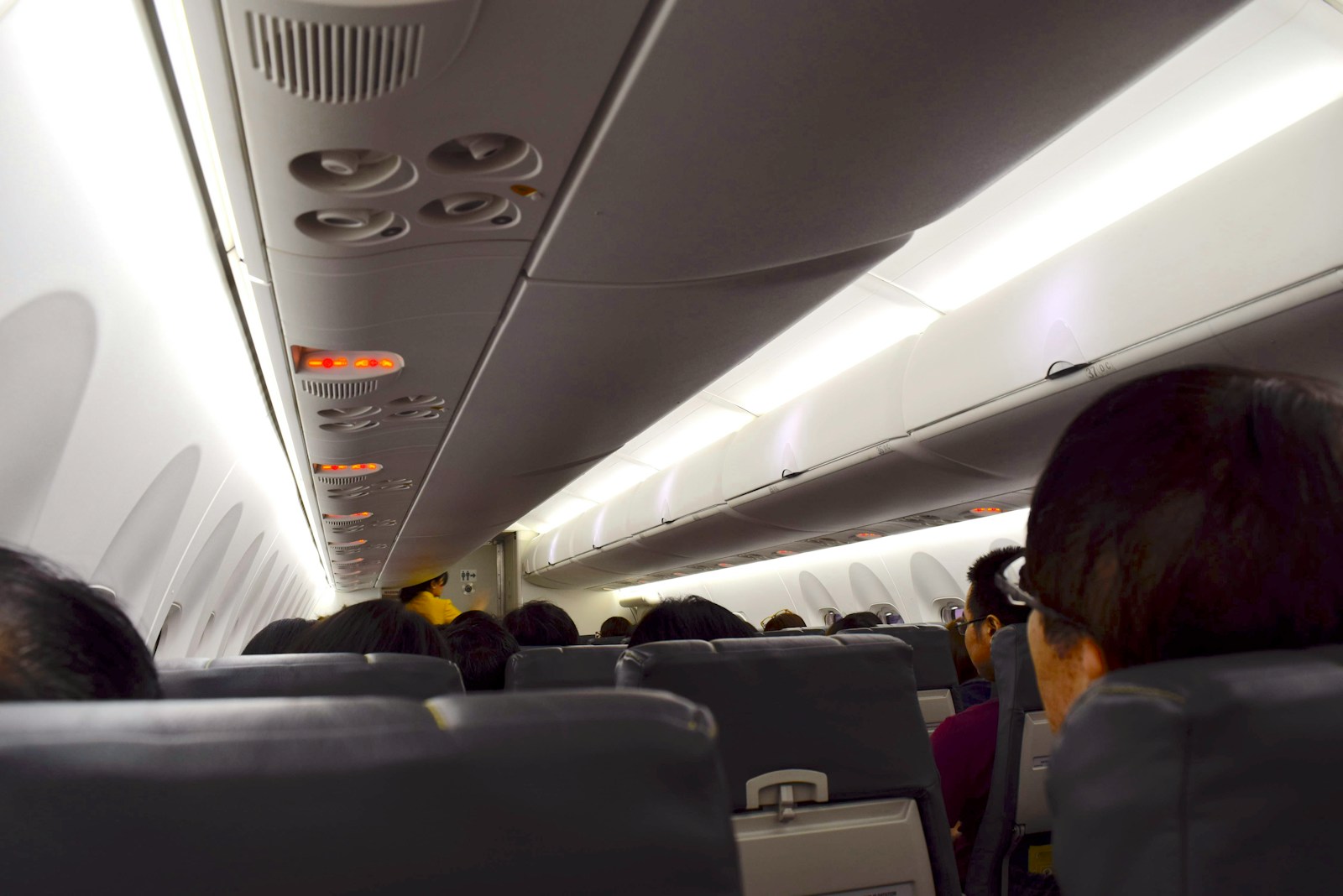
Then came the line that turned a minor inconvenience into an instant classic: he said I should’ve finished faster. Not “Sorry!” Not “Oh my gosh, did I spill something?” Just a breezy, backwards recline and a gentle scolding, like I’d missed a deadline on an in-flight snack assignment.
The moment the seat started coming back
It happened the way these things always do—quietly at first, like a chair testing the waters. I felt the seat in front of me nudge backward, and my brain did the quick math: tray table down, food uncovered, drink nearby, knees already negotiating for space. You know that tiny pause where you hope the person will stop at a reasonable angle and everyone can carry on living?
No such luck. The seat kept going, compressing my little dining setup like it was trying to become one with my lap. My cup trembled, my salad shifted, and my fork hovered in midair as I decided whether I should brace the tray, protect the drink, or simply accept that gravity was about to write my travel memoir for me.
“You should’ve finished faster,” he said
I got the first sign of trouble when I heard a faint plastic creak—tray tables make a very specific sound when they’re losing a structural argument. I leaned forward instinctively, trying to keep my meal from getting pinned between the seatback and my stomach. That’s when he turned his head slightly and delivered the comment with total calm, as if we were discussing boarding zones.
“You should have finished faster.” I blinked, mostly because my brain was buffering. There are plenty of bold takes on airplanes, but “eat quicker so I can recline into your food” is a new genre of confidence.
A small chaos, contained (mostly)
To be fair, nothing exploded. There wasn’t a dramatic marinara situation, and the flight attendants didn’t need hazmat gear. But my tray was definitely wedged at an angle that suggested the plane had hit a pocket of weird etiquette turbulence.
I did what a lot of people do in these moments: I tried to solve it quietly, like maybe the laws of physics and politeness could be renegotiated. I gently pushed the tray forward, then back, then stared at the seat in front of me like it might develop empathy. The man stayed reclined, apparently satisfied that the matter had been settled by my failure to speed-run lunch.
Passengers nearby noticed, but everyone went into “airplane mode”
The people around us clocked it, because humans are very good at sensing awkwardness at 35,000 feet. I caught one sympathetic glance from across the aisle—an expression that said, “I saw that, and I also don’t want to be involved.” Another passenger did the classic headphone adjustment, the universal signal for “I’m not here.”
And honestly, I get it. Airplanes are like tiny social experiments where everyone’s trying to be comfortable without setting off a chain reaction of conflict. Still, it was strange how quickly a clearly unreasonable moment can become something everyone silently agrees to ignore.
The unspoken rules of reclining (and why they keep failing)
Reclining is one of those airplane debates that never dies because it lives at the intersection of “I paid for this seat” and “we’re all trapped together.” Technically, the seat reclines, so people feel entitled to use it. Practically, the timing matters—especially during meal service when trays are down and drinks are out.
Most seasoned travelers follow a loose code: check behind you, recline slowly, and maybe wait until the meal trays are collected. It’s not a law, but it’s a social contract that keeps everyone from wearing their beverages. When someone ignores it, you don’t just lose space—you lose the sense that we’re all cooperating in this mildly uncomfortable group project.
What I did next (and what you can do if it happens to you)
I took a breath and went for the simplest approach: I asked him—politely—to raise the seat a bit until I finished eating. Not a speech, not a scolding, just a calm request with the tray as evidence. He gave me a look that suggested I was inconveniencing his spine, but he did inch forward enough for me to salvage the situation.
If you ever find yourself in a similar mid-bite seatback takeover, a few options tend to work. First, ask directly and clearly: “Could you sit up while I’m eating? My tray’s out.” If that doesn’t land, call a flight attendant—this is exactly the kind of low-level conflict they’re trained to defuse without turning it into a scene.
And if you’re trying to avoid confrontation altogether, you can sometimes protect your setup by moving the drink away and holding the tray steady as the seat comes back. It’s not fair that you’d have to, but it can prevent a spill while you decide what to do. The key is not to silently accept something that’s making your space unusable—especially when a simple reset solves it.
Why the comment hit harder than the recline
Seats recline. People are tired. Bodies ache, knees hurt, and flying can feel like being folded into a carry-on. I can understand the impulse to lean back and claim a little comfort.
But the “you should’ve finished faster” part is what lingered. It took a normal, solvable inconvenience and added a layer of blame—like my lunch was the problem, not his timing. It’s a weird little power move, the kind that makes you wonder how someone navigates grocery store aisles or elevator doors.
The bigger picture: tiny manners matter in tiny spaces
Air travel has gotten more efficient in some ways and more cramped in others, which means small choices carry extra weight. One person reclining at the wrong time can ripple into spills, arguments, and a whole row feeling tense for hours. The cabin doesn’t give us much room, so courtesy ends up doing the heavy lifting.
Maybe that’s why stories like this resonate. It’s not just about a seatback—it’s about the moment you realize you’re sharing a narrow slice of space with someone who’s acting like they’re the only passenger on board. And if nothing else, it’s a reminder to recline like you’re living in a society, not auditioning to be a human paperweight.
More from Willow and Hearth:
Leave a Reply