Air travel has a funny way of turning everyday manners into a high-stakes social experiment. You’re sealed in a narrow tube, everyone’s a little tired, and suddenly the smallest things—like a too-loud video or an elbow that keeps drifting—feel enormous. This week, one passenger’s story struck a nerve online after a mid-flight conflict escalated from mild annoyance to full-blown “are you kidding me?” energy.
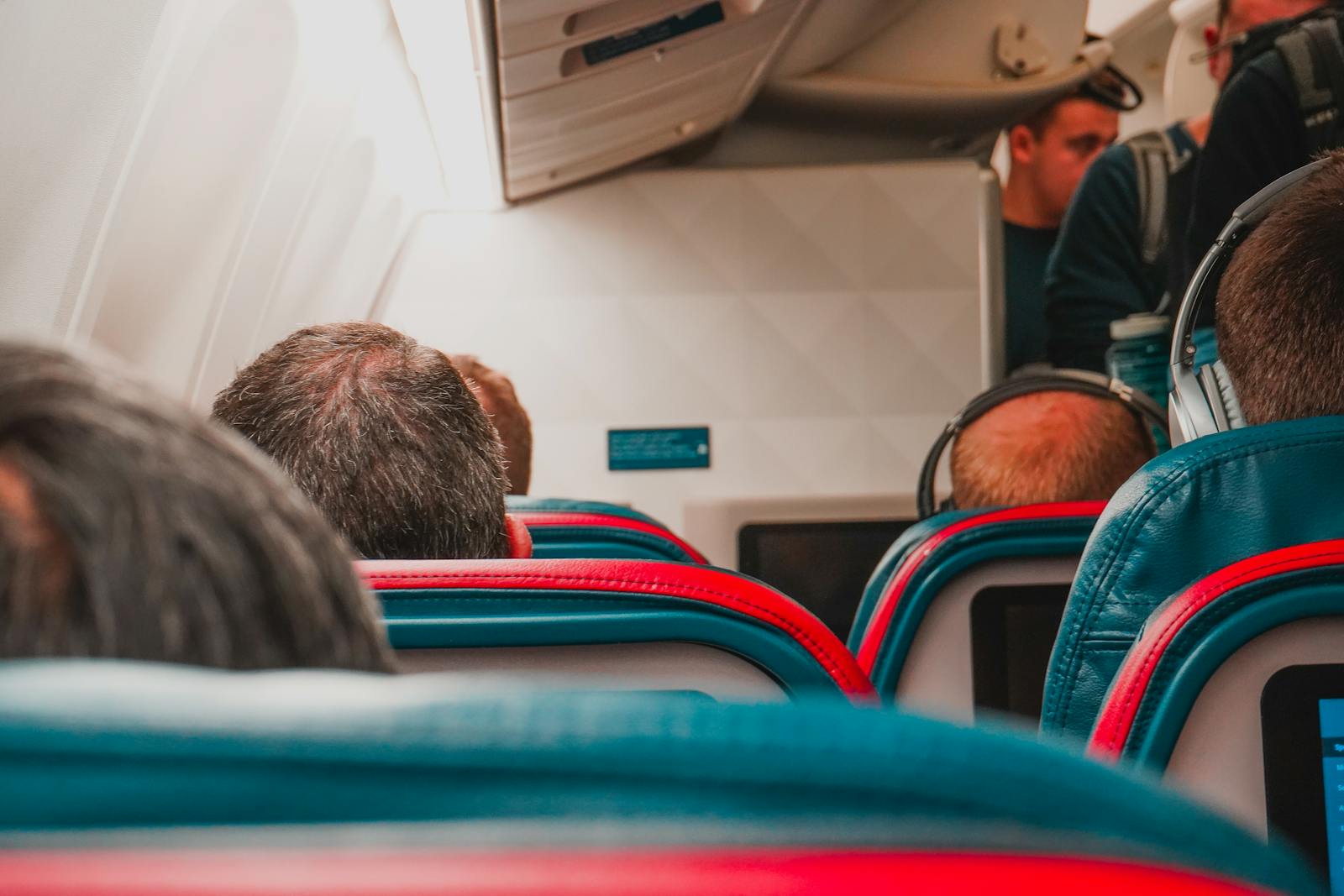
The complaint was simple: the person sitting behind them treated their seatback like a personal footrest for nearly three hours. And when asked to stop, the response wasn’t apologetic or even neutral—it was the kind of line that makes you blink slowly and reconsider humanity. “Relax and enjoy the flight,” the rear passenger reportedly said, as if having someone’s socked feet nudging your seat is a complimentary in-flight service.
The moment it turned from “small bother” to “constant tapping”
According to the account, it didn’t start with a dramatic kick. It was more like the steady pressure of someone repeatedly pushing against the back of the seat, shifting, stretching, and settling in like they were trying to get comfortable in their living room. Only this living room had tray tables, turbulence, and a strict no-shoes-on-the-furniture vibe.
At first, the passenger in front tried to ignore it—the classic strategy many travelers use when they’re not sure if something is intentional or just awkward airplane physics. But over time, the contact kept happening, and the rhythm of it became impossible to tune out. You can tolerate a one-off bump; it’s the repeated “thump… slide… thump” that turns your nervous system into a smoke alarm.
The polite request (and the not-so-polite reply)
When the front passenger finally turned around and asked if the person behind could stop putting their feet on the seat, they expected an “Oh, sorry” and maybe a quick repositioning. That’s usually how these tiny mid-flight disputes go—someone gets called in, everyone remembers they’re in public, and peace returns. Instead, the response reportedly landed with the force of a tray table snapping shut.
“Relax and enjoy the flight.” It’s a line that sounds almost soothing until you realize it’s being used as a dismissal. In the retelling, it came off less like advice and more like a command: accept the discomfort, stop making it awkward, and let me do what I want.
Why seatback footrests feel so personal
There’s a specific kind of irritation that comes from someone touching your seat repeatedly—because it’s not just “your space,” it’s the one tiny boundary you’re allowed to control for a few hours. When that boundary keeps moving, it feels invasive, even if it’s technically just a piece of molded foam and fabric. Also, you can’t exactly relocate your spine to a quieter seat.
Then there’s the mental math: Are they doing this on purpose? Are they unaware? If I say something, will it turn into drama? Airplanes are already stressful, and conflict-avoidance becomes a survival skill. The problem is that staying quiet can quietly turn you into an unwilling participant in somebody else’s comfort plan.
What other travelers say is “normal” (and what’s not)
Anyone who flies semi-regularly has a list of unwritten rules: don’t hog the armrests like you own them, don’t play audio without headphones, and please don’t treat the cabin like your bedroom. Most people also agree that feet belong on the floor, not on seatbacks, not on armrests, and definitely not sneaking between cushions like a weird little toe cameo. There’s a reason flight attendants sometimes have to make announcements that sound like they were written for toddlers.
To be fair, planes are cramped, and people stretch. Legs cramp, knees ache, and some seats are designed like medieval posture devices. But “I’m uncomfortable” doesn’t translate to “I get to use your seat as my furniture.” If you need to move, you ask, you adjust within your own space, or you take a quick walk when it’s safe.
How to handle it without turning the aisle into a courtroom
Frequent flyers often recommend a simple escalation ladder: start polite, stay calm, and don’t debate. A quick turn with a neutral line—“Hey, could you please keep your feet off my seat? It’s bumping me”—usually works on reasonable people. The key is to state what’s happening and what you need, without narrating their character flaws.
If they brush you off (or hit you with the “relax” line), you don’t have to keep negotiating. That’s where a call button can be your best friend. Flight attendants deal with seat-kicking, space disputes, and general cabin chaos all the time; they’re trained to intervene in a way that doesn’t escalate the situation—or at least tries not to.
Why “relax” is the fastest way to make someone not relax
“Relax” is one of those words that almost never works when someone’s genuinely uncomfortable. It can feel patronizing, like the other person has decided your experience isn’t valid. And on a plane—where you’re already stuck, tired, and possibly dehydrated—it can land as a tiny power move.
There’s also the absurdity factor. If someone’s feet are literally on your seat, you’re not imagining the problem. You’re reacting to a real physical sensation. Telling someone to enjoy the flight while actively making it less enjoyable is a bit like splashing water on someone and recommending they stay dry.
Airlines and cabin etiquette: what’s actually enforceable
Most airlines don’t have a “no feet on seatbacks” sign printed on the safety card, but they do have broad behavior policies about not disturbing other passengers. Flight attendants generally have discretion to ask someone to stop a behavior that’s impacting others, especially when it involves physical contact, cleanliness, or repeated disruption. And yes, feet on shared surfaces checks all three boxes.
In practice, the cabin crew’s response often depends on timing and tone. If it’s a persistent issue, it’s reasonable to ask for help sooner rather than later. You’re not “being difficult” for wanting to sit without feeling like your seat has developed a heartbeat.
The bigger takeaway: we’re all stuck in here together
Stories like this spread because they hit a universal nerve: the feeling that you’re trying to be decent in a tight space while someone else acts like the rules don’t apply. Most passengers aren’t looking for perfection—just basic consideration. And honestly, a quick “Sorry about that” can fix almost anything at 35,000 feet.
If you’re the person behind someone and you’re tempted to stretch in creative ways, take a second and look at what you’re touching. If it’s not yours, it’s probably not a footrest. And if you’re the person in front dealing with unwanted seatback contact, you’re not asking for luxury—you’re asking for the minimum: a seat that doesn’t come with surprise feet.
More from Willow and Hearth:
Leave a Reply