The basement was supposed to be the boring part of the house: concrete floor, a humming furnace, a few boxes nobody’s opened since 2019. Then someone noticed it—an odd, rectangular outline under layers of paint, like a door frame that had tried to disappear but never fully pulled it off. Up close, you could see the faint bevel of trim and a shadow line where a jamb used to meet the wall.
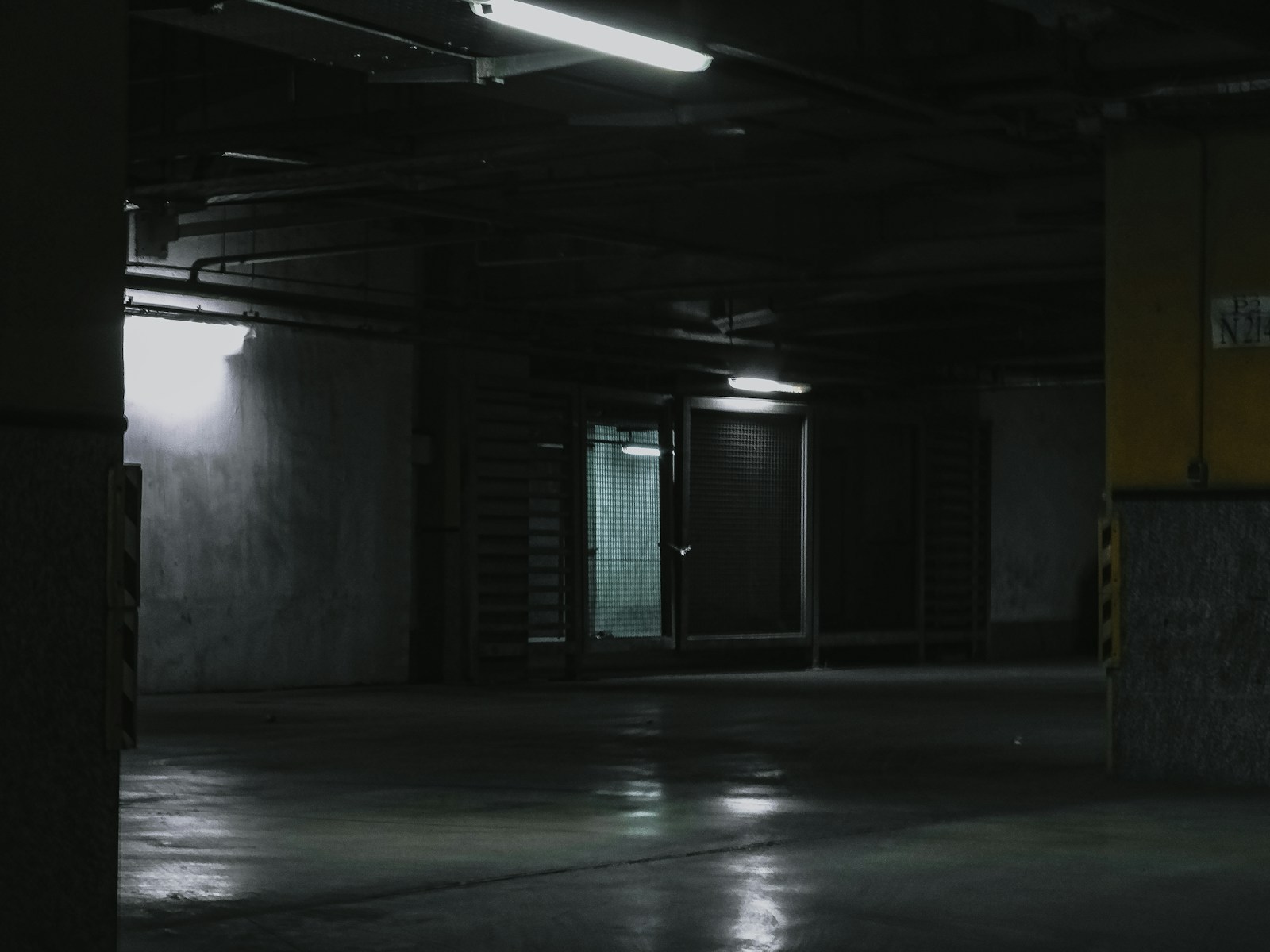
It’s the kind of discovery that instantly rearranges your priorities. Suddenly, that stack of holiday decorations isn’t the most interesting thing down there. A painted-over door frame is basically a house whispering, “Hey… remember me?”
A door that isn’t a door anymore
The “frame” sits along a finished section of basement wall—drywall over studs, the usual. The paint is thick and a little glossy, suggesting multiple coats over the years, and the edges of the rectangle are slightly raised. In a few spots, the paint has cracked in thin lines that trace what looks like old trim.
There’s no knob, no hinges, no latch plate—nothing obvious. But the proportions are right: roughly door-width, door-height, and placed where a doorway would make sense in a basement layout. It doesn’t look like a random patch job; it looks like someone intentionally erased an opening.
The floor plans don’t back it up
Here’s the twist: the home’s floor plans show nothing there. Not a room, not a closet, not even a weird little nook that might’ve been walled off later. On paper, that section is just a straight wall line, clean and uncomplicated, as if it’s always been that way.
That mismatch—physical evidence versus official drawings—is what turns a quirky find into a real head-scratcher. Either the plans are incomplete, or the basement has a history that never made it into the nice, tidy documents. And if you’ve ever dealt with old houses, you already know which one is more likely.
How this kind of thing happens (without involving ghosts)
Before anyone starts drafting a screenplay, there are several completely normal reasons a door frame might get sealed and painted over. Basements are frequently remodeled in phases: a storage area becomes a workshop, a workshop becomes a laundry room, and suddenly the “extra door” is inconvenient or doesn’t meet code. Walling it up is often faster than redesigning everything around it.
It could also be as simple as ownership changes and shifting needs. Maybe the previous owner wanted a larger finished space and removed a small partitioned room. Or maybe a doorway led to utilities, plumbing access, or an old coal chute that no longer served a purpose.
So what might be behind the wall?
If there really was a room, it could’ve been a cold storage area—common in older homes, especially before modern refrigeration was everywhere. Some houses have “root cellar” style spaces, tucked behind basements walls for consistent temperature. A door would’ve been practical, and later owners might’ve sealed it once it felt outdated or damp.
Another possibility: it wasn’t a “room” in the living-space sense at all. It could’ve been access to a crawlspace, a chimney cleanout, a sump area, or a small mechanical alcove that got rerouted. Basements are full of unglamorous necessities, and they often get hidden once finishing work begins.
And yes, there’s always the chance it was a stairwell or secondary entrance that was removed. Some older homes had exterior basement entrances, and when those get eliminated—due to water intrusion, security concerns, or landscaping changes—the interior access sometimes gets sealed too. The outline of a door can linger like a fossil.
Why the plans might not show it
Floor plans aren’t always a perfect snapshot of reality. Depending on when and why they were created, they might reflect a renovated state rather than the original design. Real estate listing plans, for example, often simplify layouts and can skip utility spaces or oddball features.
Even “official” documents can lag behind renovations. Permits may have been filed without detailed interior diagrams, or changes may have been done without permits at all (which is far more common than anyone likes to admit). In older houses, records can be missing, inconsistent, or based on hand-drawn updates that never captured every wall move.
A neighbor’s favorite question: “What’s the story?”
Once word gets out that there’s a maybe-door in the basement, people suddenly become very interested in your home’s backstory. Neighbors start mentioning things like, “Did you know the Johnsons used to…” or “My uncle said that basement used to be…” It’s part helpful, part neighborhood mythology, and honestly, it can be both entertaining and surprisingly informative.
If the house is older, a quick chat with longtime residents can reveal a lot. People remember renovations, floods, family additions, and the era when everyone stored coal or canned goods. Sometimes the most reliable floor plan is an 80-year-old memory delivered over a mailbox conversation.
What homeowners are doing next
The responsible approach is to treat the discovery like an investigation, not a demolition project. Homeowners are first looking for non-destructive clues: tapping along the wall to listen for hollow spots, checking for odd temperature differences, and inspecting the baseboards and ceiling lines for subtle changes. A stud finder can also reveal whether the framing behind the outline differs from the rest of the wall.
People are also checking for practical red flags. If there are electrical outlets nearby, they’ll want to know where the wiring runs before cutting into anything. And if the wall could be load-bearing—or if there are duct lines and plumbing nearby—it’s wise to bring in a professional before turning curiosity into a costly surprise.
The “please don’t just smash the drywall” safety notes
Basement walls are a greatest-hits album of things you don’t want to hit with a saw. Electrical lines, gas pipes, water lines, and HVAC ducts can all be routed in ways that make no sense to modern eyes. There’s also the chance of mold, moisture damage, or old materials that require careful handling.
If the home is older, there’s an added layer of caution around lead paint and asbestos-containing materials. That doesn’t mean panic—it means testing and smart planning. A small inspection hole in the right place, done safely, can tell you more than a weekend of aggressive DIY ever will.
Curiosity meets practicality
For now, the painted-over frame is doing its job: it’s turning an ordinary basement into a conversation piece. It’s also a reminder that houses evolve, sometimes messily, and paperwork doesn’t always keep up. Whether it leads to a forgotten storage room, a sealed utility nook, or simply proof of a past remodel, it’s a rare kind of find—mysterious, but still very human.
And if it turns out there’s nothing behind the wall but studs and insulation? Well, you still get a great story and a new baseline for what “normal” looks like in your basement. Plus, you’ll never look at a fresh coat of paint the same way again.
More from Willow and Hearth:
Leave a Reply