It started the way most modern neighborhood storylines do: with a totally normal question that somehow lands like a plot twist. I was pulling the trash bins back up the driveway when my neighbor, the one who always knows when the mail carrier is running late, leaned over his hedge and asked, “Hey… everything okay? I haven’t seen your husband’s car anymore.”
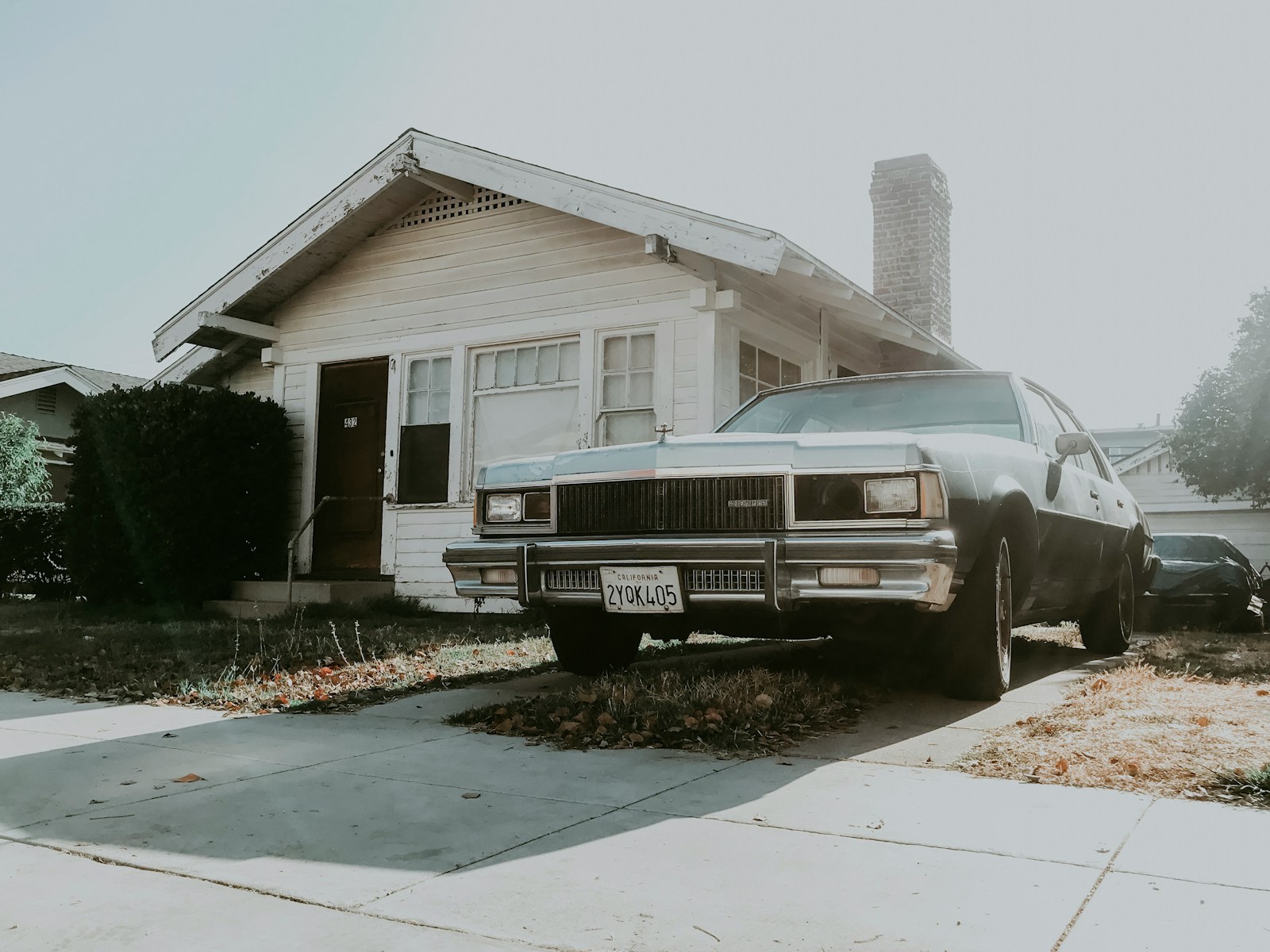
Then he lowered his voice a notch and added, “Are you two… getting divorced?” Not in a dramatic, gossip-column way—more like he was asking if our recycling schedule had changed. Still, it stopped me cold, because I hadn’t realized our marriage had become visible through vehicle patterns.
The missing car that launched a thousand assumptions
Here’s the part that makes it feel like a local-news segment: my husband’s car wasn’t “gone” in the cinematic sense. He’d been commuting differently—carpooling some days, working late on others, and recently parking around the corner because of some construction and a neighbor’s oddly territorial cones.
But from the sidewalk, it looked like a clean disappearance. And in suburban logic, a missing car equals a missing person, which equals a missing marriage. Apparently, the driveway is our relationship status update, and we’ve been posting less.
When quiet turns into a headline
I laughed—because what else do you do when someone suggests divorce while you’re holding a banana peel and yesterday’s mail? “No,” I told him, “we’re not divorcing. He’s just… not parking there right now.”
My neighbor nodded like he was absorbing breaking news, but he didn’t look fully convinced. That’s when I realized something that stuck with me the rest of the day: our silence had become the loudest thing about us. Not arguing, not posting, not being visibly couple-y in the front yard—it was being interpreted as a sign that something was wrong.
The new neighborhood “relationship radar”
We all like to think we’re invisible in our own lives, but neighborhoods have a strange kind of collective awareness. People notice patterns: who walks the dog, who leaves for work at 7:12, whose porch light always flickers, whose teenager has mastered the art of the dramatic car door slam.
And couples? Couples are basically public infrastructure. When your usual rhythms change, it’s like the streetlight went out—people don’t know why, but they notice it on the way home.
Why people ask (and why it’s not always about gossip)
To be fair to my neighbor, his question wasn’t cruel. It was nosy, yes, but it also had a hint of concern—the kind that comes from living near someone long enough to recognize their “normal.”
Sometimes people ask because they want to help, or because they’ve been through something similar and don’t know how to say, “Hey, if life’s hard right now, I get it.” Other times they ask because their brains hate uncertainty and they’d like to file your situation into a neat folder labeled “Resolved.”
The awkward truth: we have been quieter
After that hedge-side conversation, I walked inside and replayed it while unloading groceries. And if I’m honest, we have been quieter lately—not in a “we’re done” way, but in a “we’re tired and busy and our conversations are mostly about logistics” kind of way.
No big fights. No dramatic exits. Just two people who love each other but have been moving like coworkers on a shared project called Life: pay the bills, schedule the dentist, remember the birthday party gift, try to get enough sleep.
How everyday stress looks from the outside
From inside the house, that kind of season feels normal—maybe not ideal, but familiar. From outside the house, it can look like distance. You stop eating on the porch together, you stop waving at the neighbors at the same time, and suddenly your driveway becomes a rumor generator.
It’s strange, but it makes sense. People can’t see your private “we’re fine,” so they fill in the blanks with whatever story they’ve seen before.
The “car as emotional barometer” theory
I didn’t plan to become someone who analyzes marriage through parking habits, but here we are. A car being absent is weirdly symbolic: it suggests someone isn’t coming home, or isn’t expected, or doesn’t belong there anymore.
And when you pair that with a couple who isn’t visibly chatting outside or hosting friends as much, the narrative practically writes itself. The truth is simpler: sometimes your husband’s car is around the corner because he didn’t want to play cone Tetris after work.
What I told my husband (and how he reacted)
That night I told my husband what happened, and he stared at me like I’d just informed him we were trending online. “Because of the car?” he said, half laughing, half offended on behalf of his perfectly innocent parking choices.
Then he paused and said, “Have we seemed… off?” Not as an accusation—more like a gentle check-in. It wasn’t a crisis conversation, but it was the kind of moment that reminds you how easily two people can drift into autopilot without noticing.
A small reset, prompted by a nosy question
We didn’t respond by making a grand romantic gesture or posting a couple’s photo as proof of life. We just did something smaller and better: we talked. Not about schedules, not about errands—about how we’ve been feeling, what’s been hard, what we miss, what we need more of.
And yes, the next day he parked in the driveway again, partly because it was easier and partly because it made us laugh. Nothing like a rumor about your marriage to inspire a practical decision.
What this says about modern privacy
There’s a weird tension right now between wanting privacy and being constantly observed—if not online, then by the tiny audience of the street. You don’t owe anyone a performance of happiness, but it’s also true that humans read cues, and our routines are cues.
When you go quiet, people interpret it. Sometimes they’ll interpret it wrong. Sometimes they’ll interpret it in a way that reveals more about their fears than your reality.
The gentle takeaway hiding in the humor
I keep thinking about that phrase: I didn’t realize our silence was that loud. It’s funny because it’s about a car, but it’s also true in a deeper way—silence can be misread, even when nothing is “wrong.”
So if you ever find yourself on the receiving end of a neighbor’s accidental investigative journalism, maybe take it as a moment to check in, not panic. And if your spouse’s car disappears from the driveway, just know: the neighborhood will notice, and apparently, they have theories.
More from Willow and Hearth:
Leave a Reply