It came out the way these things always do: casually, almost like a throwaway line. We were standing in the kitchen, half-paying attention to the toaster, when my teen said she practices smiling in the mirror before school so nobody asks if she’s okay. Not because she’s trying to be dramatic, she added, but because questions feel exhausting.
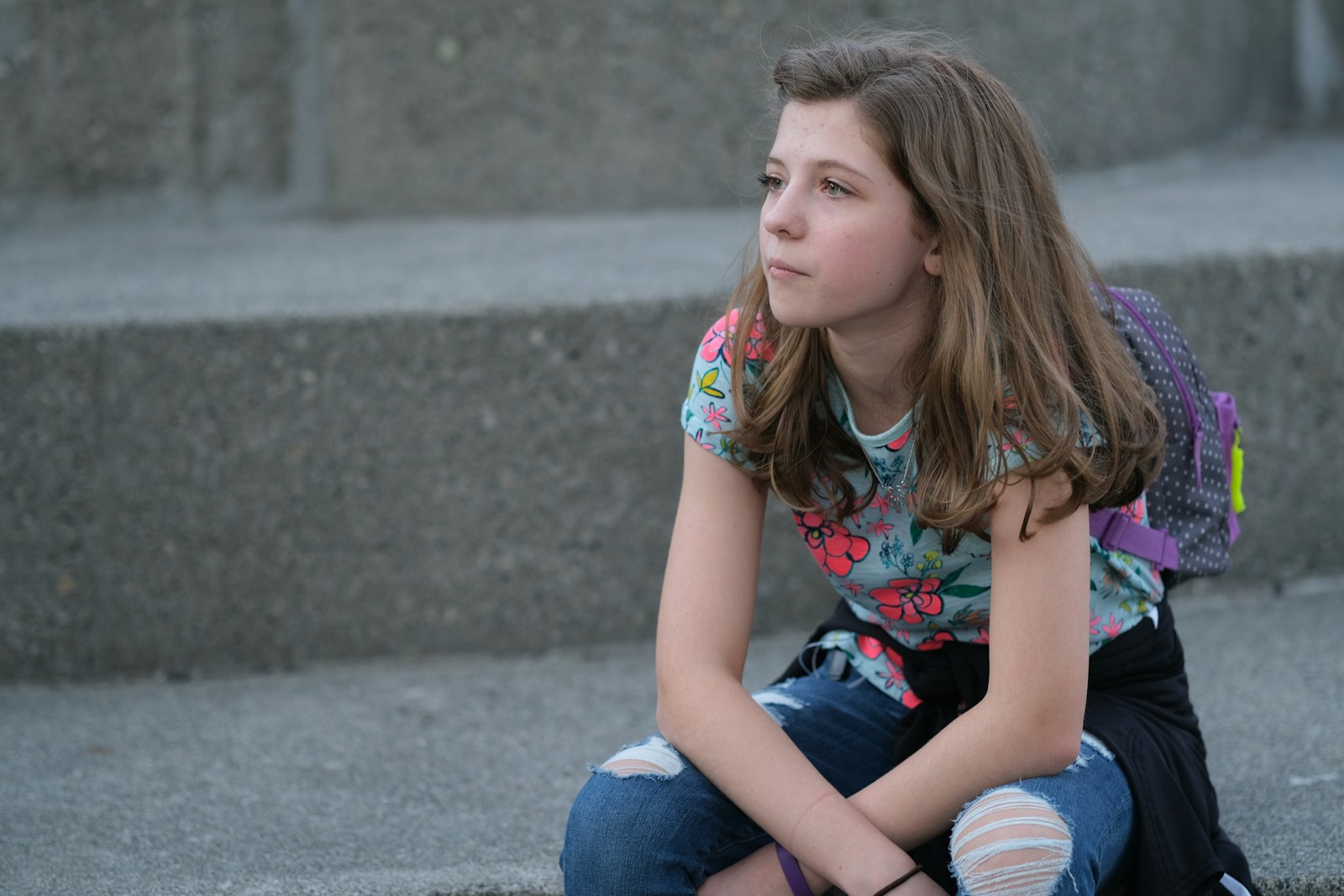
I laughed for half a second—more out of surprise than amusement—and then my stomach dropped. Because that’s not a “quirky teen habit,” is it? That’s a kid doing PR for her own face before first period.
A quiet confession that landed loud
Parents are told to look for signs: slipping grades, isolation, mood changes, the classic “door slams more than usual” data set. But this didn’t look like a sign. This looked like competence.
She still got up on time. She still did her homework. She still made jokes, rolled her eyes at my music, and asked for money for iced coffee like it’s a constitutional right.
And yet, here was this small, sharp detail: she’d learned that her face might betray her, so she trained it. That’s not just self-consciousness. That’s self-management on a level most adults don’t even realize they’re doing.
The “I’m fine” economy at school
Middle school and high school run on a weird social currency: don’t be too much, don’t be too needy, don’t be the person who makes the vibe “serious.” If someone asks, “Are you okay?” you’re supposed to say yes—even if you’re not—because honesty can cost you energy you don’t have. It invites follow-up questions, pity, gossip, or worse, the feeling that you’ve made it everyone’s job to manage your emotions.
So a lot of kids get good at looking okay. Not “happy,” exactly—just neutral enough to avoid attention, upbeat enough to keep the day moving. It’s camouflage, and it works until it doesn’t.
What parents miss when kids look “high-functioning”
The hardest part was realizing I’d been reassured by her ability to keep it together. I took her routines as proof she was fine. But routines can also be a coping system, a way to keep the wheels from coming off.
When she told me about the mirror, I flashed back through a hundred moments I’d filed under “teen stuff.” The extra time in the bathroom. The sudden quiet in the car. The way she’d answer “good” with a little too much speed, like she was swiping away a notification.
None of those were emergencies on their own. Together, they sounded like someone working hard to not be noticed.
The smile as armor (and why it made me sad)
A practiced smile isn’t vanity. It’s strategy. It says, “I can’t afford to open this door right now.”
Kids do this for all kinds of reasons: social anxiety, academic pressure, friendship drama, body image stuff, family stress, or just the heavy, unnamed fog that sometimes shows up in adolescence. Sometimes it’s not even one big thing—it’s ten small things that won’t stop piling up.
And there’s a specific sadness to realizing your child is spending their mornings preparing to be unreadable. I wanted to go back in time and tell her she doesn’t have to perform okay for anyone, especially not at 7:12 a.m. in fluorescent bathroom lighting.
What I said (and what I wish I’d said first)
My first instinct was to fix it. To ask a thousand questions, offer solutions, schedule appointments, email counselors, make a spreadsheet, take away her phone, give back her phone—parents can really spiral if you hand us a problem and a calendar.
Instead, I tried to keep my voice steady and said, “That sounds really tiring.” She looked relieved in that tiny way teens do when you don’t immediately turn their confession into a lecture. Then I asked, “Is it more that you don’t want people to worry, or that you don’t want to talk about it?”
She shrugged, then said, “Both.” Which is basically the teen version of a full memoir.
Small moves that helped more than big speeches
We didn’t solve everything in one talk. But we did a few small things that made the next conversations easier. I told her she didn’t have to give me the whole story at once, and that I wasn’t going to punish honesty with panic.
We came up with a simple check-in system that didn’t require a TED Talk at the kitchen counter. If she said “I’m at a 4,” I’d know it was a rough day; if she said “7,” I’d relax a little. Numbers gave her privacy and gave me information, which is honestly the dream arrangement for both parties.
I also started asking better questions. Instead of “How was school?” (which invites “fine”), I tried “What part of today took the most energy?” or “Who did you sit near at lunch?” The goal wasn’t interrogation—it was making it easier for real details to slip through.
When it’s time to bring in more support
Some kids just need a parent who notices and a little more room to breathe. Other kids need professional support, and that’s not a failure or a dramatic escalation—it’s just another kind of help. If your teen is regularly masking sadness, anxiety, or stress, it can be worth talking to a pediatrician, a school counselor, or a licensed therapist.
And if your child ever mentions self-harm, not wanting to be here, or feeling unsafe, that’s an immediate “drop everything” moment. In the U.S., you can call or text 988 for the Suicide & Crisis Lifeline. If you’re elsewhere, local emergency services or crisis lines can help in the moment.
The strange gift of being told the truth
Later that week, I caught myself looking at her face in the morning and wondering which version I was getting: the mirror smile or the real one. Then I realized something else—she told me. She didn’t have to. She could’ve kept perfecting the smile and let me stay comfortably unaware.
That’s the part I’m holding onto. Not the guilt (though, yes, it showed up), but the fact that she trusted me with a quiet, heavy detail. It meant she wanted something to change, even if she didn’t know what or how.
So now I’m trying to be the kind of parent whose house doesn’t require a performance. Not a house where everyone is cheerful all the time—more like a house where you can look tired and no one makes it weird. Where you can say, “I don’t want to talk,” and still feel held. Where a kid doesn’t have to practice being okay before walking out the door.
More from Willow and Hearth:
Leave a Reply