Travel blogger Alyssa Ramos was midway through a multi-country Middle East trip in early March 2026 when airspace over Kuwait shut down, commercial flights were canceled, and her itinerary turned into an evacuation plan. Stranded with a small group of companions, Ramos posted a series of videos and statements to Instagram accusing the U.S. government of offering “no help” as she tried to leave the country by land, drawing millions of views and amplifying a wave of frustration from Americans caught in the region during an escalating military crisis.
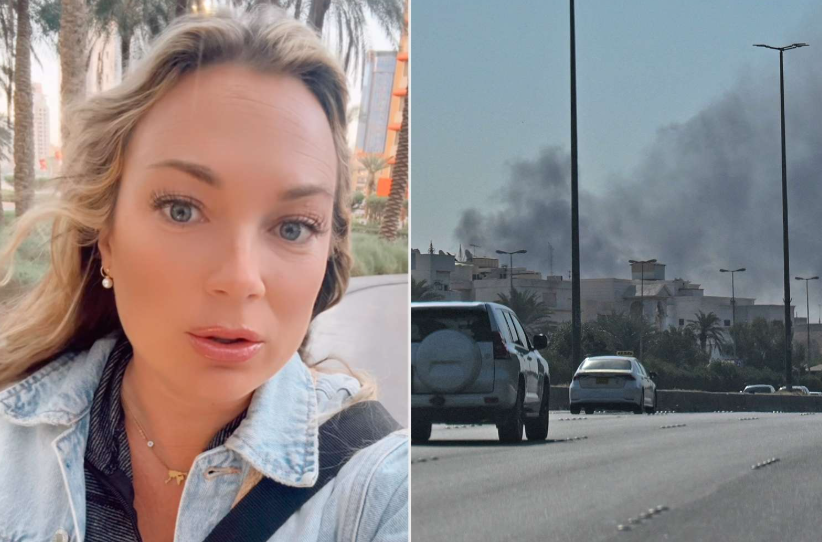
Her account has struck a nerve not because influencer travel content rarely goes wrong, but because it illustrates a gap that thousands of ordinary travelers are also experiencing: U.S. officials have told Americans to leave the Middle East immediately, yet consular offices in several countries have suspended routine services, leaving citizens to arrange their own departures through canceled flight schedules and uncertain border crossings.
How a bucket-list trip became an emergency exit
Ramos, who runs the blog My Life’s a Travel Movie and has built a following of more than 300,000 across platforms, arrived in Kuwait as one stop on a longer route through the Gulf. According to her Instagram posts in early March 2026, the group’s plans unraveled quickly after a surge in U.S. military strikes against targets in Iran and allied militias prompted regional airspace restrictions. Kuwait’s international airport suspended departures, and Ramos found herself grounded in a country she had expected to transit in a day or two.
She said she followed standard crisis advice: contact the nearest U.S. Embassy and monitor official channels. But in multiple posts, she described hours of unanswered calls and form-letter responses directing her to commercial options that no longer existed. “The U.S. government has been no help,” she wrote in one caption, setting off a public debate about what stranded citizens can realistically expect from consular services during a fast-moving conflict.
“Hear the siren behind me”: broadcasting a crisis in real time
The most striking moment came in a video posted to Instagram, where Ramos narrates her situation while emergency sirens blare in the background. “Hear the siren behind me,” she says, visibly shaken, describing what she calls a “hail of drone strikes” and a constant “wail of sirens” as she moves between shelters and transportation hubs. The footage is a jarring departure from the polished reels that typically fill her feed.
In the same clip, she says that “escaping has not been easy,” recounting failed attempts to board flights and confusion about which borders remained open. She notes that other Americans and foreign nationals around her were equally desperate for reliable information. By broadcasting the ordeal as it unfolded, Ramos turned her personal emergency into a real-time window for followers into conditions on the ground that official advisories describe only in general terms.
“We are self-evacuating by land”
With no commercial flights available, Ramos announced on Tuesday, March 4, 2026, that her group had decided to drive out of Kuwait. “We are self-evacuating by land,” she wrote, adding, “Please send us positive vibes.” She did not specify the exact route for security reasons but indicated they were heading toward a neighboring country where flights were still operating. In follow-up posts, she described the group trying to stay calm and move together even as reports of additional strikes filtered in through their phones.
The phrase “self-evacuating” resonated widely because it underscored a reality the State Department’s own language implies but rarely states so bluntly: in most overseas crises, U.S. citizens are responsible for arranging their own departure. Government-organized evacuations are rare and typically reserved for embassy personnel and their families.
What U.S. advisories actually say
Ramos’s frustration is easier to understand when measured against the official guidance available at the time. A travel advisory issued on March 3, 2026, raised Kuwait to “Level 3: Reconsider Travel,” citing the threat of armed conflict and a Notice to Airmen affecting flights. It urged Americans to avoid nonessential travel and warned that conditions could deteriorate quickly, but it focused on personal decision-making rather than promising organized departures.
The tone sharpened the next day. A Security Alert dated March 4, 2026, stated that the Department of State had ordered the departure of non-emergency U.S. government employees and their families from Kuwait “due to the threat of armed conflict.” It told American citizens plainly: “Americans should leave Kuwait now.” Critically, the alert also announced that the U.S. Embassy in Kuwait would suspend routine consular services until further notice, which helps explain why Ramos and others reported being unable to reach staff for individualized help.
That suspension is significant. When an embassy stops processing routine cases, walk-in assistance, phone inquiries, and even emergency passport services can be delayed or unavailable. For travelers who assumed the embassy would function as a lifeline, the gap between expectation and reality was immediate and disorienting.
Thousands of Americans caught in the same bind
Ramos’s experience is one high-profile example of a much larger problem. CBS News reported that Americans trying to evacuate from multiple Middle Eastern countries described being unable to reach anyone at consulates or State Department hotlines. “Could not get a hold of anyone,” one traveler told the network. The State Department said on Tuesday that more than 9,000 Americans had returned to the U.S. from the region over the preceding several days, a figure that reflects large-scale movement but says little about the chaos individuals faced while trying to secure seats on the limited flights still operating.
The State Department also issued broader warnings covering Iraq, Lebanon, Qatar, Saudi Arabia, the United Arab Emirates, and Yemen, urging Americans in all of those countries to depart due to what it called “serious safety risks.” The scope of those advisories signals how stretched U.S. consular resources are across the region, and it adds context to complaints from travelers who say their calls went unanswered.
The bigger question Ramos’s story raises
For years, the State Department has maintained that it cannot guarantee evacuation of private citizens from conflict zones and that travelers should have contingency plans before visiting high-risk areas. That policy is clearly stated on enrollment forms for the Smart Traveler Enrollment Program (STEP), which Ramos encouraged her followers to sign up for during the crisis. But the gap between that fine print and the expectation many Americans carry — that their government will come get them — remains wide.
Ramos has not yet posted a detailed update confirming her group’s safe arrival in another country, though her continued activity on Instagram suggests she has reached a location with stable internet access. Her ordeal, broadcast to hundreds of thousands of followers in real time, has already reshaped how many of them think about travel insurance, contingency routing, and the limits of consular protection. Whether it changes anything about how the U.S. government responds to the next crisis is a different question.
More from Willow and Hearth:
Leave a Reply