In early 2024, a social media post claiming a woman traveled abroad for a Brazilian butt lift and returned home missing a kidney ricocheted across platforms, racking up millions of views. No credible news organization has verified the specific incident. But the reason it spread so fast is that the fear it describes is not imaginary. Exposed by lawsuits, disciplinary records, and grieving families, a trail of real cases shows that patients who cross borders for cheaper cosmetic procedures sometimes come back with injuries, unauthorized surgeries, or worse.
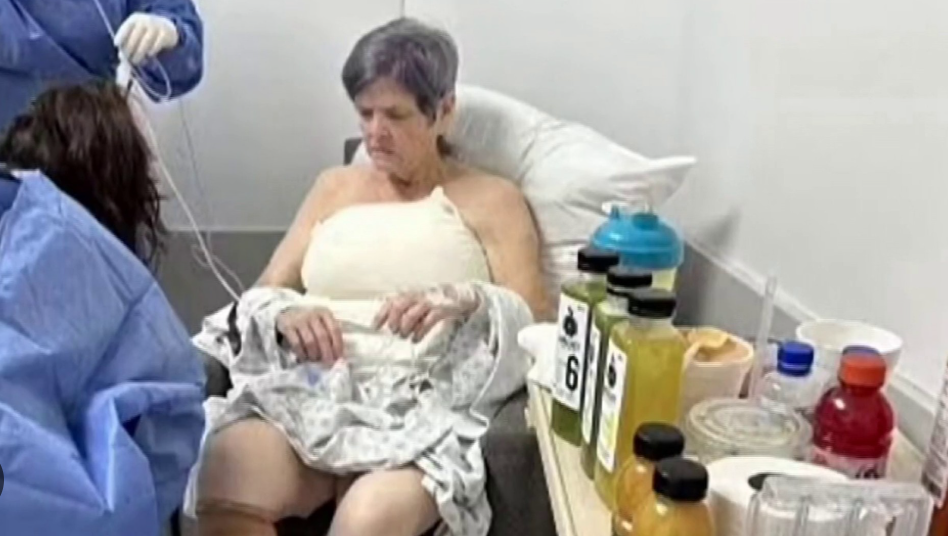
Their stories share uncomfortable similarities: rock-bottom prices advertised on Instagram and TikTok, clinics that operate in regulatory gray zones, and patients who find themselves powerless once they are sedated in a foreign operating room. What follows draws on court filings, local and national news investigations, and firsthand accounts to map the pattern behind the headlines.
The Washington state patient who woke up with procedures she never approved
Kimberly McCormick traveled from Washington state to a clinic in Mexico expecting a specific body-contouring plan. She says she woke from anesthesia to discover she had received breast implants and a Brazilian butt lift she had never agreed to. In video interviews, McCormick has called the experience “a nightmare all the way around.”
According to a Fox 13 Seattle report, McCormick says a clinic staff member took her bank card and ran a $2,500 charge she did not understand or authorize. “I don’t know what they charged me for, but it was $2,500,” she said, adding that the team later tried to frame the extra procedures as something she had requested.
A NewsNation investigation into the same case reported that McCormick was left seeking emergency reconstruction back in the United States. A GoFundMe campaign was set up to help cover the cost of corrective surgery. The trip that was supposed to save money on elective work ended up costing far more, both financially and psychologically, than the original procedure would have at home.
When a routine surgery leads to a missing kidney
The viral kidney claim resonated in part because there is legal precedent for exactly that kind of loss. In a case reported by The Washington Post in 2018, a patient named Maureen Pacheco went into a Pennsylvania hospital for back surgery and left without one of her kidneys. Surgeon Ramon Vazquez had encountered a mass during the spinal procedure, mistook it for a tumor, and removed it. It was her kidney.
Vazquez later agreed to pay a $3,000 fine tied to the incident, and a related civil lawsuit was settled. The case did not involve cosmetic tourism or Mexico. Regulators treated it as a grave surgical misjudgment, not organ theft. But it illustrates a point that applies across borders: catastrophic organ loss does not require criminal intent. Poor imaging, rushed consent, and high-volume surgical settings can produce the same result.
Amanda Gill’s death and unresolved organ trafficking questions
The most unsettling intersection of medical travel and organ trafficking fears involves Amanda Gill, a 41-year-old British woman who traveled to Mexico in 2018 and died there. Her family has said that Mexican forensic services investigated whether the condition of her body pointed to illegal organ trafficking, according to accounts shared by her relatives on social media. No official findings from that investigation have been made public as of April 2026.
It is important to note that Gill reportedly traveled for medical treatment, not necessarily a cosmetic procedure. Still, her case has been widely circulated alongside BBL warnings because it crystallizes a fear that haunts families of medical tourists: that a patient who dies far from home, without local advocates, may be especially vulnerable to exploitation. Without a confirmed outcome from the Mexican investigation, the case remains unresolved, but the questions it raised have not gone away.
A pattern of deadly outcomes in Mexican cosmetic clinics
McCormick’s ordeal and Gill’s death are not isolated. A string of fatalities and near-fatal complications in Mexican cosmetic surgery clinics has been documented by U.S. news outlets over the past several years.
In April 2021, the San Diego Union-Tribune reported that Keuana Weaver died during a procedure at a Tijuana plastic surgery clinic in the Las Torres medical complex. Officials later questioned whether the facility met minimum legal requirements to operate.
In a separate case covered by Fox LA, a family said Mexican authorities told them the doctor who operated on their sister had previously been involved in another patient’s death. The family went public to warn others about clinics that may not be fully vetted by local regulators.
A Dallas-area woman identified in television coverage as Laura traveled to Mexico for plastic surgery and returned to the United States on life support with brain damage. Her family has said they never imagined a cosmetic trip could end in a coma.
Why patients keep going, and what drives the risk
The cost gap is enormous. A Brazilian butt lift in the United States typically runs between $8,000 and $15,000, according to the American Society of Plastic Surgeons. In parts of Mexico, the Dominican Republic, and Colombia, the same procedure can be advertised for $3,000 to $5,000, sometimes including travel and recovery housing. Social media has supercharged demand: clinics and medical tourism brokers market directly to prospective patients through Instagram reels and TikTok testimonials, often featuring before-and-after photos with no mention of complication rates.
Josef Woodman, CEO of Patients Beyond Borders, a research firm that tracks global health travel, told WKRG in 2023 that “people are seeking alternatives” and that oversight in countries like Mexico varies widely, leaving some clinics subject to far less enforcement than patients assume. A CNBC analysis from the same year found that medical tourism was booming despite inflation and pandemic-era disruptions.
The U.S. Centers for Disease Control and Prevention advises patients considering surgery abroad to verify a facility’s accreditation through international bodies such as Joint Commission International, to confirm the surgeon’s credentials independently, and to have a follow-up care plan with a provider at home before leaving the country. Those steps do not eliminate risk, but they narrow the gap between the glossy marketing and the reality of an operating room thousands of miles from home.
More from Willow and Hearth:
Leave a Reply