A man watches his boyfriend lean in and kiss a woman at a party. It lasts a few seconds. Months later, he is still replaying those seconds on a loop, scrutinizing the angle of his boyfriend’s head, the placement of his hands, the half-smile afterward. The kiss itself was brief. The aftermath has been anything but.
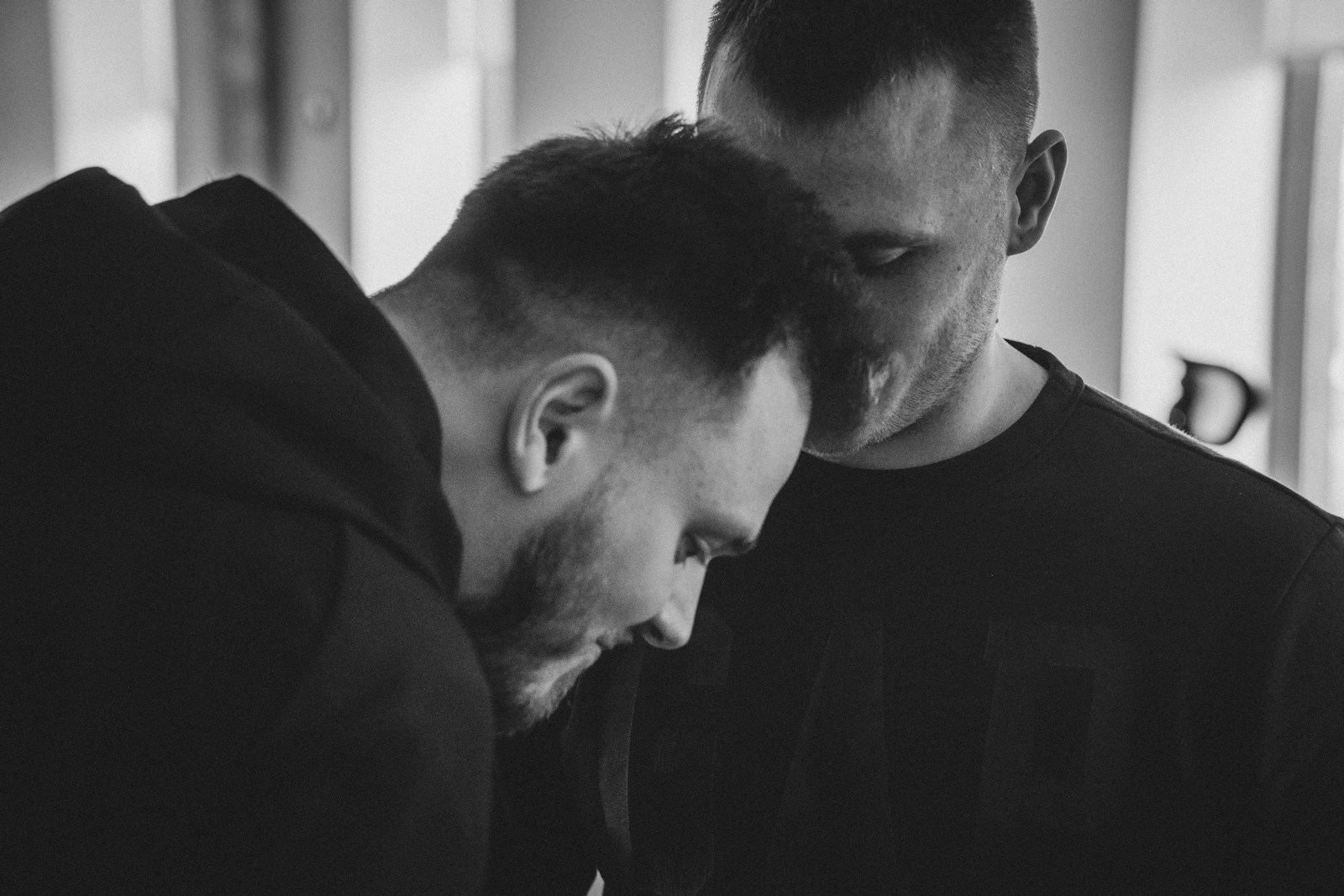
His situation is specific, but the pattern is not. When a partner crosses a physical line, even once, the person who witnesses it can find themselves trapped between two problems: the betrayal itself and the way their own mind refuses to let it rest. For queer men in particular, a same-sex partner kissing someone of a different gender can activate a deeper fear, one tangled up in bisexual erasure, cultural messaging about “real” relationships, and the question of whether they were ever their partner’s first choice.
The Loop: When Processing Becomes Obsession
Therapists who specialize in obsessive-compulsive disorder recognize a pattern sometimes called “real event OCD.” It is not a separate diagnosis in the DSM-5, but a clinical shorthand for a well-documented presentation: a person fixates on something that genuinely happened and then cannot stop interrogating what it means. The problem is not the memory. The problem is that the brain treats the memory like an unsolved equation, running the same calculations over and over without reaching an answer.
According to clinicians at the OCD Specialists center, people caught in this cycle often engage in compulsive reassurance-seeking: asking their partner repeatedly whether the kiss meant anything, feeling momentary relief, then doubting the answer within minutes. They may also perform mental rituals, such as reviewing old text messages for hidden meaning or comparing their partner’s behavior before and after the event, searching for proof of a pattern.
For the man replaying his boyfriend’s kiss, this can look like spending hours each day reconstructing the scene, cataloging every interaction his boyfriend has ever had with women, and interpreting neutral moments as warning signs. The relief never sticks because OCD does not respond to evidence. It responds to certainty, and certainty is the one thing it never allows.
The Specific Sting: Sexuality, Identity, and Biphobia
Not all kisses carry the same weight, and context matters. A queer man watching his boyfriend kiss a woman is not just processing a boundary violation. He may be confronting a fear that sits at the intersection of personal insecurity and cultural prejudice: the stereotype that bisexual men will inevitably leave a male partner for a woman because heterosexual relationships are easier, more accepted, or more “real.”
Research on bisexual stigma supports the idea that these fears are not invented from nothing. A 2019 study published in the Journal of Bisexuality found that bisexual individuals in same-sex relationships frequently encounter skepticism from both heterosexual and gay communities about their commitment, and that their partners often internalize those doubts. The cultural script is persistent: bisexuality as a phase, a hedge, or a stepping stone back to heterosexuality. When a kiss with a woman actually happens, it can feel like that script just got confirmed.
This does not mean the fear is accurate. It means the fear has roots that go deeper than one party and one moment of poor judgment. Addressing it honestly requires naming the biphobia, not just the kiss.
What the Internet Gets Wrong (and Right)
Online relationship forums tend to flatten these situations into binary verdicts. In widely discussed Reddit threads, commenters routinely label any kiss with someone else as unambiguous cheating and advise the hurt partner to leave immediately. In one thread, a woman described learning her boyfriend had kissed someone else while they were together, and the top responses framed the only self-respecting option as a breakup. In another, a wife described a husband who kissed a woman, stayed in contact with her, and met her again after using drugs, and commenters treated the ongoing contact as evidence of a pattern, not a one-time lapse.
The internet is not wrong that a kiss can be cheating. Most couples therapists agree that any physical intimacy outside the agreed boundaries of a relationship qualifies as a betrayal, regardless of duration or sobriety. Where online advice falls short is in its refusal to distinguish between a single boundary violation and a sustained pattern of deception, and in its inability to account for the specific dynamics of queer relationships, mental health, and identity.
Anonymous forums are useful for feeling less alone. They are poor substitutes for professional guidance.
ERP: Sitting With the Worst-Case Scenario
For someone whose reaction to a partner’s kiss has crossed from grief into obsession, Exposure and Response Prevention (ERP) is the most evidence-supported treatment. ERP, a form of cognitive-behavioral therapy, asks the person to confront the feared thought directly, without performing the rituals that temporarily ease anxiety.
In practice, this might mean working with an OCD specialist to write a detailed script about the worst possible interpretation of the kiss: that the boyfriend is not fully committed, that he will eventually leave for a woman, that the relationship was never what it seemed. The person then reads or listens to the script repeatedly, sitting with the discomfort instead of neutralizing it by seeking reassurance or checking their partner’s phone. Over time, the anxiety response weakens, and the person becomes better able to distinguish between legitimate relationship concerns and OCD-driven catastrophizing, a process described in detail in clinical guidance on ERP for real event OCD.
This does not mean the kiss was acceptable. ERP is not about excusing a partner’s behavior. It is about reclaiming the ability to think clearly enough to decide what to do about it.
The Two Conversations That Actually Matter
Recovery from this kind of breach usually requires two separate but related conversations. The first is between the partners: Did the boyfriend violate an agreed boundary? Does he take responsibility without minimizing? Is he willing to be transparent going forward, and does his behavior after the kiss match his words? If he continues contact with the woman, deflects questions, or frames the hurt partner’s reaction as overblown, the kiss is no longer the main problem. The pattern is.
The second conversation is internal, and sometimes it needs a therapist’s help. The man who witnessed the kiss has to ask himself which parts of his distress are proportional responses to a real betrayal and which parts are being amplified by OCD, by biphobia he may have absorbed, or by older wounds that predate this relationship. Both kinds of pain are real. They just require different tools.
The kiss happened. It was a few seconds long, and it changed the shape of the relationship. Whether it becomes the final chapter or a painful turning point depends on whether both partners are willing to do the slow, uncomfortable work of honesty, and on whether the man who cannot stop replaying it can find a way to hold the memory without letting it run his life.
More from Willow and Hearth:
Leave a Reply