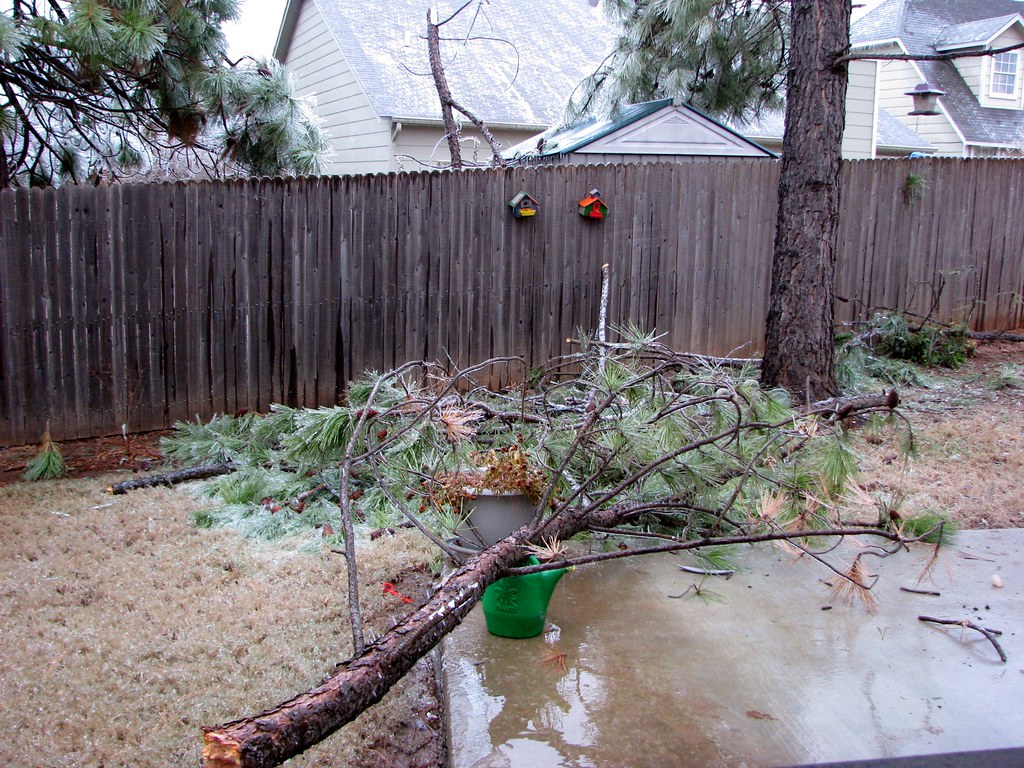
A homeowner is dealing with a frustrating situation that many property owners face: a neighbor’s massive oak tree that continuously drops branches, leaves, and debris into his yard. Despite multiple requests to trim the overhanging limbs, the neighbor has refused to take action, leaving the homeowner to clean up the mess and worry about potential damage to his property.
The homeowner has the legal right to trim the tree branches back to his property line, but he cannot go onto the neighbor’s property or damage the tree itself. This common dispute highlights the tension between property rights and neighborly relations, especially when one person’s tree becomes another person’s problem.
The situation raises questions about what homeowners can legally do when tree branches hanging over property lines cause ongoing maintenance headaches. While the falling acorns and leaves might seem like minor annoyances, they represent a broader issue about property boundaries and the responsibilities that come with conflicts involving trees and neighbors.
Understanding Your Rights and Responsibilities
Property law establishes clear rules about tree ownership based on trunk location, and homeowners facing disputes over overhanging branches need to understand what actions they can legally take. The situation becomes more complex when trees straddle property lines as boundary trees.
Who Really Owns the Tree?
The law across all states follows a straightforward principle for determining tree ownership: whoever has the trunk on their property owns the tree. It doesn’t matter if most of the canopy hangs over a neighbor’s yard or if the roots spread extensively into adjacent properties.
The homeowner dealing with the dropping oak branches has no ownership claim if the trunk sits entirely on his neighbor’s land. This means he can’t force the neighbor to remove the tree or make major alterations to it without permission. The trunk location determines everything when it comes to ownership rights.
Property owners remain responsible for trees rooted on their land, including addressing branches that extend into a neighbor’s yard. However, this responsibility doesn’t always translate into a legal obligation to trim healthy trees just because a neighbor requests it.
Can You Trim Overhanging Branches?
The frustrated homeowner does have one clear legal right: he can trim tree branches up to the property line without asking permission. The trimming must stay within specific boundaries though.
He cannot step onto the neighbor’s property to do the work, and he cannot harm the tree’s health in the process. If cutting the overhanging branches would damage or kill the oak, he risks liability for destroying his neighbor’s property. Professional arborists typically recommend specific cutting techniques to avoid injuring trees.
The homeowner must also dispose of the trimmed branches himself. He can’t throw them back onto the neighbor’s property or demand reimbursement for removal costs unless local ordinances specifically provide for it.
Common Problems With Boundary Trees
When a trunk straddles the property line, the tree becomes a boundary tree owned jointly by both property owners. Neither neighbor can remove or significantly alter a healthy boundary tree without the other’s consent.
These shared ownership situations often create the most contentious disputes. Both owners share maintenance responsibilities and costs, but they must agree on major decisions like trimming or removal. One co-owner who unilaterally cuts down a boundary tree faces potential legal action from the other owner.
Unhealthy boundary trees present different considerations. Local ordinances may require property owners to maintain safe trees and remove hazardous ones, giving both neighbors potential recourse through municipal enforcement.
How to Deal With Neighbor Tree Disputes
Branch disputes between neighbors often start small but can escalate quickly without proper communication and professional guidance. Homeowners facing similar situations have several options, from direct conversation to bringing in tree experts who can assess whether limbs pose actual dangers.
Talking It Out With Your Neighbor
The first step in any tree dispute involves a direct conversation between neighbors. Many homeowners find that their neighbors simply aren’t aware branches are causing problems until someone points it out. A polite discussion about falling branches can sometimes lead to a quick resolution without legal involvement.
The conversation works best when it stays factual rather than accusatory. Homeowners can explain specific problems the branches cause, like damage to gutters, roof debris, or safety concerns. Some neighbors agree to split costs for trimming when they understand the situation.
Documentation helps if talks don’t go well. Taking photos of the branches, damage, and where the tree trunk sits relative to the property line creates a record. This evidence becomes important if the situation escalates to legal action later.
When You Need a Certified Arborist
A certified arborist provides professional assessment when neighbors can’t agree on tree issues. These specialists evaluate whether branches actually pose risks or if the tree itself has health problems. Their reports carry weight in disputes because they’re trained to identify structural weaknesses and disease.
Property owners have rights to trim branches that hang over their property line, but they can’t damage the tree in the process. An arborist determines how much trimming the tree can handle without harm. This matters because damaging a neighbor’s tree during trimming can lead to legal liability.
The arborist’s written evaluation becomes crucial documentation if the dispute heads to court. Their professional opinion on whether a tree is dangerous or unhealthy influences how judges view these cases.
Handling Hazardous or Dead Trees
Dangerous trees and dead trees create different legal situations than healthy ones. City governments often intervene when trees become hazardous, since many municipalities have ordinances prohibiting dangerous conditions on private property. Local authorities can order removal or issue fines to property owners who ignore hazardous tree situations.
A dead tree or one with significant decay that threatens neighboring property gives the affected homeowner stronger legal standing. Courts recognize that property owners have responsibilities to prevent foreseeable damage from trees they own. If a neighbor refuses to address a genuinely dangerous situation, the homeowner can file a nuisance lawsuit asking a judge to order action.
Utility companies sometimes help when trees threaten their equipment. Phone or electric companies will trim branches near their lines without homeowners needing to get involved.
What to Do If You Need Professional Help
Professional tree service companies handle both assessment and actual work when disputes reach a critical point. A tree removal might become necessary if the tree is truly dying or poses serious structural risks. These services cost anywhere from a few hundred to several thousand dollars depending on tree size and location.
Homeowners who trim branches themselves must stay on their own property while working. Crossing the property line to access the tree without permission constitutes trespassing, even if the branches hang over. Tree care professionals know these boundaries and work within legal limits.
Legal action becomes the last resort when neighbors refuse reasonable solutions and the tree creates genuine problems. Small claims court handles monetary damages from tree issues, but ordering a neighbor to trim or remove a tree requires filing in municipal court. These cases require evidence that the tree causes actual harm or poses real danger, not just minor annoyance.
Leave a Reply