
Disagreements in relationships don’t start as big problems. They build gradually, shaped by small habits that never quite get resolved in a lasting way. What makes situations like this so relatable is how minor they seem at first, yet how persistent they become when the same issue repeats over and over again without change.
That’s exactly what makes this story stand out. It looks like it’s about laundry, but it quickly becomes clear that it’s really about effort, consistency, and how people respond to small requests over time. When one person keeps handling the extra step and nothing shifts, even something simple can start to feel heavier than it should.
Six Years of Doing the Work
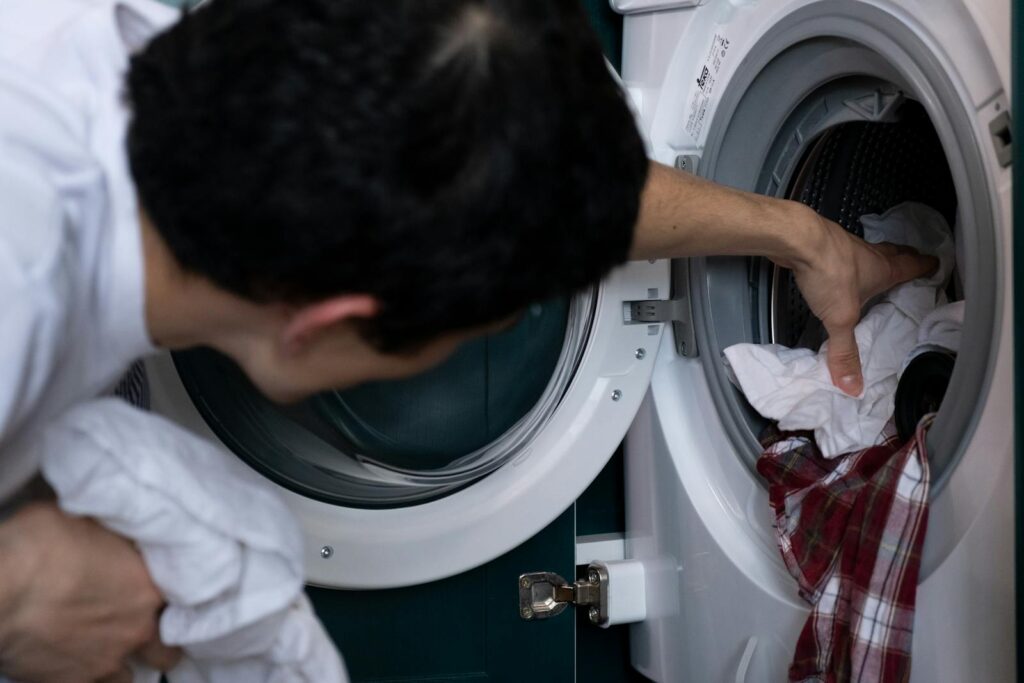
The man at the center of the story explained that he doesn’t mind doing laundry, and in fact, he has taken on almost all of that responsibility in the relationship. He handles the washing, the drying, the folding, and even putting everything away, making it one of the many routines he has quietly absorbed over time.
For a while, that arrangement didn’t feel like a problem. It was just one of those unspoken divisions of labor that naturally develops in long-term relationships, where each person picks up certain tasks and keeps things running without much discussion.
But within that routine, there has always been one small detail that hasn’t changed. His fiancée consistently throws her clothes into the hamper inside out, which means every load of laundry comes with an extra step that only he seems to handle.
When a Small Step Starts to Matter
On its own, flipping clothes right side out isn’t difficult. It takes a few seconds per item, and it’s not physically demanding in any way. However, when that step becomes part of every single load, it stops feeling like a minor inconvenience and starts to feel like an added responsibility.
Over time, repetition is what changes the weight of the task. What once felt like nothing begins to stand out simply because it happens so often, especially when the person doing it knows it could be avoided with a small adjustment.
From his perspective, he is already doing the majority of the work, and asking for one small change doesn’t feel unreasonable. The fact that nothing has shifted after years of mentioning it makes the situation feel less like a habit and more like something that isn’t being taken seriously.
The Plan That Changes the Dynamic
After dealing with the same pattern for years, he started thinking about a different approach. Instead of continuing to flip each item before folding, he considered simply washing, folding, and putting everything away exactly as it comes out of the machine.
That means her clothes would stay inside out in the drawer.
The idea behind it is straightforward. If she wants her clothes right side out, she can flip them herself when she’s getting dressed. At the same time, he recognizes that this approach might come across as passive-aggressive rather than constructive.
That hesitation is what makes the situation more complicated. It raises the question of whether this is a reasonable boundary or just a quiet way of expressing frustration without addressing it directly.
The Twist No One Expected
What made this story take off wasn’t just the relationship dynamic. It was the unexpected detail that washing clothes inside out is actually recommended in many cases, especially for items like jeans and graphic shirts.
Turning clothes inside out can help preserve color, reduce fading, and protect prints during the wash cycle. That means what he has been correcting might actually be the better way to handle laundry from a practical standpoint.
That shift in perspective changed how people looked at the situation. Instead of focusing only on fairness or effort, it introduced the idea that the “problem” might not be a problem at all.
It also reframed the extra step he has been taking. If flipping the clothes isn’t necessary in the first place, then the frustration may come more from expectation than from actual need.
What People Took From It
The responses reflected a mix of practicality and perspective, with many people suggesting that the simplest solution might also be the most effective one. Rather than continuing to correct the habit, they encouraged him to remove the extra step entirely.
I-luv-sloths pointed out,
“Jeans are supposed to be washed inside out.”
Others focused on the division of effort and what responsibilities actually come with doing the laundry.
Bitchshortage wrote,
“Just wash and put them away how they are. She can flip them when she wears them.”
Some commenters emphasized that doing the task doesn’t mean handling every detail attached to it.
Stucklikegluetomyfry explained,
“If you’re doing the laundry, you don’t also have to prep her clothes for her.”
And others questioned whether the issue matters in the long run at all.
Bubbly-Water2229 said,
“Why does it matter how they’re stored? You fix it when you wear it.”
Across all of these responses, one idea kept coming up in different ways. Sometimes the easiest way to resolve a repeated frustration isn’t to change the other person’s behavior, but to stop doing the extra work that keeps the frustration in place.
More from Willow and Hearth:
Leave a Reply