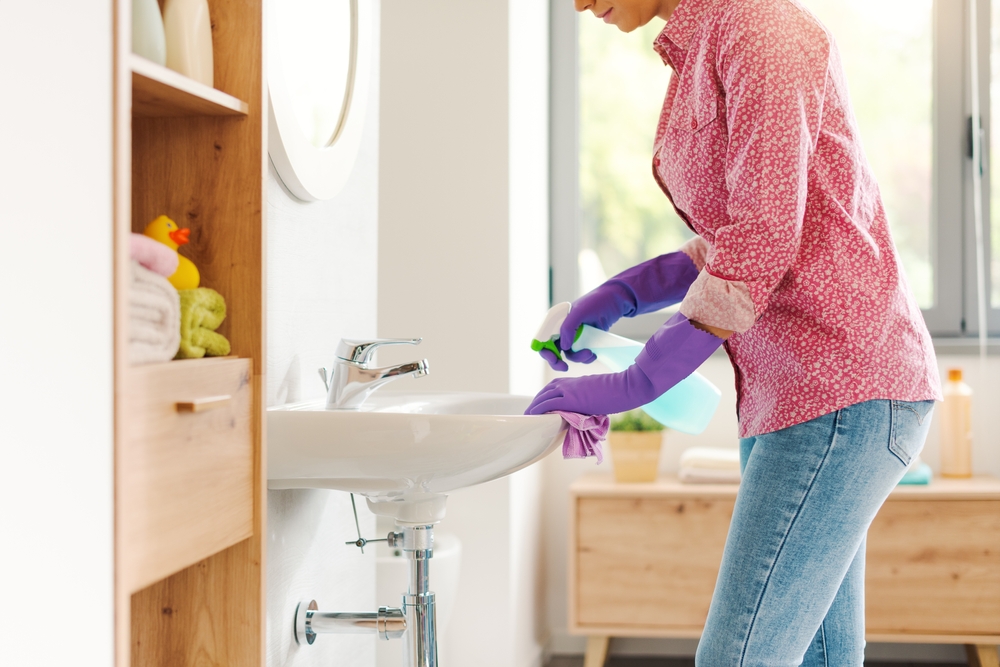
A simple question can sometimes unravel an entire routine people rarely stop to think about. Cleaning habits often feel automatic, passed down through advice, advertising, or just what everyone else seems to be doing. When someone pauses and asks why those habits exist, it creates a moment that feels surprisingly uncomfortable.
That tension is exactly what pulled attention to this discussion. The idea sounds almost too straightforward: if soap is enough for the human body, why wouldn’t it be enough for a bathroom? It’s the kind of logic that makes immediate sense, yet somehow clashes with what many people have always believed.
A Straightforward Question That Challenges Everyday Cleaning Habits
Curiosity sat at the center of the question rather than criticism. The person explained that they already clean their bathroom regularly, using soap to scrub surfaces and maintain basic hygiene. Their routine wasn’t neglectful or careless, which made the question feel more grounded than provocative.
The confusion came from the expectation that bathrooms require disinfecting products. The idea of using harsher chemicals didn’t feel necessary, especially when the space wasn’t being used for anything like food preparation. Closing the toilet lid while flushing added to that sense of control over cleanliness.
Framing the issue this way shifts the conversation from “are you cleaning enough” to “what actually counts as clean.” It highlights how easily routines become rules without much explanation. Once that question is out there, it’s hard to ignore.
Where the Confusion Starts Between Cleaning, Sanitizing, and Disinfecting
A big part of the discussion centered on definitions people rarely think about. Cleaning, sanitizing, and disinfecting often get used interchangeably, even though they serve different purposes. That overlap creates confusion about what is actually necessary in everyday situations.
Regular cleaning removes dirt and reduces the number of germs, which already lowers risk significantly. Disinfecting goes further by killing germs, but it doesn’t necessarily remove grime or buildup. Understanding that difference changes how people view their routines.
That distinction explains why soap often feels sufficient. The physical act of cleaning does most of the work, even without harsh chemicals. Once that idea clicks, the need for constant disinfecting starts to feel less obvious.
The Role of Habit, Marketing, and Perception in Cleaning Routines
People’s expectations around cleanliness are shaped by more than just science. Marketing plays a significant role, often promoting the idea that stronger products equal better results. Over time, that messaging can turn into a kind of default belief.
There’s also a social element tied to how cleanliness is perceived. Maintaining a “perfectly sanitized” space can feel like a reflection of responsibility or care, even when it goes beyond what’s necessary. That pressure can make simpler routines seem inadequate.
Looking at it this way reveals how much of cleaning is influenced by perception rather than need. It becomes less about what actually works and more about what feels reassuring. That gap is where debates like this tend to grow.
When Disinfecting Actually Becomes Necessary
Situations exist where disinfecting makes practical sense. Illness in a household, especially something highly contagious, increases the need to reduce germs more aggressively. Shared spaces and frequently touched surfaces can also raise the level of risk.
Environmental factors can matter as well. Poor ventilation, moisture buildup, and mold growth can push cleaning beyond basic soap and water. In those cases, stronger products can help manage issues that simple cleaning might not fully address.
Framing disinfecting as situational rather than constant makes the idea easier to understand. It shifts from being a default step to something used with intention. That perspective helps balance effectiveness with practicality.
Reactions Show a Split Between Simplicity and Caution
Many responses leaned toward keeping things simple, reinforcing the idea that basic cleaning is enough for most homes. That sentiment came through when what_to_do_what_to_ noted, “You don’t need to disinfect your bathroom. Regular cleaning spray works just fine,” echoing a common perspective in the discussion. It reflects a broader pushback against overcomplicating everyday routines.
Skepticism about excessive cleaning also appeared in how people described certain habits. That tone showed up when EscapeSeventySeven described some cleaning practices as “performative cargo culting,” suggesting that people follow routines without fully understanding them. The phrasing stood out because it captured frustration with unnecessary standards.
At the same time, caution wasn’t completely dismissed. That balance appeared when MsAlyssa pointed out that disinfecting can matter during illnesses like norovirus, while Interesting_West_148 explained the differences between cleaning and disinfecting in more detail. Their input added nuance, showing that while the original question challenged assumptions, the answer wasn’t entirely one-sided.
More from Willow and Hearth:
Leave a Reply