
A lot of cleaning frustrations don’t come from big, overwhelming messes, but from small, stubborn spots that never seem to get properly handled. Those areas quietly build up over time, turning into something you notice every day but avoid dealing with because every attempt just makes things worse. It creates this lingering sense of annoyance that never quite goes away.
That’s what makes simple discoveries like this feel surprisingly meaningful. When something that used to feel like a constant hassle suddenly becomes easy, it doesn’t just fix the mess, it changes your entire mood around it. That shift, from low-grade frustration to relief, is exactly what pulled people into this story.
A Random Moment Turns Into an Unexpected Cleaning Breakthrough
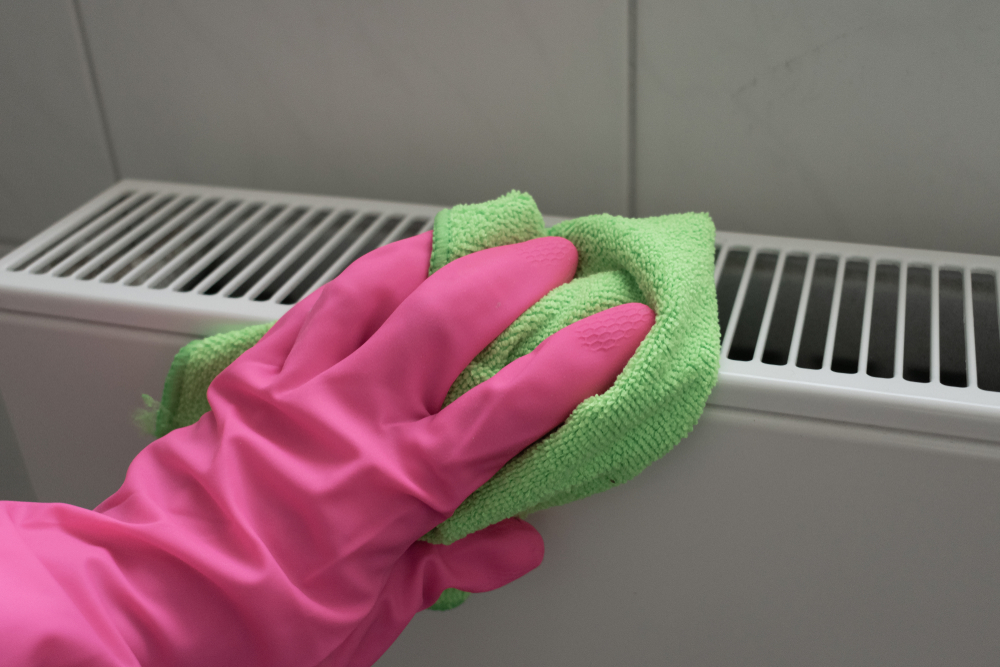
The discovery didn’t come from research or planning, it happened almost by accident. A used dryer sheet was already in hand, and in a passing moment, it was dragged across a dusty baseboard heater without much thought. There was no expectation tied to it, just a casual motion while moving through the room.
Looking down revealed a clean strip cutting through layers of dust and hair that had built up over months. The contrast was immediate and almost shocking, making it clear that something unusual had just happened. It wasn’t a subtle improvement, it was a dramatic difference that demanded attention.
Curiosity took over quickly, leading to a more deliberate attempt to clean the rest of the heater. What could have been dismissed as a fluke turned into a full test, and the results stayed consistent. That’s the moment when a random action became a repeatable method.
Years of Frustration Built Around a Problem That Never Quite Had a Solution
Cleaning baseboard heaters had always been more complicated than it seemed. Traditional methods like vacuuming didn’t just fail to remove dust completely, they often made the situation worse by pushing particles into the air. That created a bigger mess and made the process feel pointless.
Other approaches didn’t solve the problem either. Damp cloths smeared dust into streaks, while flexible dusters improved things slightly but still left particles floating around. Each attempt came with effort but no satisfying result, which made the task easy to avoid.
That avoidance built up over time, turning into a quiet source of guilt. The heaters remained visibly dusty, a constant reminder of something unfinished. Finding a solution wasn’t just about cleaning, it was about finally resolving something that had been sitting unresolved for a long time.
A Quick Test Confirms the Method Works Faster Than Expected
Once the method was applied properly, the results held up across the entire surface. The dryer sheet didn’t scatter dust the way other tools did, it grabbed onto it and held it in place. That difference changed the entire experience from messy to controlled.
Cleaning all the heaters took only a few minutes, which added another layer of surprise. Tasks that usually feel tedious become manageable when they can be completed quickly and effectively. That combination of speed and efficiency made the method stand out.
The success wasn’t limited to one attempt, it worked consistently across multiple heaters. That kind of reliability is what turns a one-time trick into something people actually adopt. It shifted from curiosity to a dependable solution.
Why This Small Discovery Feels Bigger Than It Seems
The impact of this kind of tip goes beyond the specific task. It highlights how small, overlooked tools can solve problems that more obvious methods struggle with. That realization challenges the assumption that cleaning always needs specialized products or complicated techniques.
There’s also something satisfying about reducing effort while improving results. When a task becomes easier and cleaner at the same time, it changes how people feel about doing it. That emotional shift is part of why the story resonates.
Moments like this tend to spread because they’re easy to try and easy to understand. There’s no barrier to testing it, which invites people to experience the result for themselves. That accessibility makes the idea stick.
People Share Their Own Discoveries and Add to the Conversation
The discussion quickly expanded as others added their own insights and variations. That detail came through when LittleBeans5542 pointed out, “The key is that it’s a used dryer sheet, not a fresh one,” highlighting a small detail that made a big difference in how effective the method was. It helped explain why some people hadn’t seen results before.
Others connected the idea to different cleaning uses, showing how versatile the trick could be. That perspective showed up when LeeAllure shared that used sheets work well for bathroom fixtures, noting they’re great for picking up residue and leaving surfaces shiny. It turned one discovery into a broader cleaning strategy.
There was also a sense of excitement and rediscovery throughout the reactions. That feeling came through when meguggs admitted, “I have tried this for years and never knew they had to be used,” capturing how a small missing detail can change everything. Even curiosity played a role, with tqrnadix wondering if static cling was the reason behind the effect, showing how people were trying to understand why it worked as much as they wanted to use it.
More from Willow and Hearth:
Leave a Reply