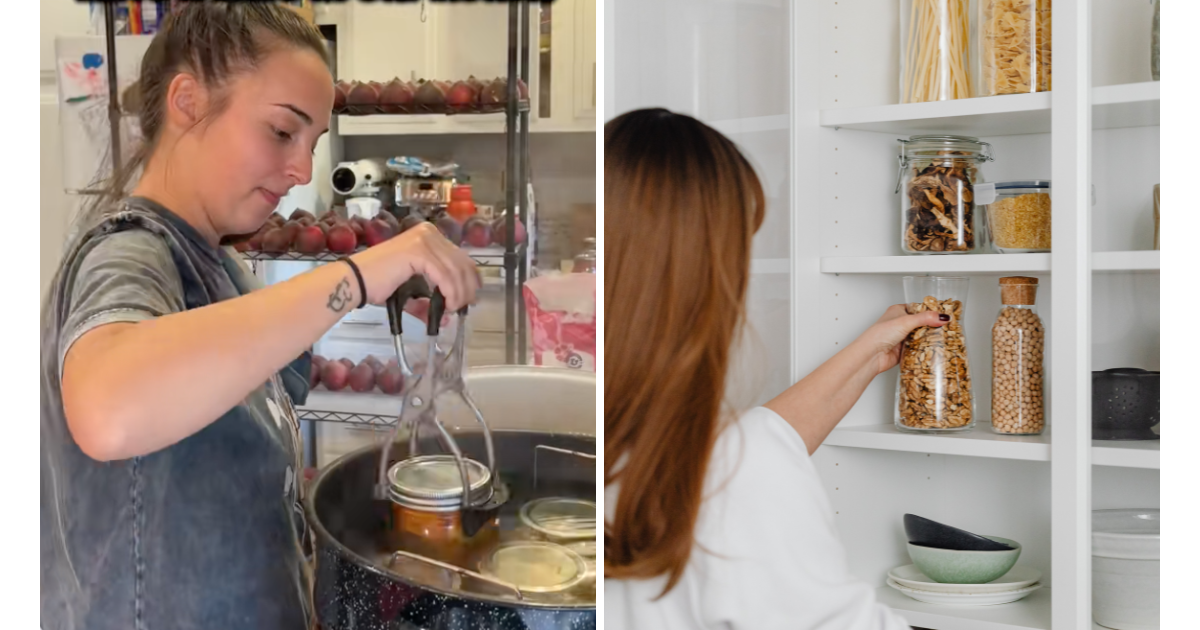
There’s something quietly satisfying about seeing rows of filled jars lined up on a shelf. In a TikTok video, @cara.annejones shares why she takes the time to can and preserve food, and her reasons go far beyond tradition or aesthetics. What might look like an old-fashioned habit turns into something much more practical once she explains how it fits into her daily life.
Her perspective makes the process feel grounded rather than nostalgic. It’s not about recreating the past or following a trend, but about making everyday life a little more stable and intentional. The jars represent planning, care, and a sense of control over things that usually feel unpredictable, especially when it comes to food and expenses.
What the Video Shares
She walks through the reasons she continues to preserve food, starting with something most people can relate to, which is reducing grocery bills. Being able to store what you grow or buy in bulk means fewer last-minute trips and less spending over time. It turns seasonal abundance into something that lasts much longer.
She also talks about knowing exactly what goes into the food her family eats. There’s no guessing about ingredients or worrying about additives, because everything is prepared by hand. That level of control feels especially important when feeding children.
Another point she highlights is food security, which becomes more relevant the more you think about it. Having shelves stocked with preserved meals creates a kind of buffer, so you’re not completely dependent on what’s available at the store. It’s a simple way to feel more prepared without needing anything complicated.
Why It Feels Practical, Not Old-Fashioned
Canning often gets associated with tradition, but the way she describes it feels very current. Rising food prices and unpredictable supply issues have made people more aware of how fragile everyday systems can be. Preserving food becomes less about nostalgia and more about adapting to that reality.
It also fits into how people are rethinking convenience. Instead of relying entirely on packaged options, there’s a growing interest in preparing food in ways that last longer. The effort happens upfront, but it pays off later when meals are already available.
That shift makes the practice feel less like extra work and more like a different kind of planning. It’s about trading a bit of time now for ease later, which is something a lot of people are starting to value more.
The Feeling of Being Prepared
One of the most noticeable themes in what she shares is the sense of reassurance that comes with having food ready. Knowing there’s something already prepared takes pressure off daily decisions, especially on busy or unpredictable days. It removes the question of what’s for dinner before it even comes up.
There’s also a level of independence that comes with it. Relying less on constant trips to the store can feel freeing, especially when schedules are tight or options are limited. It creates a rhythm that feels more self-directed.
That sense of preparedness isn’t dramatic, but it’s steady. It shows up in small ways, like opening a jar instead of rushing to figure something out. Over time, those moments add up.
Why People Are Paying Attention Again
More people are starting to notice practices like this, not because they’re new, but because they’re useful. Skills that once felt optional are becoming more relevant as people look for ways to simplify and stabilize their routines. Canning fits into that shift naturally.
There’s also something appealing about doing something tangible. In a world where so much is digital or temporary, creating something you can store and use later feels different. It’s visible, practical, and directly connected to everyday life.
The video captures that balance between practicality and satisfaction. It shows that the process isn’t just about the outcome, but also about the feeling of being capable and prepared.
Would You Try Preserving Your Own Food?
For some people, the idea of canning might feel like too much effort at first. It takes time to learn and some planning to get started, which can feel like a barrier. But once you understand the benefits, it starts to feel more approachable.
Others might already be doing small versions of it without realizing, like freezing meals or storing ingredients for later. Canning just takes that idea a step further. It’s another way of extending what you already have.
So the question becomes simple. Would you consider putting in the time to prepare food ahead like this, or stick with what feels easier day to day?
More from Willow and Hearth:
Leave a Reply