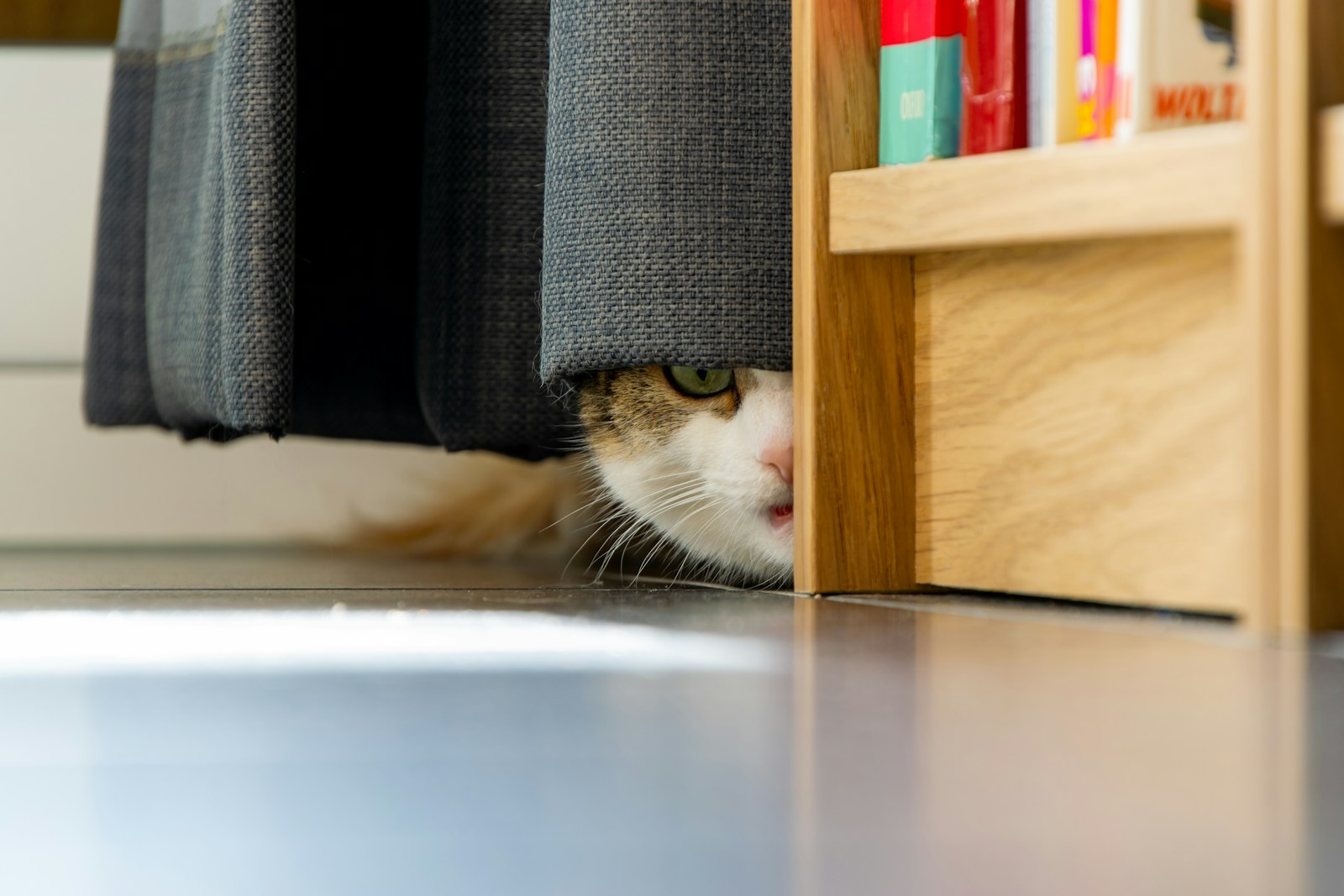
Have you ever noticed your cat suddenly taking a liking to that little nook behind the couch or the space under your bed? One minute they’re basking in the sun, and the next they’re a furry Houdini, disappearing into places you didn’t even know existed. While it might seem like they’re just being their quirky selves, these hiding spots could be a sign they’re feeling a bit uncomfortable. Let’s unpack that, shall we?
Why Cats Hide: The Instinctual Side
Cats have some pretty strong instincts, and hiding is one of them. In the wild, a good hiding spot is essential for avoiding predators and stalking prey. So, even though your cat is now living the plush life with you, those instincts are hardwired. If they’re suddenly seeking refuge in unusual places, it might be their way of saying, “Hey, I need a little more personal space!”
Signs Your Cat’s Hiding Is More Than Just Play
Now, not all hiding is created equal. Sometimes, your feline friend just wants to play a game of hide-and-seek (and let’s be honest, they’re usually the ones seeking). But if your cat is consistently retreating to new hiding spots and seems less social, it’s worth paying attention. Keep an eye out for these signs:
- Changes in Appetite: If they’re skipping meals or grazing less, that’s a red flag. Cats are creatures of habit, and a sudden change in their eating behavior can signal stress or discomfort.
- Less Playful: Is your usually energetic furball now a couch potato? If they’re not engaging in play, it could mean they’re feeling unwell or anxious.
- Vocalization: Some cats are chatty, and if yours has suddenly gone silent or is meowing excessively, take note. It could be their way of expressing discomfort.
Stress and Anxiety: The Feline Factors
Just like us, cats can experience stress and anxiety. Changes in their environment, such as moving to a new home, a new pet joining the family, or even changes in your routine, can throw them for a loop. If your cat seems to be hiding more, think about any recent changes in their life.
Sometimes, it’s the little things, too. Have you had friends over? Or maybe you’ve rearranged the furniture? Cats love their routines, and even a minor shake-up can make them feel uneasy. If you recognize a trigger, give them some extra love and patience.
Health Issues: A Hiding Cat Is a Concerned Cat
Let’s get serious for a moment. If your cat’s hiding is accompanied by other changes like lethargy, vomiting, or unusual bathroom habits, it’s time to put on your detective hat. Health issues can often lead to behavioral changes, and hiding can be a sign that something’s not quite right. It’s best to consult your vet if you notice any concerning symptoms. Better safe than sorry, right?
Creating a Safe Space
So, what can you do to help your cat feel more secure? First, create a cozy spot just for them. Think of it as their little sanctuary. A comfy bed, some toys, and maybe even a few treats can go a long way in helping them feel at home. Cats love vertical space, so consider adding a cat tree or shelves where they can perch and observe their kingdom from above.
Incorporating interactive playtime into your routine can also help. It not only stimulates them mentally and physically but also reinforces the bond you share. Plus, it’s a great excuse for you to get up and move around a bit!
When to Seek Help
If your cat’s hiding behavior doesn’t improve or you notice other concerning signs, don’t hesitate to reach out to a professional. A vet or a feline behaviorist can provide insights tailored to your kitty’s unique situation. It’s important to remember that you’re not alone in this journey; many cat parents have been there, and it’s totally okay to seek help.
In Conclusion: A Little Understanding Goes a Long Way
So, the next time your cat decides to pull a disappearing act, take a moment to consider what’s happening in their world. Understanding their needs and feelings can create a stronger bond between you two. Remember, your cat’s comfort matters just as much
Leave a Reply