It started the way a lot of home stories start: with a small, slightly grimy discovery that probably should’ve been ignored, but absolutely couldn’t be. While clearing out a decades-old attic in a quiet neighborhood outside town, a homeowner found a yellowed slip of paper taped to a ceiling beam. The handwriting was neat, old-fashioned, and unsettlingly direct: “Don’t stay after dark.”
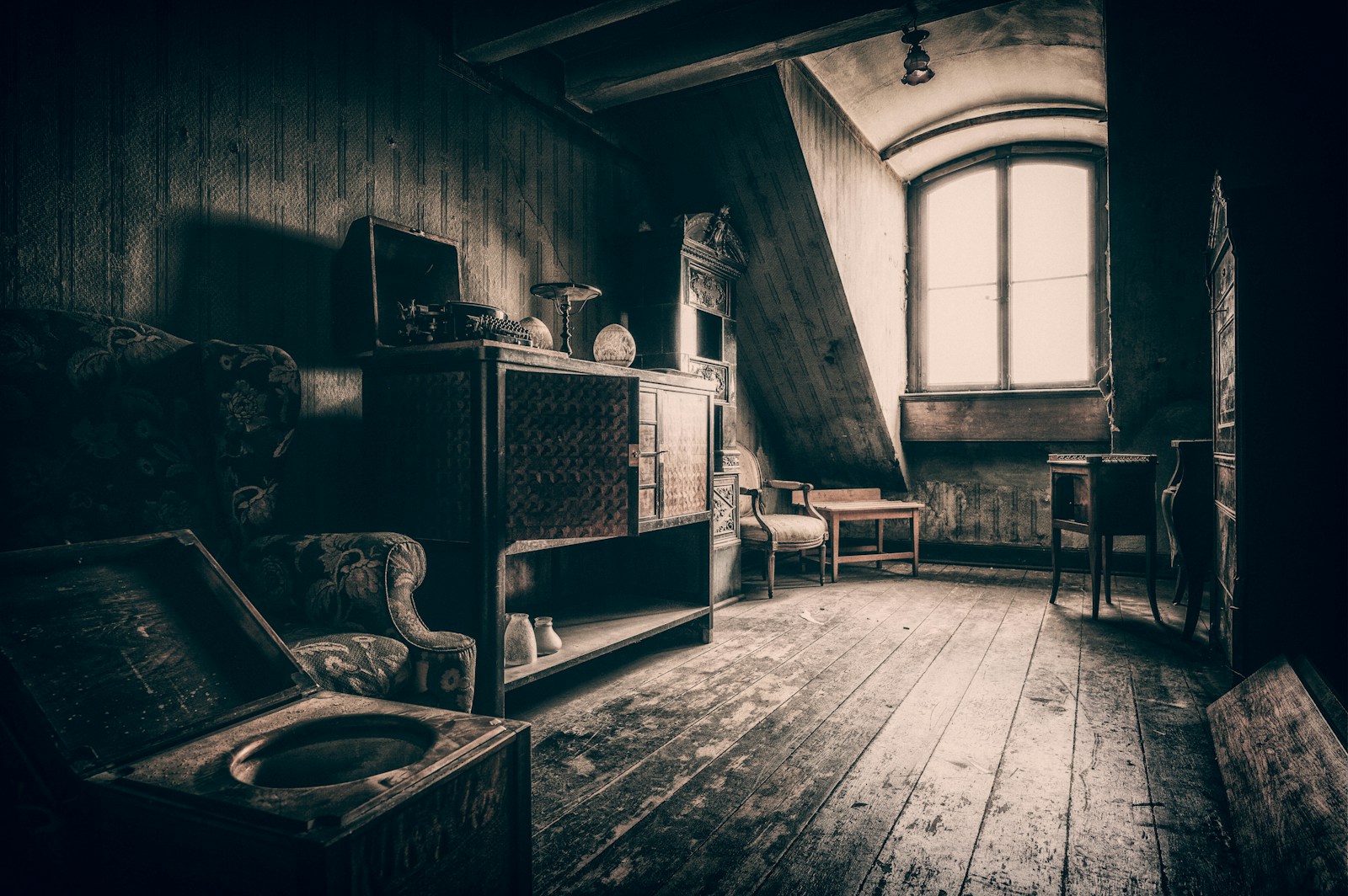
In any other context, it might’ve been a joke—something a previous owner left behind to spook the next person. But in a space full of dust, boxed-up memories, and a faint smell of old pine, it landed differently. And once you’ve read words like that in a place you sleep, it’s hard to un-read them.
The note that changed the sound of a house
The homeowner, who asked to be identified only as “Mara” for privacy, said the note was stuck to a beam above the attic steps, right at eye level. “It wasn’t buried in a box or hidden behind insulation,” Mara explained. “It was placed like someone wanted you to see it the second you looked up.”
After that, the house didn’t sound the same. A radiator clicking on became a deliberate signal. The soft pop of settling wood felt like footsteps learning the floor plan. “I used to think creaks were just the house doing house things,” Mara said. “Now I’m listening like it’s trying to talk.”
Neighbors swap lore, and the street gets chatty
Word spread the way it always does—through a group text, a quick mention over the fence, and one neighbor who “doesn’t gossip” but somehow knows everything by dinner. Within a day, a few residents on the block were offering their own bits of local lore. A former occupant’s late-night habits, an old remodel done “in a hurry,” a vague rumor about a tenant who “kept to themselves.”
None of it was concrete, and that’s kind of the point. In the absence of facts, the brain turns into a little documentary producer, adding mood lighting and ominous music to otherwise normal events. A house that used to feel familiar can start feeling staged, like it’s waiting for a cue.
Is it a prank, a warning, or something else entirely?
If you’re hoping for a clean answer, you’ll be in the same boat as everyone else. The note has no date, no signature, and no context beyond the sentence itself. It’s not even clear whether it was meant for a child sneaking into the attic, a roommate who loved late-night projects, or someone entirely different.
A local handyman who’s worked in several older homes nearby offered a very unspooky possibility: heat, wiring, and old framing can make attics genuinely risky after dark. “People do dumb stuff up there with a flashlight and one hand on the rafters,” he said. “That note could’ve been practical, not paranormal.” Still, practical warnings usually mention nails or weak boards, not… darkness.
The psychology of “now I can’t unhear it”
There’s a reason one sentence can hijack your sense of safety. Psychologists call it priming: once your mind is nudged toward a particular idea, it starts sorting incoming information to match that story. So the same creak you’d shrugged off last week becomes evidence this week.
Another factor is pattern-seeking, which is basically your brain’s favorite hobby. It’d rather connect random dots than admit something is random. If the house creaks at 10:13 three nights in a row, your mind will treat it like a scheduled event—even if it’s just the temperature dropping and the wood contracting.
What the homeowner has done so far (and what they won’t do)
Mara says the note is now sealed in a plastic sleeve and stored with the home’s paperwork, partly for preservation and partly because leaving it up there felt like “letting it supervise.” The attic light has been upgraded from a dim pull-cord bulb to a brighter LED fixture, and a battery lantern now sits at the top of the stairs. “I’m not giving the darkness any advantage,” Mara joked, then admitted they haven’t gone up at night since.
They’ve also done the sensible checks: smoke detectors tested, carbon monoxide monitors replaced, and an electrician scheduled to inspect older wiring. It’s the kind of response you’d hope for in a story like this—less séance, more safety checklist. “If something is off, I want it to be the kind I can fix with a screwdriver,” Mara said.
A small investigation, minus the dramatic soundtrack
Curiosity has a way of turning regular people into amateur historians. Mara has requested property records and is speaking with the previous owner about any known renovations or incidents. So far, nothing jumps out, though the home did change hands quickly once in the early 2000s—something that could mean anything from a job relocation to “we hated the commute.”
One neighbor suggested checking the attic beam itself for markings, old repairs, or signs of water damage. “Sometimes people leave notes near the problem spot,” she said. It’s a practical idea, even if it does sound like the opening scene of a horror movie where someone says, “It’s probably nothing.”
When a house feels “intentional,” everyday life gets weird
The strangest part, Mara says, isn’t fear exactly—it’s the sense of being watched by the house’s routine. The dishwasher’s late-night gurgle sounds like it’s clearing its throat. The hallway settling at 2 a.m. feels like a reminder. “It’s like the building has opinions now,” Mara said.
That shift can be exhausting, because it turns normal living into low-level vigilance. People start timing noises, avoiding rooms, changing sleep habits. And then, ironically, lack of sleep makes everything feel even more eerie, because tired brains are famously dramatic.
What experts say to do when a warning feels spooky but might be real
Home safety professionals tend to give the same advice whether the warning comes from a note, a neighbor, or a gut feeling. Check for the boring hazards first: electrical issues, pests, structural weakness, and ventilation problems. Attics can hide all four, and none of them get friendlier after dark.
If the house noises are ramping up, it’s also worth tracking temperature and humidity changes, since those can make framing and ductwork expand and contract loudly. A cheap hygrometer can sometimes explain a week of “mysterious” sounds better than any ghost story. And if a noise seems rhythmic or new, recording it can help a contractor identify it without relying on a midnight reenactment.
The note remains, and the question does too
For now, “Don’t stay after dark” sits in that uncomfortable space between creepy and sensible. It could be someone’s half-joking scare tactic, a long-forgotten safety warning, or a message written during a moment that felt urgent to the person holding the pen. The trouble is, the note did what it was meant to do: it made someone pay attention.
And attention changes everything. Once you believe a house might be communicating—even if it’s just through pipes, beams, and old nails—every sound starts to feel like it’s aimed at you. Mara put it simply: “I didn’t inherit a haunting. I inherited a sentence, and now the whole place is reading differently.”
More from Willow and Hearth:
Leave a Reply