It started the way these things usually do: with someone moving a dusty shelf “just for a second” and noticing something that didn’t belong. Behind a tangle of paint drips and old caulk lines in a finished corner of the basement was the unmistakable outline of a door frame—trim, jamb, even the faint suggestion of hinge mortises—sealed up and painted like it had never existed.
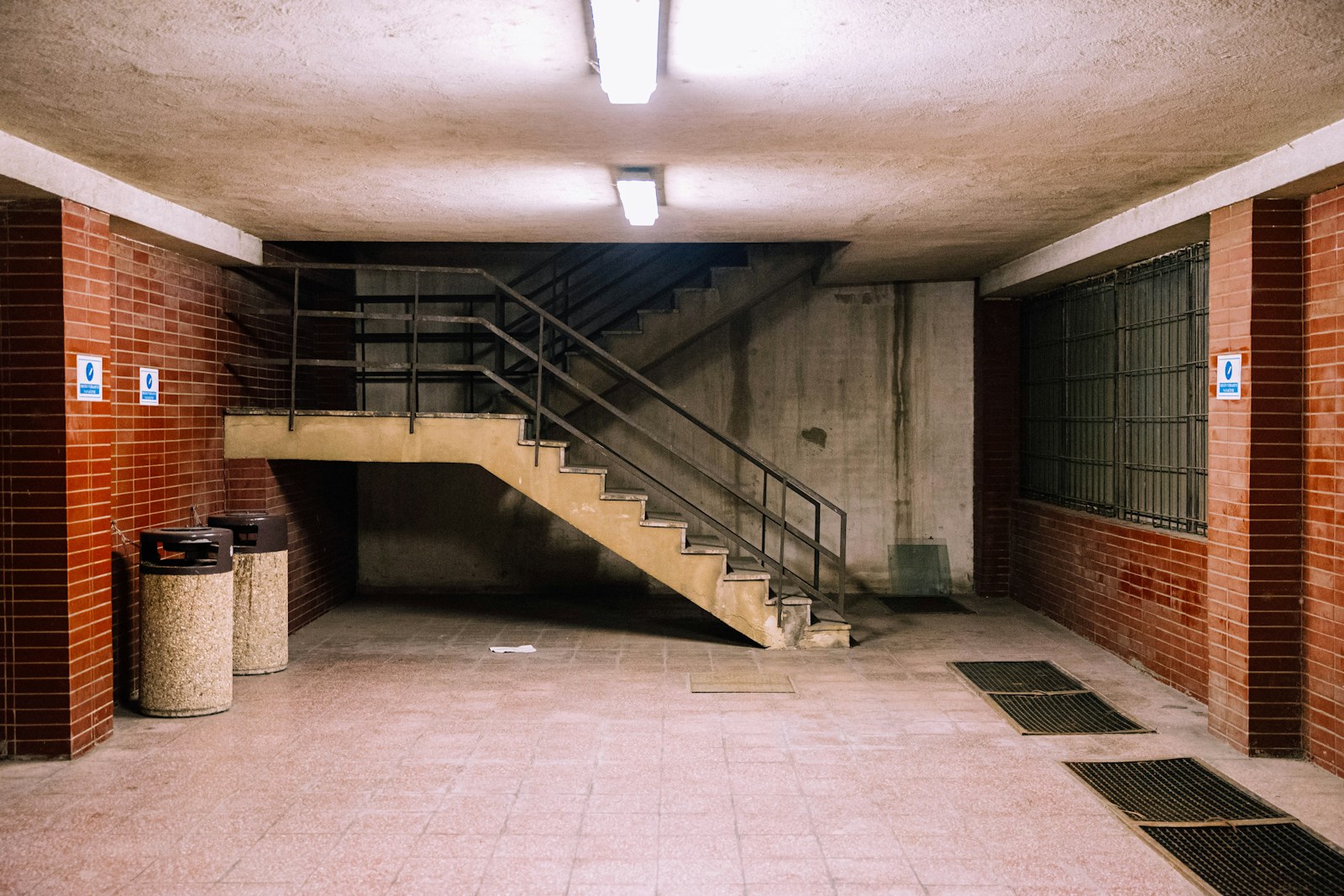
The trouble is, the house’s official floor plans don’t show a doorway there. They don’t show a room there either. On paper, it’s just a straight run of foundation wall, as boring and solid as a bank vault.
A door frame that shouldn’t be there
Up close, it’s not a ghostly smudge or a trick of the light. The proportions look right for a standard interior door, and the trim doesn’t match the newer basement finishes, which suggests it’s older—maybe original to the house, or at least to an earlier renovation.
The paint tells a story too. There are multiple layers, including an older cream color under a newer, brighter white, with the edges of the “door” painstakingly blended so the wall reads as one continuous surface. Whoever sealed it up didn’t just slap on drywall and call it a day; they wanted it forgotten.
Why the floor plans might be wrong (without anyone lying)
If you’ve ever compared “official” floor plans to the house you actually live in, you already know the secret: plans can be more suggestion than gospel. Many property records reflect a snapshot in time, and sometimes that snapshot is blurry—especially for older homes that have been remodeled in stages over decades.
In some towns, drawings were updated only when major permitted work happened, and even then, the documentation can be simplified. A small storage room, a mechanical nook, or a sealed access point might never have made it into the final paperwork. And if the change happened before modern permitting was common—or was done without permits—there may be no record at all.
The most likely explanations (and the ones that make the best stories)
The most practical possibility is that the door once led to a utility space: a coal bin back when coal delivery was a thing, a root cellar, a cold room, or an access corridor for plumbing and wiring. These spaces were often walled off when heating systems changed, basements got finished, or homeowners decided they’d rather not have a drafty mystery corner.
Another common scenario is structural work. If a foundation wall was reinforced, waterproofed from the inside, or reconfigured after settling, an opening might’ve been closed permanently for safety. Sometimes it’s as simple as “that door was annoying,” and the easiest fix was to seal it and move on.
Then there are the more cinematic ideas: a hidden room, a stash spot, an old tenant space, or a prohibition-era nook that never quite made it onto the books. Those are fun to imagine, and occasionally they’re even true, but most “secret rooms” are really “storage rooms that got sacrificed to drywall.” Still, the door frame being carefully painted over does add a dash of intrigue.
What the door frame can tell you without opening anything
Even without poking holes in the wall, a door outline can offer clues. The height and width can hint at the era—older homes sometimes have slightly narrower doors—and the trim profile can match other original millwork in the house, which helps date it.
Look for hardware ghosts too: small patches where a knob plate used to be, old latch marks, or uneven plaster around the strike side. If you can spot hinge recesses, you can tell which way the door used to swing, which in turn suggests what kind of space it served. A door that swung into the “missing room” often implies a functional room; a door that swung out into the basement can sometimes indicate a closet-like area or an access hatch.
How a “missing room” can exist in real life but not on paper
Basements are especially good at accumulating unofficial history. A lot of older basements started as purely functional spaces, then got gradually carved into smaller zones: laundry here, workshop there, storage behind a stud wall, a walled-off corner to hide a sump pump that nobody wants to look at.
In some builds, there’s also the possibility of an exterior stairwell that was later removed, or a door that once led to a bulkhead or cellar entrance. If the exterior access was filled in, the interior door might have been sealed to keep moisture and drafts out. The floor plan could easily have been updated after that change, leaving no trace of the earlier layout.
What neighbors, permits, and old listings can reveal
If you’re trying to figure out what used to be there, the best sources are often surprisingly human. Longtime neighbors may remember when the basement had a different configuration, or when contractors came through for a big waterproofing job. People remember jackhammers.
Municipal permit archives can help too, especially if the house had major renovations. Even when the drawings are basic, the permit description might mention “foundation repair,” “basement finish,” or “remove interior stair,” which can explain why a door got buried. Old real estate listings, meanwhile, sometimes include photos that accidentally capture the “before,” back when that door was still just… a door.
If you’re tempted to open it up, here’s the sensible way to think about it
Curiosity is normal, but basements are where the serious systems live. Before anyone starts cutting, it’s worth considering what could be behind that wall: electrical runs, plumbing stacks, gas lines, HVAC ducting, or foundation reinforcement. And if it’s a foundation wall, opening anything can have structural and moisture implications.
A non-destructive approach can satisfy a lot of curiosity. Stud finders can map framing, and an inspection camera (the small borescope kind) can peek through a tiny hole behind baseboard or trim—often without leaving a visible scar. In some cases, a thermal camera can show temperature differences that hint at voids, masonry, or an unconditioned space beyond.
Why someone would paint over a door instead of removing it
It seems odd until you remember how renovations actually happen. Removing a door properly means patching framing, matching wall thickness, dealing with baseboards, and making everything look intentional. Painting it into oblivion is cheaper, faster, and—if you’re trying to make a basement look “finished”—surprisingly effective.
There’s also the possibility that the door frame is still structurally part of the wall assembly. In older homes, framing choices can be quirky, and sometimes the easiest way to stabilize a patched opening is to leave the frame in place and build over it. Out of sight, out of budget.
So what’s behind the wall?
Right now, the most honest answer is: something existed, and someone had a reason to hide the evidence. The door frame is a breadcrumb from an earlier version of the house, one that didn’t survive into the clean lines of today’s floor plans. That doesn’t automatically mean a secret chamber—but it does mean the basement has a backstory.
And if you do end up finding a small storage room filled with nothing but old paint cans and a single, mysterious doorknob? That’s still a win. Houses are like that: they’re never quite done telling you who they used to be.
More from Willow and Hearth:
Leave a Reply