
Getting your compost ready for winter can feel tricky, especially when the cold slows down the natural breakdown process. If you want to keep your compost pile healthy and productive through those chilly months, a little preparation goes a long way.
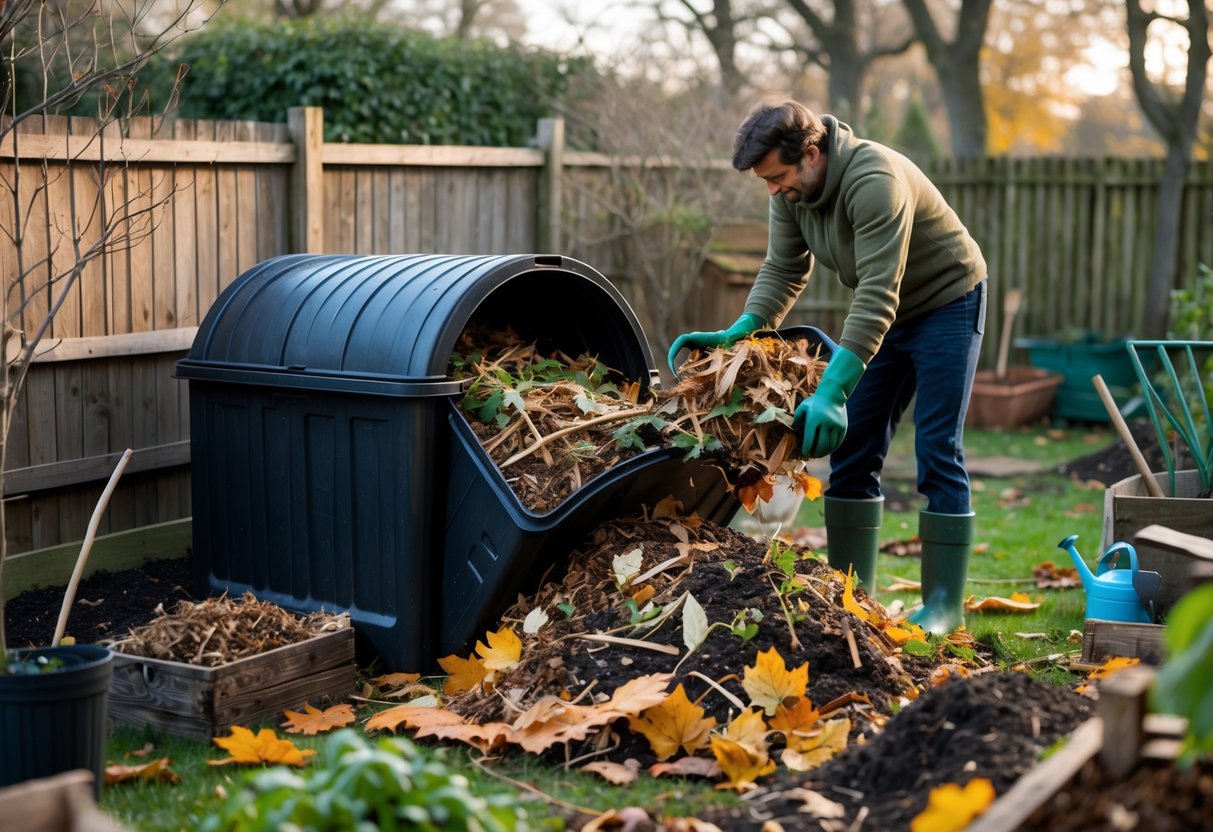
The key to successful winter composting is making simple adjustments that help maintain activity despite the cold. With the right approach, you can avoid a mountain of unprocessed scraps and keep nutrient-rich soil building steadily until spring.
Add a thick layer of straw or dry leaves to insulate your compost pile
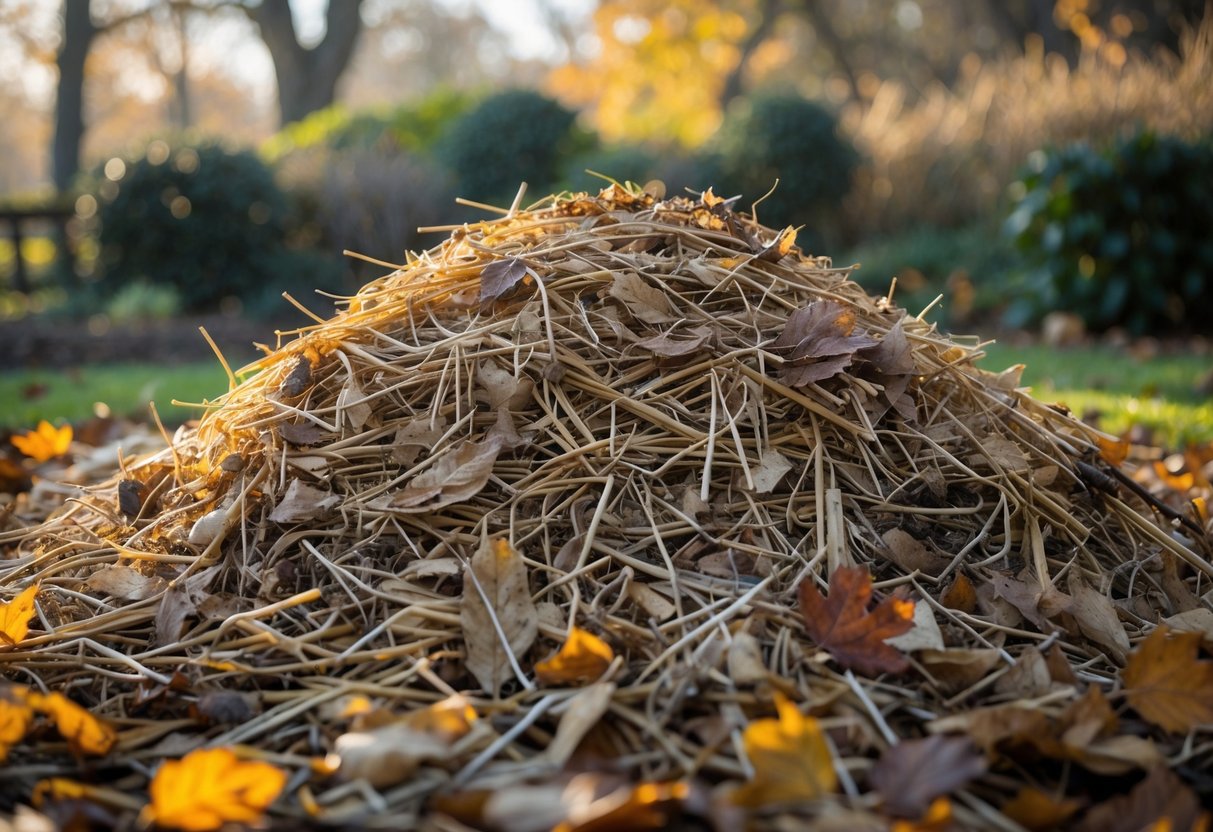
Cover your compost pile with a thick layer of straw or dry leaves before winter sets in. This helps trap heat inside, keeping the pile warm enough for decomposition to continue.
You can also mound bales of straw around the sides for extra insulation. Make sure the layer is thick enough to protect against snow and cold winds.
This simple step helps maintain a stable temperature inside your compost, so the microorganisms can keep working even when it’s chilly outside.
Turn the compost to aerate and speed up decomposition before winter
You should turn your compost pile regularly before winter sets in. This introduces oxygen, which is essential for the microbes breaking down the material.
Use a garden fork or compost aerator to fluff up the pile. Avoid compacting it because tight layers restrict airflow and slow decomposition.
Turning the pile also helps distribute moisture and heat evenly. This can give your compost a better chance to keep breaking down as temperatures drop.
Cover the pile with a tarp to protect it from excess moisture and snow
Covering your compost pile with a tarp helps keep out snow and rain. This prevents the pile from becoming too wet or waterlogged, which can slow down decomposition.
A tarp also helps keep heat and moisture inside, making the compost break down more steadily even when it’s cold. Just remember to lift the tarp occasionally to add scraps or check the moisture level.
Using rocks or bricks to hold the tarp in place stops it from blowing away on windy days. This simple step can make a big difference in keeping your compost active through winter.
Keep adding kitchen scraps but avoid large amounts of wet food waste
You can keep adding kitchen scraps to your compost all winter long. Just try to balance what you add to avoid soggy piles that slow down decomposition.
Avoid dumping large amounts of wet food like melon, citrus, or cooked leftovers at once. Too much moisture attracts pests and causes unpleasant smells.
Add dry, brown materials like leaves or shredded paper on top. This helps soak up excess moisture and keeps your compost healthy throughout the cold months.
Build your compost pile bigger to retain more heat naturally
When winter hits, bigger compost piles hold heat better. The size helps trap warmth inside, making it easier for microbes to stay active and break down materials even in the cold.
You don’t need a giant mountain, but aim for a pile at least 3 feet wide and tall. This size balances heat retention and airflow, so your compost won’t get cold or smelly.
Adding more material at once also means the pile’s core stays warmer longer. Keep your pile dense but still moist to help the natural heat build-up last through chilly days.
Use a compost thermometer to monitor internal temperature
Using a compost thermometer helps you keep an eye on how warm your pile is inside. This is important because the right temperature speeds up decomposition, even as it gets colder outside.
Stick the probe deep into the middle of your compost pile to get an accurate reading. If temperatures drop too low, you might need to add more materials or turn the pile to keep things active.
Checking the temperature regularly lets you adjust moisture and aeration. That way, your compost stays healthy and ready for spring.
Leave a Reply