He had been managing. Weeks had passed since his father’s funeral, and the son — whose story circulated widely in online grief communities in early 2026 — had settled back into routines: work, laundry, groceries. Then he turned into the coffee aisle and saw his dad’s favorite brand stacked at eye level, flagged with a bright sale tag. The steadiness he had been building collapsed in a single breath. He left his cart where it stood, walked to his car, and sobbed until the wave passed.
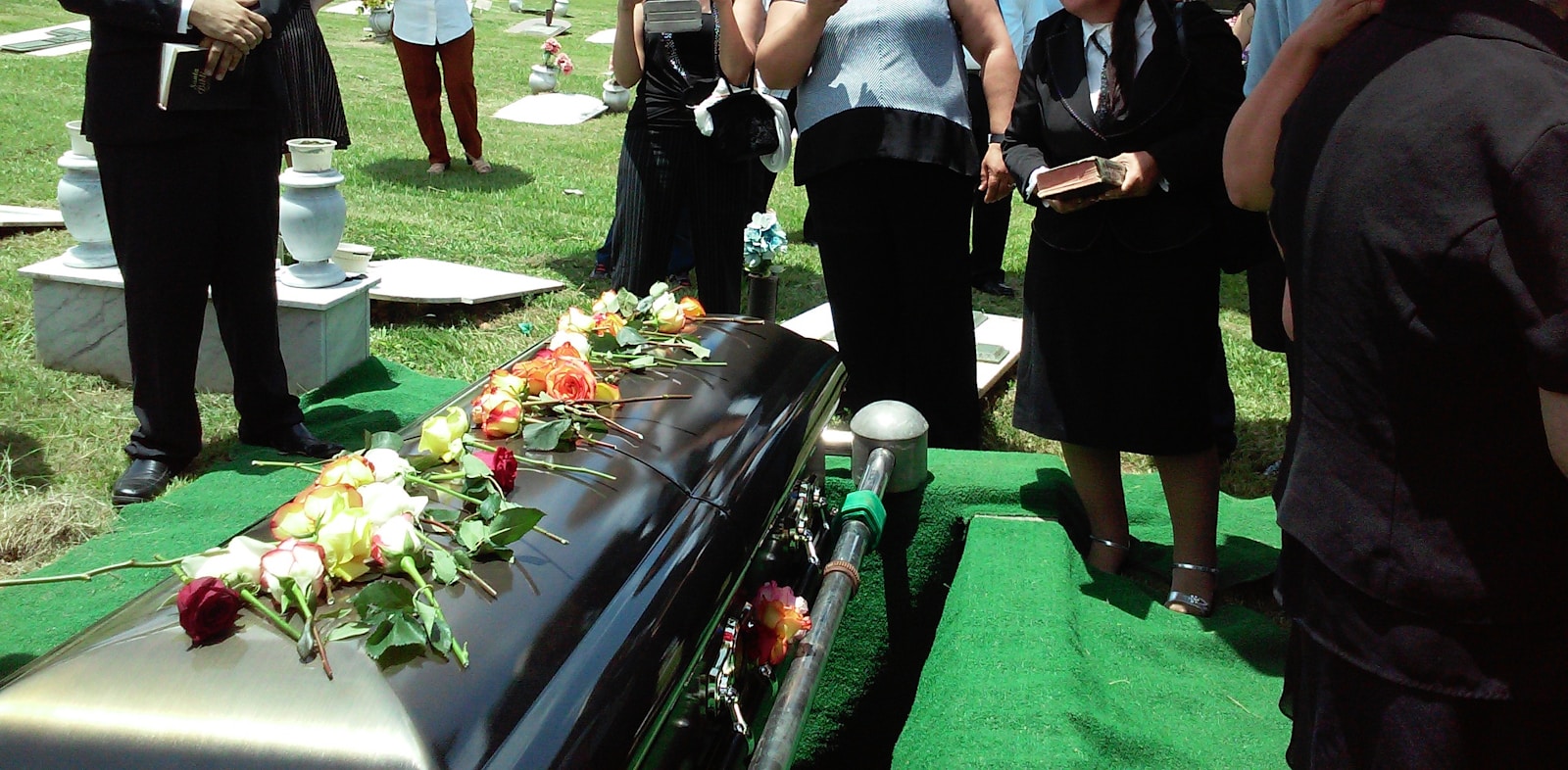
His reaction was not a breakdown. According to grief researchers, it was one of the most predictable things a mourning person can experience — and one of the least discussed.
Why a coffee sale can become a breaking point
The son’s errand was routine until it wasn’t. He had navigated dozens of grocery runs since the death, each one uneventful enough to suggest he was healing on schedule. But grief does not follow a schedule. The moment he locked eyes with that familiar label, the errand stopped being about restocking the kitchen and became a confrontation with absence.
Grief counselors call these moments “triggers” — sudden, sensory reminders of the person who died that can hit with the force of a gut punch. Some triggers are easy to anticipate: a birthday, a holiday, the anniversary of the death. Others ambush people in the most mundane settings. As the grief-education site What’s Your Grief explains, the same object can land as gentle nostalgia one day and as searing pain the next, depending on a person’s fatigue, stress level, and emotional reserves.
Grocery stores are uniquely loaded spaces
Supermarkets show up again and again in mourners’ accounts, and there is a sensory reason for that. Food shopping engages smell, sight, and spatial memory simultaneously. The shape of a cereal box that sat on a family counter for decades, the scent of ground coffee beans, the exact shade of a label — each one can function as a shortcut to a person who is no longer there.
A guide from Open to Hope, a nonprofit bereavement resource, notes that visual cues — photographs, familiar places, even someone who resembles the deceased — are among the most powerful drivers of grief flashbacks. A grocery aisle is essentially a corridor of such cues, organized at eye level and impossible to avoid.
There is also a timing problem. In the early days after a death, friends and neighbors often deliver meals, which shields the bereaved from shopping altogether. Once that support fades, the first solo trip back to the store can feel, as many mourners describe it, like crossing a minefield. The son who fled the coffee display was not unusually fragile. He was walking a path that thousands of grieving people quietly recognize.
What happens in the brain when a trigger fires
Mary-Frances O’Connor, a grief researcher and associate professor of psychology at the University of Arizona, has spent years studying how loss registers in the brain. In her 2022 book The Grieving Brain, O’Connor explains that the brain maps loved ones into our neural architecture — encoding their presence into our expectations about the world. When that person dies, the brain does not immediately update the map. So when a familiar cue appears (a coffee brand, a ringtone, a cologne), the brain briefly expects the loved one to be attached to it. The mismatch between expectation and reality generates a surge of distress that can feel as raw as the original loss.
This is not a mood swing. It is an associative-memory response involving the amygdala and the nucleus accumbens, brain regions that process both emotional pain and reward-based learning. O’Connor’s neuroimaging research, published in the journal NeuroImage, found that reminders of the deceased activated these reward-processing areas in people experiencing complicated grief, suggesting the brain is still “searching” for the person who died.
Medical guidance from the Mayo Clinic reinforces the point: grief does not end on a schedule, and reminders — whether tied to an anniversary or stumbled upon in a store — frequently reignite the pain of loss. Understanding these surges as part of the brain’s recalibration, rather than as a personal failure, can help people ride out the wave instead of judging themselves for it.
Triggers show up across every age
The coffee-aisle experience belongs to an adult, but the underlying mechanism is the same in children and adolescents. A resource developed by the New York Life Foundation’s Grieving Students initiative defines grief triggers as sudden reminders that cause powerful emotional responses in bereaved young people — sparked by a classroom activity, a song, or a classmate mentioning a family event. The document stresses that these reactions “are normal and expected” and can surface months or years after the death.
Adults rarely hear that same reassurance stated so plainly. Clinicians who work across age groups say the goal is not to eliminate triggers but to help people recognize and, where possible, prepare for them. A clinical guide from Rula, a mental-health platform, suggests that naming patterns out loud — “walking past the coffee display might be hard today” — can reduce the element of ambush. The principle holds whether the mourner is a teenager facing a school cafeteria or a grown man pushing a cart past the brand his father swore by.
What actually helps when grief hits in public
For people who find themselves blindsided in a store or on a sidewalk, a few evidence-informed strategies can make the difference between feeling trapped and feeling allowed to step back.
- Leave without guilt. Abandoning a cart is not dramatic. It is a reasonable response to an overwhelming sensory moment. The groceries will still be there tomorrow.
- Use grounding techniques on the spot. The Mayo Clinic and multiple grief therapists recommend focusing on immediate physical sensations — feet on the floor, cold air on the skin, five things you can see — to interrupt the emotional spiral.
- Let someone else handle the errand. A guide on coping with sudden loss from Batchelor Brothers Funeral Home encourages friends and family to offer concrete help — picking up groceries, sitting with the person, providing a shoulder — rather than waiting to be asked.
- Know when to seek professional support. The American Psychiatric Association added prolonged grief disorder to the DSM-5-TR in 2022, recognizing that when intense grief persists beyond 12 months in adults (six months in children) and significantly impairs daily functioning, it may benefit from targeted treatment such as prolonged grief disorder therapy (PGDT) or cognitive behavioral therapy.
Small gestures from the people around a mourner matter, too. In reader-submitted accounts collected by grief organizations, a recurring theme is that action beats asking. A friend who quietly drops off groceries, or sends a simple emoji text to say “thinking of you” without expecting a reply, can make it easier for a bereaved person to face loaded spaces again — knowing that if another coffee-aisle collapse happens, they will not have to explain or justify it.
The son in the store did not fail at grief. He walked into a place saturated with memory, and his brain did exactly what brains do: it looked for someone who was no longer there. That is not weakness. That is love, still searching.
“`
More from Willow and Hearth:
Leave a Reply