When a family of four tries to book a few nights at the Disneyland Hotel in Anaheim for a summer weekend in 2026, the math gets uncomfortable fast. A standard room with two double beds lists for roughly $680 a night on Disney’s own booking portal, before taxes and fees. Add three nights, parking, and the resort’s 15% Anaheim tourism surcharge, and the hotel bill alone can clear $2,500 before anyone buys a park ticket or a churro.
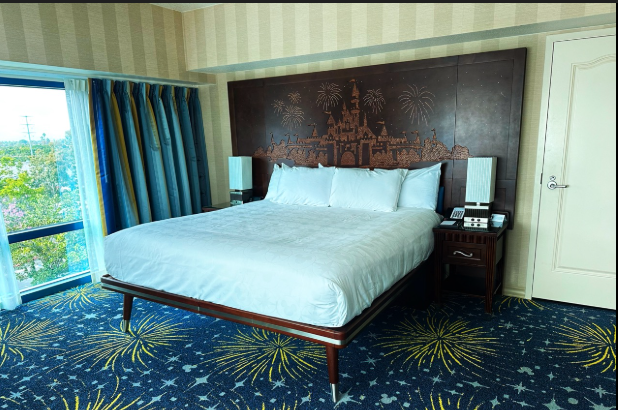
That kind of sticker shock has turned Disney resort pricing into one of the most heated debates in family travel. Room rates at Disneyland Resort and Walt Disney World have climbed sharply over the past several years, and as of spring 2026, on-site stays routinely cost two to four times what comparable off-property hotels charge just minutes away. The question facing millions of families is no longer whether Disney hotels are expensive. It is whether the premium is still worth it.
What Disney resort rooms actually cost right now
Disney does not publish a single flat rate for its hotels. Like airlines, the company uses demand-based pricing that shifts nightly rates depending on the season, day of the week, and room type. But even at the lower end of the calendar, the numbers are steep.
At the Disneyland Hotel in Anaheim, standard rooms start around $500 per night during value periods and climb past $700 during peak weeks, according to rates displayed on Disney’s reservation system in March 2026. At Disney’s Grand Californian Hotel & Spa, the resort’s flagship property with a direct entrance into Disney California Adventure, base rates regularly exceed $800 and can top $1,100 a night during holidays and spring break.
Across the country at Walt Disney World in Orlando, the range is wider but the ceiling is just as high. Value resorts such as All-Star Movies start near $150 a night, but deluxe properties like the Grand Floridian and the Polynesian Village push well past $700. Disney’s own rate calendars show that a four-night stay at a deluxe Walt Disney World resort during a moderate season can exceed $3,000 before tax.
For context, a well-reviewed Marriott or Hilton property within a 10-minute drive of Disneyland typically lists between $160 and $280 a night for the same dates, based on rates visible on major booking platforms in March 2026. The gap is not subtle.
How rates got here
Disney’s hotel prices have risen faster than general inflation for more than a decade, but the steepest jumps came after the pandemic. When the parks reopened in 2021 with reduced capacity, pent-up demand collided with limited supply, and Disney discovered that guests would pay significantly more than pre-COVID rates. The company leaned in.
In its fiscal year 2024 earnings calls, The Walt Disney Company reported record per-capita guest spending at its domestic parks and resorts, a figure that includes hotel revenue. CEO Bob Iger has repeatedly described the strategy as investing in quality and pricing to match, telling analysts that Disney’s parks business is focused on delivering premium experiences rather than competing on volume alone.
The shift to demand-based hotel pricing, which Disney rolled out more aggressively starting in 2022, means that rates now fluctuate daily. A Tuesday in early February might cost half of what the same room costs on a Saturday in late March. For families without flexible schedules, that system often means paying peak prices by default.
Disney has also bundled on-site stays with perks designed to make the premium feel justified. Guests at Disneyland Resort hotels get Early Entry, a 30-minute head start into the parks each morning. At Walt Disney World, deluxe resort guests also receive Extended Evening Hours on select nights. These benefits are real time-savers during crowded periods, but they also function as pricing leverage: leave the Disney bubble and you lose the perks.
The Grand Californian backlash
No Disney property has drawn more pricing criticism than the Grand Californian. Designed to evoke the Arts and Crafts lodges of early 20th-century California, the hotel is genuinely beautiful, and its location, with a walkway that opens directly into Disney California Adventure, is unmatched. But at $800 to $1,100 a night, guests expect perfection, and some have not found it.
In early 2025, a guest’s account of finding mold and what appeared to be mushrooms growing in a Grand Californian room went viral after being shared by the fan site Disney Fanatic. The guest claimed they had to purchase medicine to manage symptoms during their stay and described the room as “outdated for what they charge.” Disney has not publicly commented on that specific complaint, and it is worth noting that a single anecdote does not represent the condition of the entire hotel. But the story resonated precisely because the price was so high: at $1,000 a night, tolerance for any flaw drops to zero.
The incident became a lightning rod on Instagram and Facebook, where posts about Grand Californian pricing now routinely draw hundreds of comments from guests sharing their own frustrations. A March 2026 Instagram post from the account @parktrendnews highlighting the “dramatic rise in price for a single night at the Grand Californian” collected thousands of likes and a comment section split between outrage and defense.
The ticket side of the equation
Hotel rates do not exist in isolation. Disney’s overall vacation cost has climbed on multiple fronts simultaneously. At Walt Disney World, a peak single-day ticket now exceeds $200, a threshold the company crossed in late 2025 when updated pricing took effect. Annual pass prices have also risen, with the top-tier pass at Walt Disney World now above $1,500.
At Disneyland Resort, single-day tickets top out above $200 on the busiest days under the resort’s tiered pricing system. Add Genie+ (Disney’s paid line-skipping service, priced dynamically and often running $25 to $35 per person per day) and the cost of feeding a family inside the parks, and a three-day Disneyland trip for four with an on-site hotel stay can realistically approach $6,000 to $8,000.
That total has pushed Disney vacations into a price bracket that competes with Caribbean cruises and European city breaks, a comparison that comes up constantly in online travel forums and that Disney’s own executives have acknowledged, at least indirectly, by emphasizing the “lifetime memories” framing in recent marketing.
Why some families still book on-site
Despite the sticker shock, Disney’s on-site hotels maintain high occupancy. The reasons are practical as much as emotional.
Staying on property at Disneyland Resort means being within walking distance of both parks. There is no need for a rental car, no ride-share surge pricing after the fireworks, and no 20-minute shuttle ride with tired children at 10 p.m. At Walt Disney World, on-site guests get complimentary bus, monorail, or Skyliner transportation across the resort’s 25,000 acres, a logistical advantage that is hard to replicate from an off-site hotel.
The Early Entry perk also has tangible value. Thirty minutes in a nearly empty park can mean walking onto two or three headliner attractions before standby lines build to 60 or 90 minutes. For families with young children who fade by mid-afternoon, that early window can reshape the entire day.
Disney also uses targeted discounts to keep bookings flowing. In early 2026, the company offered “bounce-back” promotions to guests already on property, providing discounted rates for a future resort stay if booked before checkout. Annual passholders and Disney Vacation Club members frequently see room offers that shave 20% to 35% off rack rates during slower periods. These deals rarely make a Disney hotel cheap, but they narrow the gap enough to keep loyal guests returning.
The off-site calculation
For a growing number of families, the math simply does not work. A three-night stay at the Disneyland Hotel at $680 a night totals $2,040 before tax. The same three nights at a well-rated Courtyard by Marriott less than a mile from the Disneyland main gate might run $600 to $750 total. The savings, often $1,200 or more, can fund an extra day of park tickets, a character dining experience, or a meaningful dent in the overall trip budget.
Off-site hotels near Disneyland have also improved significantly in recent years. Several properties along Harbor Boulevard now offer shuttle service, modern rooms, and pools that, while not themed to Monorail waterslides, are perfectly functional for a post-park cooldown. Near Walt Disney World, the hotel market along International Drive and in the Bonnet Creek area includes full-service resorts with amenities that rival Disney’s moderate-tier properties at a fraction of the cost.
The trade-off is real: no Early Entry, no walking-distance access, and no immersive theming in the lobby. But for families who spend 12 hours in the parks and use the hotel mainly for sleeping and showers, that trade-off increasingly looks like a smart one.
What this means for Disney’s brand
Disney has spent decades cultivating the idea that its theme parks are for everyone, a place where any family can experience the magic regardless of background. The current pricing trajectory complicates that narrative. When a standard hotel room costs more per night than many Americans earn in a day, the “everyone” promise starts to feel aspirational rather than accessible.
The company is clearly aware of the tension. The bounce-back offers, the continued operation of value-tier resorts at Walt Disney World, and the occasional promotional rate all suggest that Disney wants to keep a path open for budget-conscious guests, even as it pushes the ceiling higher for those willing to pay. Whether that balancing act holds as rates continue to climb is one of the most consequential questions facing the parks division in 2026 and beyond.
For the family staring at a $680-a-night room rate on their laptop screen, the question is more immediate: book the dream, or book the deal? Increasingly, both answers are valid, and neither one is easy.
More from Willow and Hearth:
Leave a Reply