A driver without a disability placard pulls into an accessible parking spot at a fast-food restaurant, eats a burger, and leaves five minutes later. No ticket, no confrontation, no harm done — or so the thinking goes. But disability rights advocates, legal experts, and the drivers who depend on those spaces tell a very different story. The “quick stop” in a blue-striped spot is not a gray area. It is illegal in every U.S. state, and its consequences fall on people who may not be able to enter the building without that specific space.
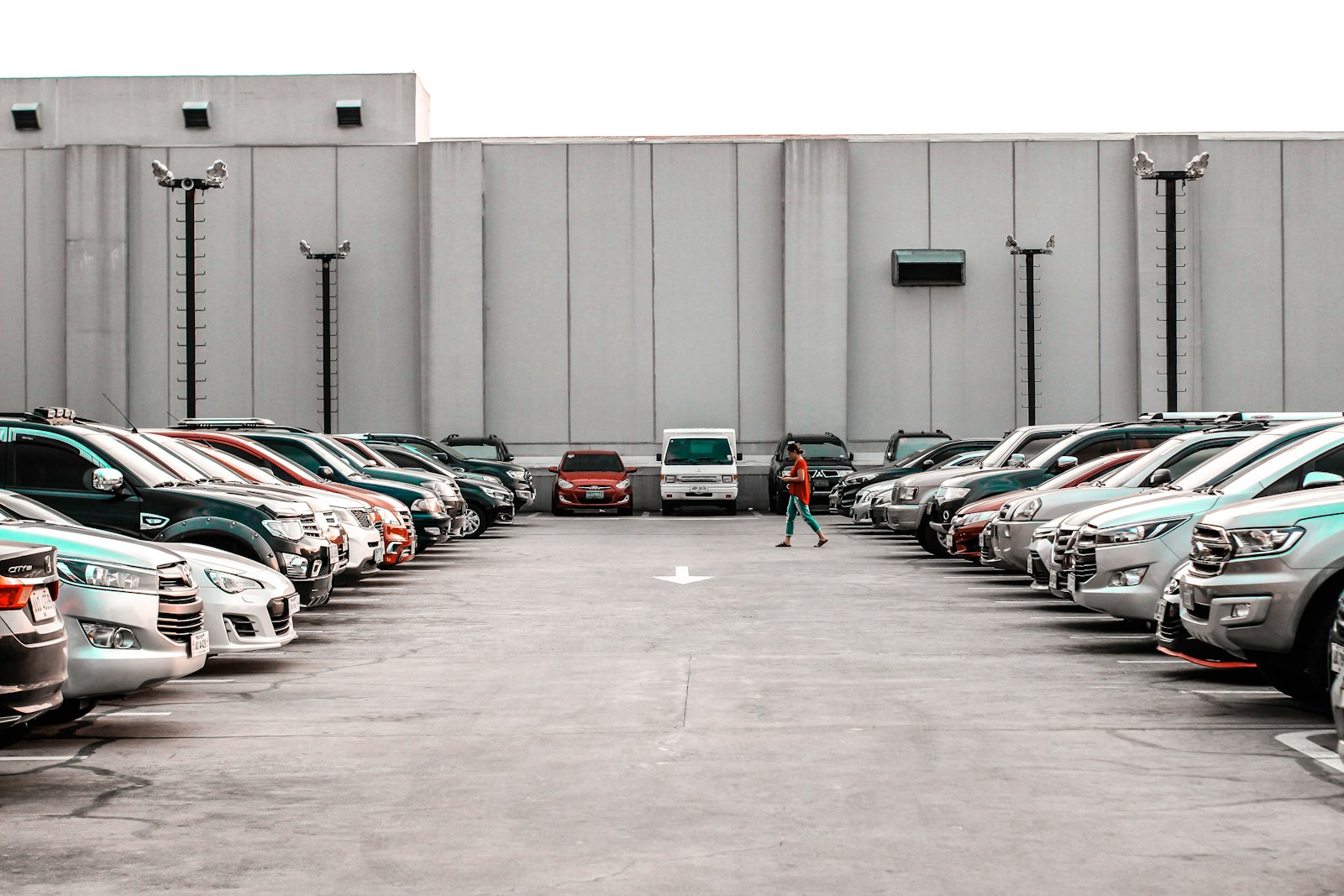
What accessible parking is actually designed to do
Accessible parking spaces are not premium spots handed out on a first-come basis. They are a legal mandate rooted in the Americans with Disabilities Act, which requires that parking facilities serving places of public accommodation provide a minimum number of spaces with specific features: wider dimensions, adjacent access aisles (the striped zones), and barrier-free routes connecting directly to building entrances.
Those features exist for concrete reasons. A driver who uses a wheelchair-accessible van needs the access aisle to deploy a side ramp or lift. A person with a walker or prosthetic limb needs a shorter, level path to the door. The U.S. Access Board’s guidelines specify that van-accessible spaces must be at least 11 feet wide with a 5-foot aisle, and that at least one in every six accessible spaces must accommodate vans. These are engineering standards, not suggestions.
New York’s Department of Motor Vehicles frames the purpose plainly: reserved spaces exist “to ensure safe and equal access to goods and services” that most drivers take for granted. The agency asks motorists to “be parking considerate,” a phrase that understates the stakes. When a non-permitted vehicle occupies one of these spaces, the next driver who actually needs it may be forced to navigate a longer, more hazardous route — or leave without completing their errand at all.
The law does not care how long you stayed
Drivers who use accessible spots without a permit often assume brevity is a defense. It is not. Disability parking statutes in every state prohibit occupying a reserved space without valid credentials, regardless of duration.
In California, Vehicle Code Section 22507.8 makes it unlawful to park in a space designated for disabled persons unless the vehicle displays a valid placard or plate. A first offense carries a minimum fine of $250 and can reach $1,000, according to the California DMV. There is no exception for “just a few minutes.”
New Jersey’s statute (N.J.S.A. 39:4-197.5) is similarly direct. The state’s guide to handicapped parking laws prohibits parking in a reserved space without a special vehicle identification card, with fines starting at $250 for a first offense. In Texas, fines range from $500 to $750, and a second offense can cost up to $1,250 under Transportation Code §681.011.
The pattern holds nationally. Whether the fine is $250 or $1,250, no state’s law distinguishes between a two-minute stop and a two-hour one. The violation begins the moment an unpermitted vehicle occupies the space.
“No one was using it” is not a defense
The most common justification — “the spot was empty, and I would have moved if someone showed up” — misunderstands how accessible parking works. The space is not reserved only when a disabled driver is visibly approaching. It is reserved at all times so that a disabled driver can rely on its availability without having to circle the lot, wait, or ask a stranger to move.
The ADA’s parking guidance makes no provision for temporary use by non-permitted vehicles. Neither do state codes. As a practical matter, enforcement on private lots (like fast-food restaurants) can be inconsistent because local police may not patrol them regularly. But inconsistent enforcement does not equal permission. A driver who avoids a ticket has gotten lucky, not gotten clearance.
Disability advocates point out that the “I’ll move” promise also fails on its own terms. A driver eating in a parked car may not notice a van pulling into the adjacent space. By the time the situation becomes obvious, the disabled driver has already been forced to adapt — circling, waiting, or leaving.
The human cost behind the paint and signs
For someone who can jog across a parking lot, a few extra car lengths feel trivial. For a driver who uses a wheelchair lift, those car lengths can be the difference between independence and staying home.
Access aisles — the striped zones next to accessible spaces — are a frequent flashpoint. Drivers sometimes treat them as overflow parking or a convenient place to leave a shopping cart. But a van-mounted ramp or lift cannot deploy if a vehicle or obstruction is blocking the aisle. When that happens, the disabled driver is effectively locked out of their own vehicle or locked out of the building entirely.
The National Council on Disability has repeatedly noted that parking access is one of the most common ADA compliance failures affecting people with mobility impairments. In community forums and advocacy spaces, disabled drivers describe the experience in blunt terms: arriving at a store only to find every accessible space taken by vehicles without placards, then facing the choice of parking illegally themselves, navigating a dangerous route from a distant spot, or simply going home.
One commenter in a Wildwood, New Jersey community group on Facebook put it this way: “You do realize that if you park there, then someone that really needs the spot, can’t. Especially the blue stripped area when they have a ramp on the side of their vehicle.” The frustration is not about etiquette. It is about whether someone can physically get out of their car.
Why fast-food lots are a particular problem
Fast-food restaurants create a specific version of this temptation. The accessible spots are often closest to the building, the driver is “just eating in the car,” and the lot may appear empty. But fast-food locations are also frequent destinations for disabled customers, many of whom use drive-throughs precisely because entering the building is difficult. When they do need to go inside — to use a restroom, pick up a mobile order, or meet someone — the accessible space is not optional.
Restaurants with parking lots are covered under Title III of the ADA as places of public accommodation. That means the business itself has an obligation to maintain accessible parking, and drivers have a legal obligation not to misuse it. A restaurant manager who notices repeated violations could, in theory, request local enforcement or have vehicles towed, though in practice this rarely happens at fast-food chains.
The bottom line
Parking in an accessible space without a permit is illegal in every state, regardless of how long you stay or whether the lot looks empty. Fines typically start at $250 and can climb well past $1,000. More importantly, every unpermitted car in a blue space is a barrier for someone who cannot simply park somewhere else. The “quick stop” is not quick for the person who arrives next and finds the space taken. It is the reason they cannot get out of their car, cannot reach the door, or cannot run the errand they came for.
The rule is simple, and it does not have a fast-food exception: if the space has a blue sign, and you do not have a permit, it is not your spot. Not for five minutes. Not for one.
More from Willow and Hearth:
Leave a Reply