Holiday guests tend to remember the small, thoughtful touches as much as the main event, and those details rarely happen by accident. With a bit of planning and a few editor-tested tricks, a home can feel polished, welcoming, and surprisingly easy to manage even on the busiest entertaining days.
Taste of Home editors consistently point to simple, repeatable moves that elevate a gathering without demanding restaurant-level skills or a designer’s budget. From prepping make-ahead dishes to styling a store-bought dessert, these strategies focus on smart shortcuts that free hosts to actually enjoy their company instead of disappearing into the kitchen.
Set the tone before guests walk in
First impressions start at the curb, so editors emphasize getting the entryway and main living area guest-ready before worrying about anything else. A quick sweep of clutter, a wiped-down front door, and a clear spot for coats and bags signal that visitors were expected, not squeezed in at the last minute. Simple touches like a seasonal wreath, a small doormat, or a string of warm white lights can make even a compact space feel intentional and festive, a point that aligns with guidance on creating a welcoming holiday entry.
Inside, lighting and scent do much of the heavy lifting. Taste of Home editors often recommend swapping harsh overhead bulbs for table lamps, candles, or dimmable fixtures to soften the room and flatter both food and faces, a strategy echoed in their broader party-planning tips. A single scented candle, a pot of mulled cider on low, or a simmer pot with citrus and spices can create a cozy backdrop without overwhelming guests who are sensitive to fragrance. The goal is not a showroom-level transformation but a few deliberate choices that make the home feel calm and ready before the first knock on the door.
Lean on make-ahead recipes and smart shortcuts
Guests notice when a host is relaxed, and nothing undermines that faster than trying to cook everything in real time. Taste of Home editors repeatedly highlight make-ahead recipes as the backbone of low-stress entertaining, from breakfast casseroles that sit overnight to side dishes that can be reheated while guests arrive. Their collections of make-ahead holiday recipes and freezer-friendly mains show how much of a menu can be prepped a day or two in advance, then finished with quick garnishes or a final bake.
Shortcuts do not have to be hidden, either. Editors often suggest buying high-quality staples, such as bakery rolls, frozen puff pastry, or prewashed salad greens, and then adding a homemade element like a flavored butter, vinaigrette, or herb topping to make them feel special. Advice on semi-homemade dishes underscores that guests care more about flavor and timing than whether every component was made from scratch. By front-loading the work and embracing a few store-bought helpers, hosts can spend the party topping off drinks and chatting instead of juggling timers.
Offer one signature drink and plenty of self-serve options
Instead of playing bartender all night, editors recommend choosing a single signature drink and setting up a self-serve station around it. A large-batch cocktail, a festive punch, or a big pot of hot chocolate can be prepared ahead and ladled out as guests arrive, which is a recurring theme in Taste of Home’s holiday drink coverage. Adding simple garnishes like citrus slices, cinnamon sticks, or sugared cranberries makes the setup look more elaborate than it is, while keeping the recipe itself straightforward.
Nonalcoholic choices matter just as much, particularly for families and mixed-age gatherings. Editors often suggest pairing the main drink with sparkling water, a pitcher of infused water, and perhaps a zero-proof punch so everyone has something festive in hand, a balance reflected in their roundups of alcohol-free holiday drinks. Placing glasses, napkins, and a small towel nearby encourages guests to help themselves and reduces traffic in the kitchen. The result is a bar area that feels generous and well thought out without requiring constant oversight.
Build a grazing board that doubles as decor
One of the simplest ways to impress a crowd is with a generous grazing board that looks like a centerpiece and functions as the main appetizer. Taste of Home editors frequently break down how to layer cheeses, cured meats, crackers, fruits, and nuts so the board appears abundant from every angle, a method detailed in their guides to charcuterie boards. Starting with a large board or baking sheet, then filling in gaps with small bowls of olives, spreads, or pickles, creates a polished display without requiring advanced styling skills.
Color and texture are the quiet workhorses here. Editors advise mixing soft and hard cheeses, thinly sliced meats, and crisp elements like nuts or crudités, then adding pops of seasonal color with grapes, pomegranate arils, or fresh herbs. Their holiday-specific boards, including themed Christmas arrangements, show how a few strategic shapes, such as a tree outline made from cheese cubes or a wreath of crackers, can turn everyday ingredients into something photo-ready. Because everything is out at once, guests can nibble at their own pace, which keeps the energy up while the main course finishes.
Dress up the table with simple, repeatable details
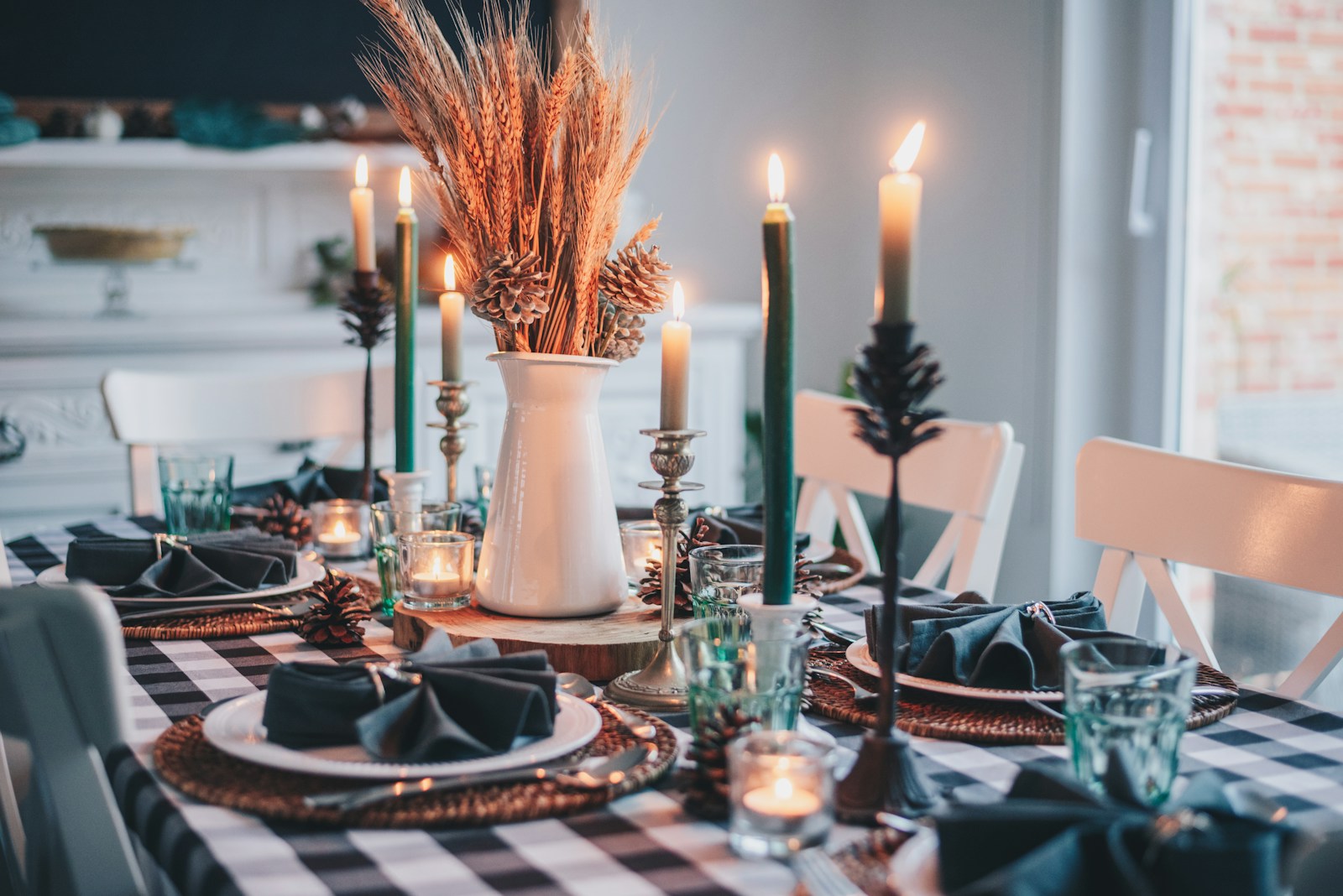
A thoughtfully set table signals that the meal is the main event, but editors stress that it does not require elaborate centerpieces or expensive linens. A neutral tablecloth or runner, a stack of basic white plates, and cloth napkins folded simply can create a clean canvas that works for multiple holidays, a strategy reflected in Taste of Home’s table-setting ideas. Layering in a few seasonal elements, such as sprigs of rosemary, small ornaments, or votive candles, adds personality without cluttering the surface or blocking sightlines.
Place cards and small favors are another low-effort way to make guests feel considered. Editors often suggest handwritten tags, a single cookie wrapped in cellophane, or a mini candy cane at each setting, touches that appear throughout their Christmas dinner coverage. These details help manage seating, encourage conversation, and give the table a finished look even if the rest of the room is casual. Because the components are inexpensive and reusable, hosts can repeat the formula year after year with minor tweaks to color or theme.
Plan a low-stress dessert moment
By the time dessert arrives, most hosts are running on fumes, which is why editors consistently recommend planning a finale that is visually impressive but logistically simple. A single showpiece, such as a trifle, a Bundt cake, or a slab pie, can anchor the dessert course, supported by a few easy extras like store-bought cookies or chocolates. Taste of Home’s collections of easy holiday desserts highlight recipes that can be baked ahead and finished with a quick dusting of powdered sugar, a drizzle of glaze, or a bowl of whipped cream at serving time.
Presentation often matters more than variety. Editors suggest grouping desserts on a separate sideboard or coffee table, adding a cake stand for height and a few small decorations to tie the display back to the main table. Their guides to dessert table styling show how clustering plates, stacking napkins, and placing a single serving utensil with each dish keeps traffic flowing and minimizes questions. By keeping the choices focused and the setup self-serve, hosts can sit down with their guests instead of slicing and plating every piece.
Prep for overnight guests like a small inn
When visitors are staying the night, editors recommend thinking like a boutique hotel and anticipating basic needs before they are asked. Fresh sheets, an extra blanket, and a cleared surface for a suitcase or bag go a long way toward making a guest room feel intentional, a point reinforced in Taste of Home’s overnight hosting tips. Even if the “guest room” is a pullout sofa, a small basket with travel-size toiletries, tissues, and a bottle of water can make the space feel more private and comfortable.
Morning logistics matter just as much. Editors often suggest setting out coffee supplies, mugs, and a simple breakfast option like muffins or a make-ahead casserole so early risers do not have to wake the host to find what they need, an approach reflected in their holiday breakfast roundups. Sharing the Wi-Fi password on a small card and pointing out towels and extra pillows before bed reduces awkward questions later. These small gestures show forethought and hospitality, which guests tend to remember long after the last dish is washed.
More from Willow and Hearth:
Leave a Reply