
Frustration has a way of creeping in when something looks clean at first glance but never quite feels right. That moment when sunlight hits a surface just enough to expose every streak and smudge can undo the satisfaction of cleaning in seconds. It creates this lingering sense that maybe the problem isn’t effort, but something harder to pinpoint.
That’s exactly why this story stands out, because it taps into a familiar experience of doing everything “right” and still not getting the result you expect. It’s not about laziness or neglect, but about using a method that seems correct until it quietly fails. When the fix turns out to be simple, it makes all the wasted time feel both frustrating and oddly funny.
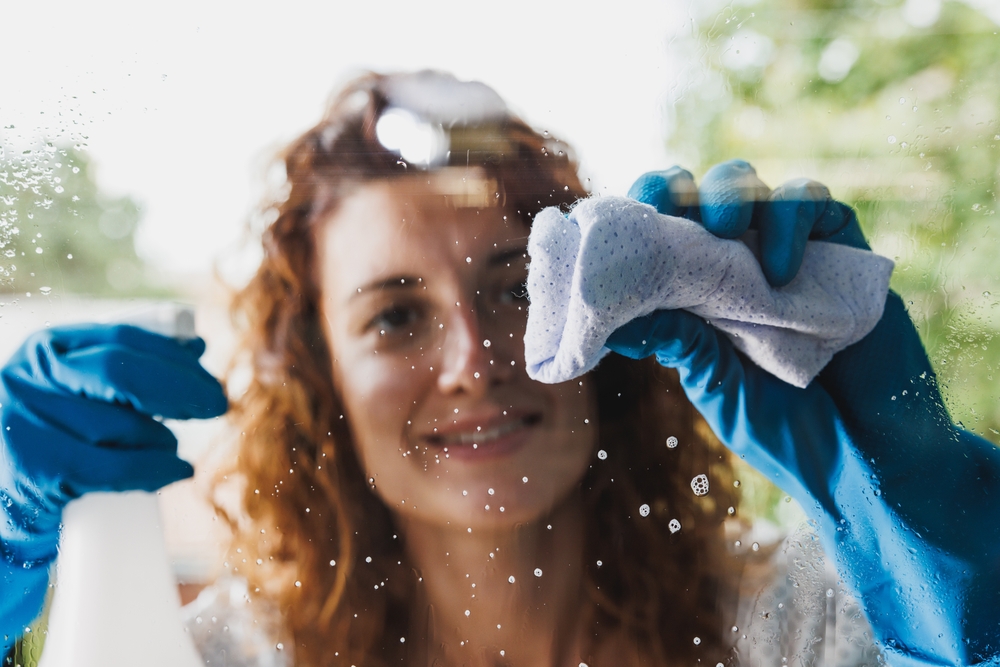
The Cleaning Routine That Seemed Good Enough
For years, the poster followed a method most people would recognize without thinking twice. Spray the glass, wipe it down with paper towels, step back, and admire the result. From a distance, everything looked perfectly fine, which made it easy to assume the job was done properly.
Up close, though, the illusion started to break. Certain angles of light revealed streaks scattered across the surface, along with faint residue that never quite disappeared. That inconsistency created doubt, but not enough to completely question the method.
The natural assumption was that the issue came from the products being used. Over time, different cleaners were tested in hopes of finding one that would finally solve the problem. Each attempt brought the same outcome, leaving the surface looking briefly improved before the streaks returned.
The Search for a Fix That Never Quite Worked
Switching products became the default strategy, driven by the belief that the right formula would make the difference. Each new cleaner promised better results, and each one seemed convincing at first. The problem was that none of them actually addressed what was going wrong.
The cycle repeated itself over several years, creating a quiet frustration that built gradually. Effort was consistent, attention to detail was there, yet the outcome never matched expectations. That disconnect made it feel like an unsolved puzzle rather than a simple cleaning task.
Blaming the products made sense because it was the most visible variable. Paper towels felt neutral and reliable, so they weren’t questioned. That assumption kept the real issue hidden in plain sight for much longer than expected.
The Small Suggestion That Changed Everything
A casual conversation with a friend introduced a completely different approach. The suggestion wasn’t complicated or expensive, just the idea of using a basic squeegee instead of paper towels. It sounded almost too simple to take seriously at first.
Curiosity eventually won out, and the method was tested without much expectation. The process involved spraying the glass, making a single pass across the top, and pulling the squeegee down in smooth, overlapping strokes. Wiping the blade between passes kept the motion clean and controlled.
The result felt almost confusing in the best way. When the light hit the windows the next morning, the usual streaks were gone entirely. The glass looked so clear it almost disappeared, creating a level of clarity that hadn’t been achieved in years.
Realizing the Problem Was Never the Cleaner
That moment shifted the entire understanding of what had been going wrong. The issue wasn’t the cleaning solution at all, but the tool being used to apply it. Paper towels had been leaving behind tiny fibers and uneven residue that only became visible under certain conditions.
The realization came with a mix of relief and disbelief. Years of switching products had been solving the wrong problem, which explained why nothing ever worked consistently. The solution had been simple all along, just overlooked.
Expanding the method to other surfaces reinforced the discovery. Mirrors and other glass areas responded the same way, becoming clearer with less effort. What started as a small experiment quickly turned into a complete shift in routine.
Reactions That Turned One Discovery Into Shared Advice
People reading the story immediately connected with the experience of chasing the wrong fix. That recognition showed up when Plus_Paint_9685 described the moment perfectly, saying, “the sun hitting at the exact angle that exposes every streak you thought wasn’t there is genuinely one of the most humbling cleaning moments.” The comment captured how universal that frustration feels.
Others focused on building on the technique with small improvements. Suggestions around adding simple ingredients to the cleaning solution or refining the squeegee method added layers to the original discovery. The conversation naturally expanded from one tip into a broader discussion about efficiency.
There was also a sense of validation from people who had already made the switch. That came through when Flashy-Library-6854 shared, “It is the only way and it is so fast and satisfying,” reinforcing that the result wasn’t a fluke. Together, the responses turned a single realization into a shared shift in how people approached cleaning glass surfaces.
More from Willow and Hearth:
Leave a Reply