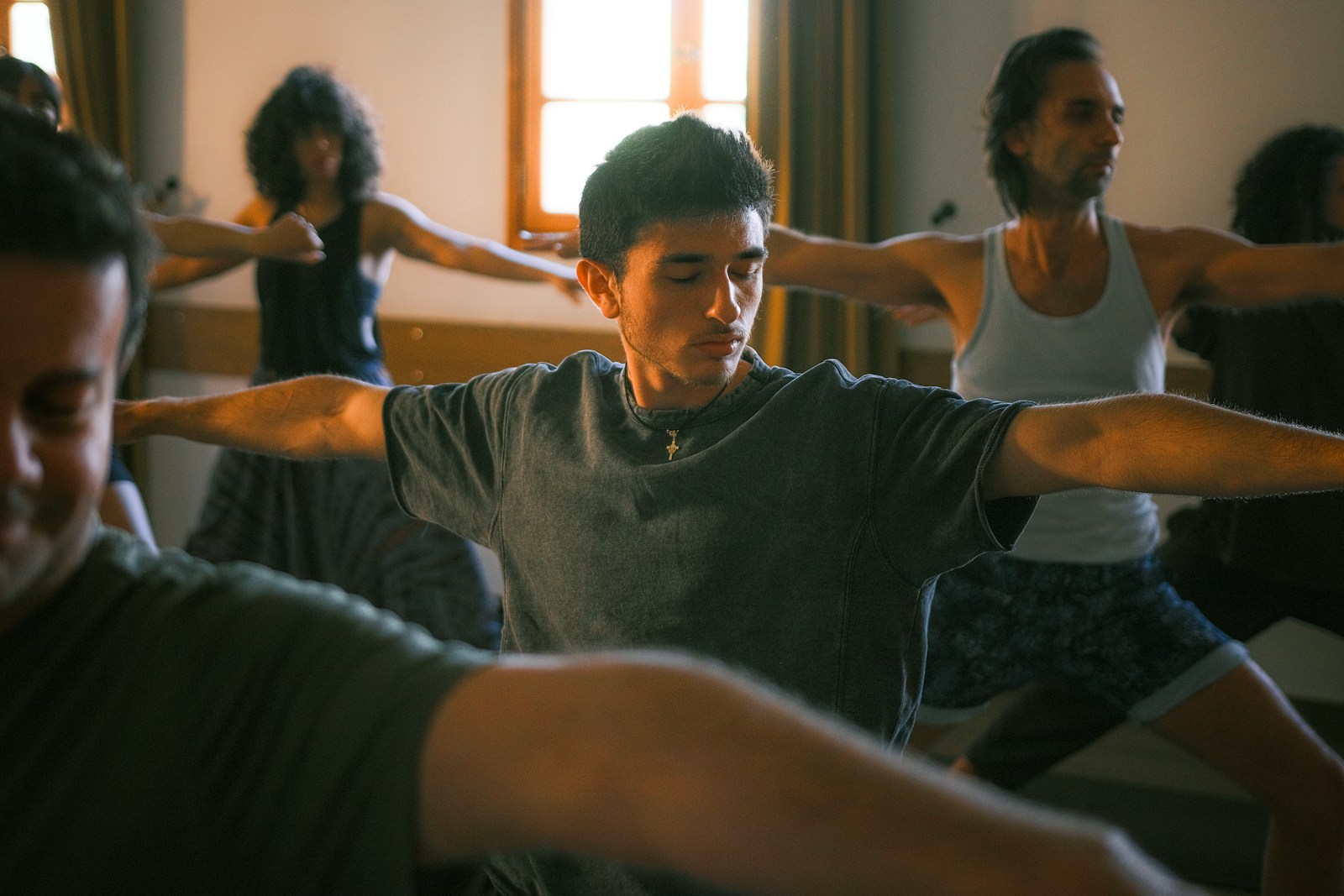
In the world of teenage fitness, navigating social dynamics can be just as challenging as mastering the latest Pilates move. For one 16-year-old boy, a simple exercise class has turned into a conundrum that many can relate to: how to correct someone without feeling like they’re hitting a wall of embarrassment. This teen, who has been enrolled in a Pilates class for most of the school year, recently discovered that his teacher mistakenly believes he’s a girl. With a mix of humor and anxiety, he took to Reddit to seek advice on how to handle this awkward situation.

Despite the potential for misunderstandings, the teen acknowledges that it’s an easy mistake to make. He describes himself as fairly androgynous with a high voice and an excitable personality. However, he’s also learned that appearances and mannerisms can lead to assumptions about gender, which can be especially tricky in an environment where physicality is on full display. His teacher’s error has been compounded by the fact that the school employs digital records where students can indicate their preferred pronouns, something he did, yet the misunderstanding persists.
Initially, the boy thought the teacher’s use of “she” was meant as a light-hearted joke. After all, he’s the most flexible person in the class—something often stereotypically associated with female students. But when his teacher introduced him as “she” to a new student in the class, it became clear that this was not a fleeting joke; it was a misunderstanding that needed addressing. Now, as he approaches the third trimester of the school year, he finds himself caught in a bind: how does he correct his teacher without causing embarrassment for either of them?
The responses he received from fellow Redditors were a mix of practical advice and moral support. One user suggested that the boy should approach his teacher after class to gently clarify the situation. They recommended a calm and straightforward approach: simply saying, “Hey, you’ve been calling me ‘she’ for a while, but just to let you know, I’m a ‘he.’” It’s a suggestion that emphasizes open communication and kindness, as it allows the teacher to understand her mistake without causing a scene in front of the entire class.
Another commenter offered a different angle, suggesting that he could enlist the help of a friend in the class to bring it up to the teacher. Sometimes, a third party can diffuse the potential awkwardness and broach the topic without putting the boy directly in the spotlight. This approach might encourage the teacher to seek him out later to apologize, turning an embarrassing moment into a bonding opportunity.
Some might argue that a simple, straightforward correction is the best route. One Redditor said, “Just say, ‘Actually, I’m a guy.’” This no-nonsense approach cuts through the tension and delivers the message clearly. While it may feel daunting, getting straight to the point can often be the most effective strategy, even if it involves a bit of awkwardness.
This teenager’s situation is one that resonates with many, particularly in an age where gender expectations are being challenged and reshaped. The blend of embarrassment, humor, and anxiety reflects the complex landscape of teenage identity, where a simple misunderstanding can snowball into a source of stress. Yet, amidst the potential for cringe-worthy moments, it’s also an opportunity for connection—both between the teacher and the student, and among peers navigating similar experiences.
As teens seek to express their identities and navigate social norms, understanding and compassion remain crucial. Whether through direct communication or the support of friends, finding a way to clear up misunderstandings can lead to personal growth and stronger relationships.
In the end, it comes down to finding a solution that feels right. Whether it’s a one-on-one conversation, getting a friend involved, or just stating the facts, the goal is the same: to correct the misunderstanding with grace and ease. It’s a small step that could pave the way for greater understanding, not just in Pilates class but in the broader context of their journey through adolescence.
More from Willow and Hearth:
Leave a Reply