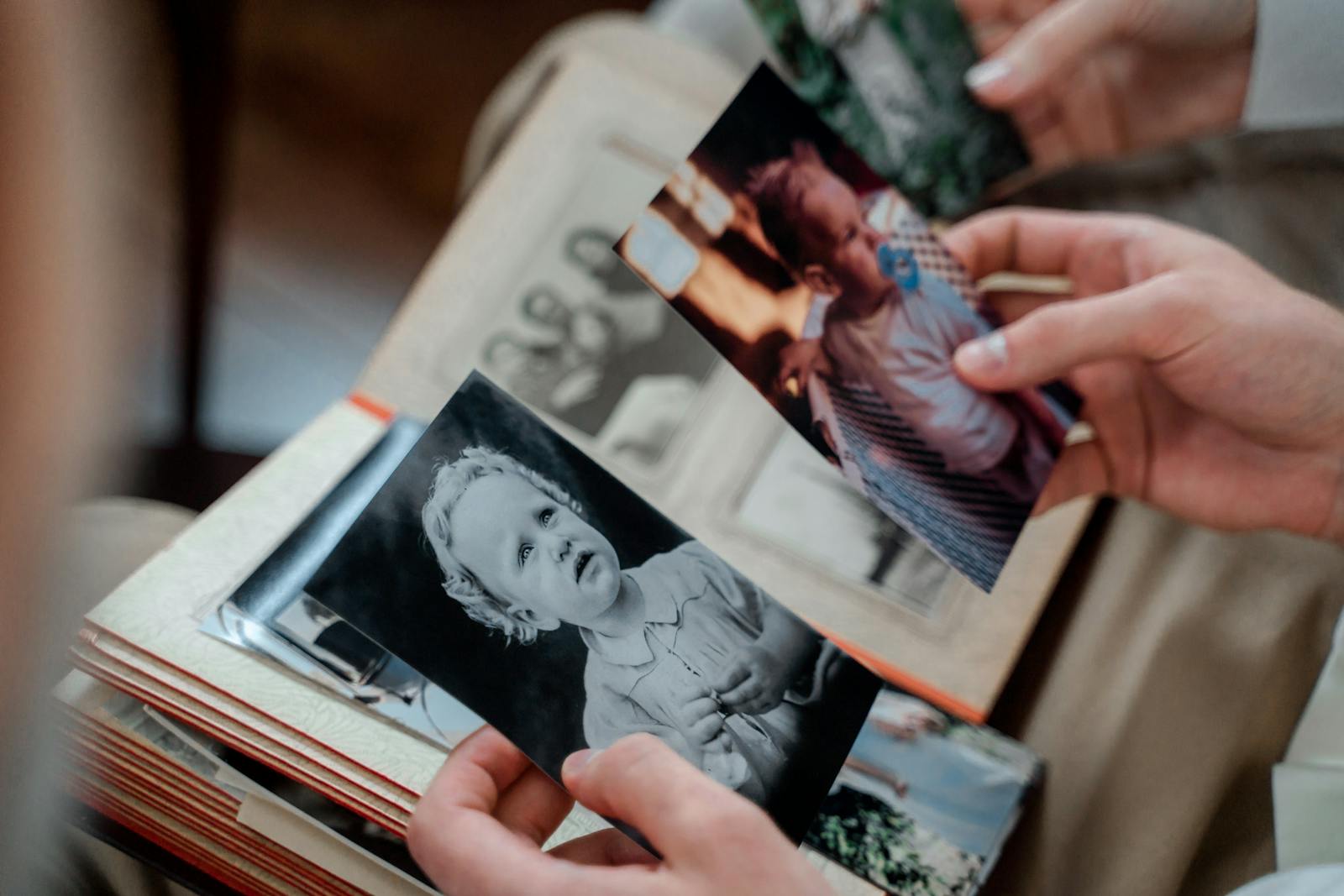
In the delicate tapestry of family dynamics, the relationship between parents and their children can often be complex, particularly when mental health issues come into play. For one Reddit user, this complexity was brought to a head while planning a fitting tribute for her father, who struggled with undiagnosed Borderline Personality Disorder (uBPD) throughout his life. As she sifted through age-old family photographs, she found herself inundated with a swirl of emotions, memories of love juxtaposed with darker undertones that seemed to tell a more complicated story.

The act of selecting a headstone—an unavoidably final act—became a profound opportunity to reflect on her father’s impact on her life. While some family snapshots depicted moments of warmth, laughter, and affection, others revealed something unsettling. She found photos where her father bore the infamous “crazy eyes,” reflecting a more chaotic and unpredictable side. This stark contrast left her heart heavy, reminding her that love does not always equate to stability and that the legacy of a parent can often be a tangled web of joy and pain.
In these moments of reflection, she recognized the profound impact of her father’s mental illness on her own emotional landscape. Growing up, she learned to navigate the sharp edges of his personality, often tiptoeing around outbursts that could erupt without warning. The loving father image shown in one photo often clashed with the unpredictable behavior represented in another. As she examined these artifacts of her past, tears began to flow—tears for the father she wished he could have been, mingled with grief for the one she often had to defend herself against.
This experience of going through old photographs resonates with many who have encountered similar familial complexities. The dance between nostalgia and reality often leaves one questioning how to honor a parent who has left behind a patchwork of memories—some beautiful, others riddled with chaos. In her case, while the love was undeniable, so too was the struggle that shaped their relationship.
As she continued her planning, she found herself moved by the remembrance of shared activities, family vacations, and simple moments of joy, all represented through smiles frozen in time. Yet, these moments were often tinged with an underlying sadness that encapsulated the reality of their life together. A loving embrace captured in a photograph could just as easily be accompanied by memories of tension that made those joyful instances feel fleeting and fragile.
Deciding how to commemorate such a life became a reflective journey. She contemplated inscriptions that might capture the duality of her father’s nature—the loving man who played games with her in the yard, and the one whose emotional unpredictability often left her feeling unseen. Ultimately, she settled on a simple yet profound message: “In loving memory of a father. A complex man with a big heart.”
Memorializing her father with a headstone became an avenue for healing. This form of self-exploration allowed her to accept the duality of her experiences, acknowledging both the joy and heartache he brought into her life. She realized that while the past could not be rewritten, how she chose to honor it could still be framed in a way that was reflective, honest, and healing.
For anyone sorting through complicated family histories, the process can feel overwhelming, especially when it comes to memorialization. Each photograph holds weight—a reminder of laughter and sorrow. Yet, this daughter’s journey serves as a poignant reminder that even the most complex relationships can find resolution through mindfulness, compassion, and an honest reckoning with the realities of their loved ones.
As she prepared for the funeral and the subsequent unveiling of the headstone, she found solace in knowing that she was not alone in her experience. The shared struggles of many navigating familial relationships with mental health challenges offer a collective understanding where tears can flow freely, and complexities can coexist in harmony.
Ultimately, the act of memorializing a parent is not only about reflecting on their life but also about embracing the individual’s full spectrum of love, pain, and everything in between—a beautiful yet imperfect journey toward closure.
More from Willow and Hearth:
Leave a Reply