Designers are famously picky about lighting, so when they fall hard for a vintage lamp, it usually means the piece has serious staying power. From iridescent glass to postmodern plastic, these 12 vintage lamps designers love show how a single fixture can shape an entire room, and even hint at where lighting trends are headed next.
1. Louis Comfort Tiffany Dragonfly Lamp
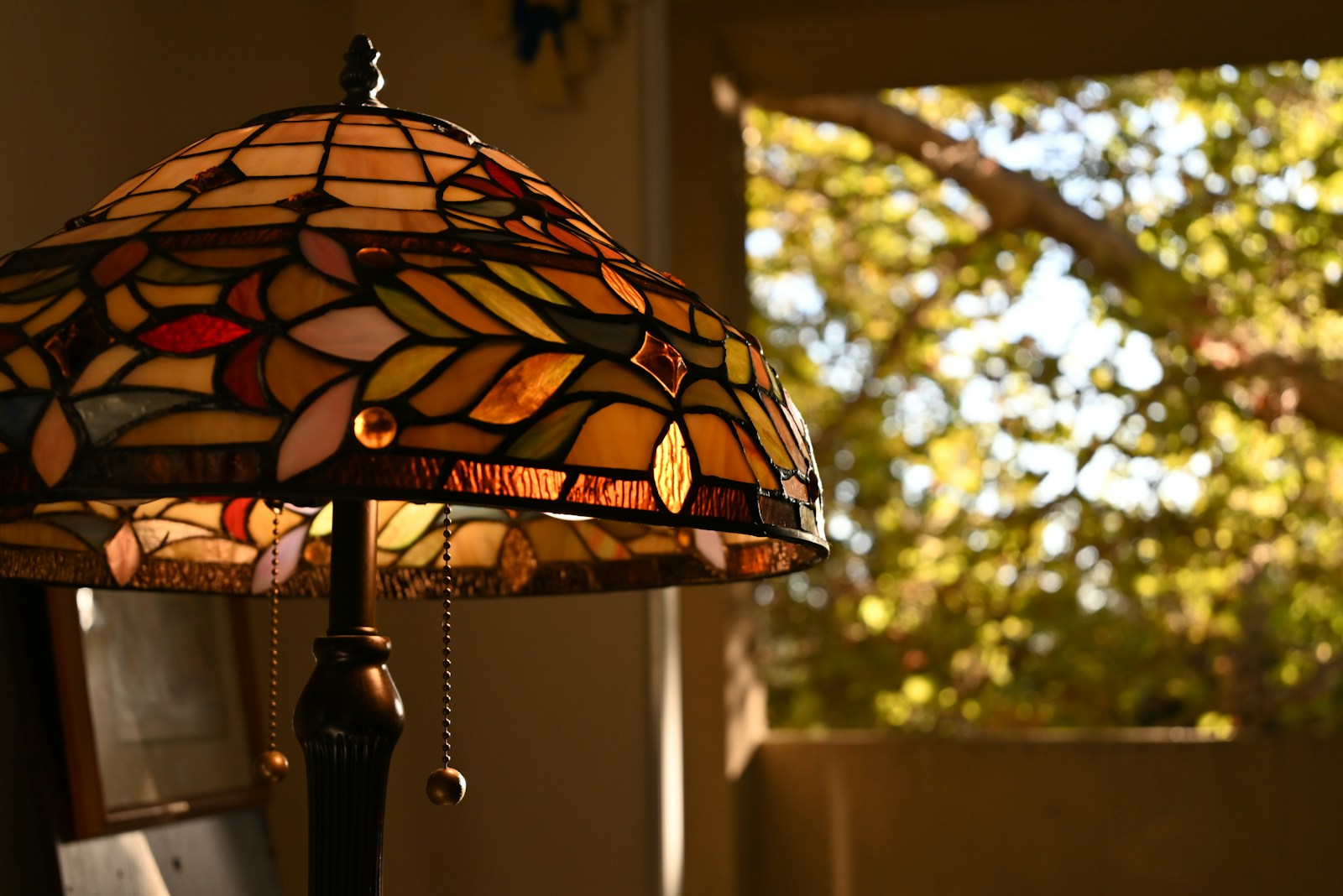
The Louis Comfort Tiffany Dragonfly Lamp, circa 1902, is the kind of vintage piece that stops designers in their tracks. In an interview, Kelly Wearstler called it “my ultimate vintage obsession for its iridescent glasswork,” a rare bit of fan-girling from someone known for fearless taste. That iridescence, shimmering across the dragonfly wings and jeweled eyes, is exactly what makes the lamp feel alive when lit, turning a side table into a small stage.
Wearstler’s obsession signals how relevant this lamp still is to contemporary interiors. Collectors chase it for the craftsmanship, but working designers also see it as a lesson in mood: the way layered glass can soften light while still reading as bold color. For clients flirting with maximalism or rich jewel tones, the Dragonfly Lamp becomes a reference point, proving that intricate pattern and saturated hues can feel timeless rather than fussy.
2. Pairpoint Glass Puffy Lamp
The Pairpoint Glass Puffy Lamp, manufactured in New Bedford, Massachusetts, around 1890, has a devoted fan in Jonathan Adler, who collects it for its blown-glass dome. That “puffy” shade, thick and rounded like a rising soufflé, diffuses light in a way that feels instantly nostalgic. Adler’s enthusiasm underlines how this lamp bridges serious craftsmanship and a slightly cheeky silhouette, which fits neatly into his playful, polished aesthetic.
For designers, the stakes with a lamp like this are about warmth and personality. The blown-glass dome throws a soft, flattering glow that can rescue even a stark room, while the ornate surface gives traditional spaces a hit of character. When Adler reaches for a Pairpoint, it signals to clients that vintage lighting does not have to be minimal to feel modern, and that late nineteenth century pieces can still hold their own beside contemporary furniture.
3. Jacques Adnet Floor Lamp
The Jacques Adnet Floor Lamp, from France in the 1940s, is pure quiet luxury, which is exactly why Kelly Behun says, “I adore” it. She singles it out “for its leather-wrapped metal structure,” a detail that turns a simple frame into something tailored and tactile. The stitching, the patina, and the way the leather softens the silhouette all make the lamp feel more like a piece of luggage or a saddle than a typical fixture.
Designers watching clients gravitate toward investment pieces see this lamp as a case study in subtle drama. The leather-wrapped metal adds depth without shouting, so it works in both minimalist apartments and layered, art-filled homes. Behun’s admiration signals a broader trend: lighting that doubles as finely crafted furniture, where materials like leather are not just accents but the main story, encouraging homeowners to think about touch and aging as part of the design brief.
4. Murano Glass Sommerso Lamp
Aerin Lauder’s pick, the Murano Glass Sommerso Lamp, produced on Murano Island, Italy, in the 1950s, is all about technique. She highlights it for its layered colored glass, the signature sommerso method where one hue seems to float inside another. That depth of color turns the lamp base into a kind of frozen wave, shifting from clear to saturated tones as the viewer moves around it.
For designers, Lauder’s appreciation underscores how process can drive desirability. The sommerso technique makes each lamp slightly different, which appeals to clients craving pieces that feel one of a kind rather than mass-produced. At the same time, the 1950s Italian origin taps into the ongoing obsession with midcentury Murano glass. When a designer places one of these lamps in a room, it often becomes the anchor for a whole palette, proving how a single vintage object can dictate color strategy for an entire project.
5. George Nelson Ball Clock Lamp
Thomas O’Brien has a soft spot for the George Nelson Ball Clock Lamp, a 1950s Howard Miller design adapted into a lamp, and he specifically notes its playful wooden spheres. Those little balls, originally part of the iconic clock, become a sculptural detail when translated into lighting, giving the piece a kinetic, almost atomic-age feel. The adaptation keeps the midcentury optimism intact while making the form more functional for today’s interiors.
Designers watching the renewed love for midcentury design see this lamp as a clever way to nod to the era without defaulting to the usual suspects. O’Brien’s affection highlights how reimagined classics can satisfy both collectors and clients who want something practical. The wooden spheres add warmth to metal and plastic components, which helps the lamp land comfortably in rooms that mix vintage and contemporary pieces, reinforcing the idea that good design can evolve formats without losing its soul.
6. Arne Jacobsen Egg Lamp
Ilse Crawford recommends the Arne Jacobsen Egg Lamp, originally a 1958 Danish pendant, but she favors it as a vintage floor adaptation for its organic shape. That egg-like curve softens the light and the room, echoing Jacobsen’s famous furniture while standing on its own as a sculptural object. By shifting the pendant into a floor version, designers gain flexibility in placement without losing the original design language.
The appeal here speaks to a broader shift toward softer, more human forms in contemporary spaces. Crawford’s endorsement shows how an iconic midcentury piece can be reinterpreted to suit current living patterns, where renters and homeowners alike rely on floor lamps to avoid hardwiring. The organic silhouette also plays nicely with natural materials and textiles, making it a go-to for designers who want modernist clarity without harshness, and reinforcing the trend toward adaptable, user-friendly vintage lighting.
7. Ettore Sottsass Memphis Lamp
When Bobby Berk cites the Ettore Sottsass Memphis Lamp, from Milan in 1981, he is clearly leaning into drama. He calls it a bold postmodern icon, pointing to its plastic and neon elements as the reason it still feels radical. The lamp’s stacked shapes and electric colors embody the Memphis movement’s refusal to be quiet, turning a functional object into something closer to a small sculpture.
For designers, Berk’s enthusiasm signals how postmodern pieces are cycling back into favor with a new generation. The plastic and neon that once felt rebellious now read as joyful, especially in interiors that mix vintage with tech-forward living. Using a Sottsass lamp can shift the stakes of a project, pushing clients to accept riskier color combinations or unexpected materials elsewhere. It also proves that sustainability in design can include reusing high-impact vintage pieces instead of buying new, low-quality statement lighting.
8. Jean Royère Liane Lamp
Pierre Yovanovitch’s affinity for the Jean Royère Liane Lamp, a French 1950s design with spiraling metal vines, is all about line and movement. The lamp’s structure twists upward like a climbing plant, turning metal into something unexpectedly lyrical. Those spiraling vines create a sense of vertical rhythm, which can draw the eye in tall rooms or add height where ceilings are lower.
Yovanovitch’s admiration highlights how vintage lighting can introduce a sculptural quality that furniture alone cannot provide. The Liane Lamp’s airy form keeps it from feeling heavy, even in smaller spaces, which is crucial for designers balancing drama with livability. Its 1950s French origin also taps into ongoing interest in Royère’s work, making the lamp both a design flex and a subtle reference for clients who follow collectible design. In practice, it often becomes the piece that loosens up otherwise strict, rectilinear interiors.
9. Gio Ponti Arredoluce Lamp
India Mahdavi treasures the Gio Ponti Arredoluce Lamp, made in Milan around 1954, for its elegant brass and glass form. The combination of slender metal and refined glass gives the lamp a poised, almost architectural presence, which aligns neatly with Ponti’s broader body of work. Mahdavi’s appreciation underscores how the lamp balances lightness and structure, avoiding both fussiness and minimal austerity.
For designers, this kind of piece becomes a shorthand for sophistication. The brass introduces a warm metallic note without the brashness of high-polish finishes, while the glass keeps the profile visually light. Mahdavi’s endorsement also reflects a larger trend toward mixing Italian midcentury lighting with more colorful, contemporary interiors. By placing a Ponti lamp in a room full of pattern and saturated hues, designers can ground the space with a single, impeccably proportioned object that quietly signals design literacy.
10. Studio 65 Boccia Lamp
Nate Berkus praises the Studio 65 Boccia Lamp, an Italian 1970s piece, for its resemblance to a bowling ball in chrome and leather. That playful, spherical form sits somewhere between pop art and industrial design, with the shiny metal and tactile leather creating a sharp contrast. The lamp’s visual joke is part of the appeal, but Berkus’s interest also points to its ability to inject humor into otherwise serious spaces.
Designers increasingly recognize that clients want rooms that feel personal rather than museum-like, and the Boccia Lamp fits that brief perfectly. Its bowling-ball reference can spark conversation without tipping into kitsch, especially when styled alongside more restrained furniture. The chrome surface reflects surrounding colors and textures, subtly tying the lamp into the rest of the room. For Berkus, choosing this piece shows how vintage lighting can carry both narrative and nostalgia, which is a powerful tool in residential projects.
11. Greta Magnusson Grossman Gräshoppa Lamp
Beata Heuman’s selection, the Greta Magnusson Grossman Gräshoppa Lamp, a 1947 Swedish design with a conical shade, is beloved for its sculptural swivel arm. That angled stance and pointed shade give the lamp a dynamic, almost animated posture, as if it is leaning in to spotlight a book or artwork. Heuman’s choice highlights how the lamp’s functional adjustability is inseparable from its visual character.
For designers navigating small apartments and flexible work-from-home setups, the Gräshoppa’s swivel arm is more than a styling detail. It allows light to be directed precisely where it is needed, which supports layered lighting schemes without cluttering a room with fixtures. The 1947 origin also speaks to the longevity of Scandinavian modernism, proving that a well-considered silhouette can stay relevant across decades. Heuman’s endorsement reinforces the idea that vintage task lighting can be both practical and delightfully expressive.
12. Edward Wormley for Dunbar Lamp
Kelly Hoppen’s pick, the Edward Wormley for Dunbar Lamp, from Chicago in the 1950s, stands out for its walnut wood base and parchment shade. She highlights that pairing as a key part of its appeal, with the warm timber grounding the light, and the parchment casting a soft, diffuse glow. The proportions feel calm and balanced, which aligns with Hoppen’s signature, quietly luxurious style.
Designers watching the swing back toward natural materials see this lamp as a blueprint. The walnut base introduces organic texture without visual noise, while the parchment shade avoids the coldness of some modern synthetics. Hoppen’s admiration suggests that clients are increasingly drawn to pieces that feel both crafted and understated. In practice, a Wormley lamp can bridge vintage and contemporary furniture, reassuring homeowners that midcentury American design still has a place in today’s layered, globally influenced interiors.
More from Wilder Media Group:
Leave a Reply