If you grew up sneaking cookies out of grandma’s plastic containers, you already know retro Tupperware hits a sweet spot of nostalgia and practicality. Some of those “everyday” pieces are now quietly collectible, with certain bowls, carriers, and keepers reselling for serious cash. If you are sorting through cupboards or a family estate, these 10 vintage Tupperware pieces are absolutely worth saving instead of tossing in the donation pile.
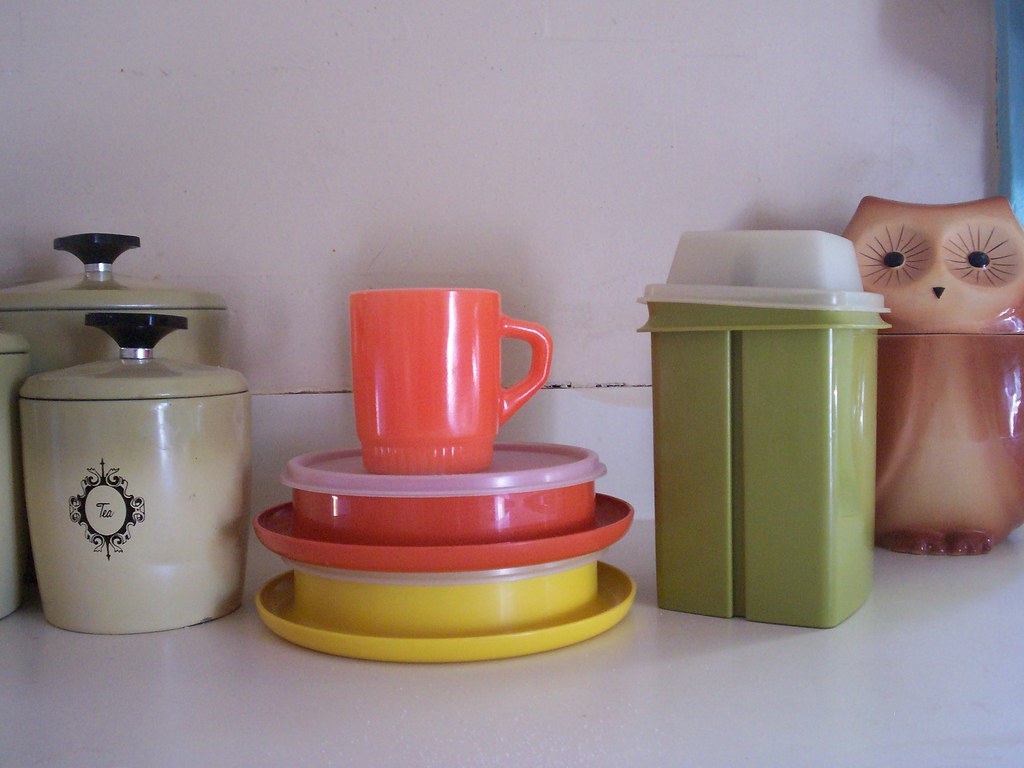
1. The Iconic Wonder Bowl
The Wonder Bowl from the 1940s is one of those deceptively simple pieces that collectors chase because of its original seal design. Vintage market experts note that this early modular storage bowl can resell for up to $30 each when the lid still snaps on tightly, which is why it regularly shows up on curated lists of vintage Tupperware worth reselling. That price tag reflects how well the seal still works for leftovers, baking prep, or even pantry storage decades after it left a home party table.
If you find a Wonder Bowl in your cabinets, check the rim for warping and make sure the lid presses down evenly all the way around. A bowl that still passes the “shake test” without leaks is more than just a memory of Jell-O salads, it is a small, functional asset. For collectors, the Wonder Bowl captures the start of Tupperware’s airtight revolution, so keeping one in good shape connects you directly to that design history.
2. Versatile Serval Nested Bowls
The Serval set from the 1950s, often confused with later Servalier lines, is all about nested convenience and party-ready style. These bowls stack neatly, then seal up with tight lids that make hauling potato salad or punch to a neighbor’s house incredibly easy. Because of that mid-century design appeal, complete sets typically land in the $40 to $60 resale range, and similar Servalier astro bowls have been tracked with a Current value up to $149 for certain colors and sizes.
That kind of pricing shows how much buyers value both function and aesthetics in these nested bowls. If your Serval set still has snug-fitting lids and the plastic has not gone chalky, you are looking at a piece that can still serve chips at a party while quietly appreciating in value. For anyone hosting on a budget, keeping and using these bowls lets you lean into retro style without sacrificing the airtight performance that made them famous.
3. Practical Butter Keeper
The Tupperware Butter Keeper from the 1960s is the definition of an “everyday” item that turned into a collectible. Designed to keep butter fresh and spreadable on the counter without refrigeration, it became a staple in grandma’s kitchen long before fancy butter bells showed up. Experts now point out that this rectangular container, especially in classic colors, can be worth $25 or more to collectors who appreciate its practical innovation and nostalgic look, a value echoed by listings for a Tupperware 2-PC Butter Keeper with its 16 oz capacity and fitted lid.
When you spot one, look for a tight-fitting top and a base that is not warped, since a flat bottom helps the butter stay evenly chilled at room temperature. Keeping this piece is not just about resale, it is also about how it still solves a daily problem in a low-tech way. For home cooks who bake often or just like soft butter ready for toast, hanging on to a vintage Butter Keeper can save you from constantly replacing cheaper, flimsier containers.
4. Customizable Pick-a-Mix Set
The Pick-a-Mix set from the 1970s marked a shift in Tupperware’s focus from simple food storage to full-on organization. Instead of one-size-fits-all bowls, you got customizable storage modules that could be mixed and matched to fit snacks, sewing notions, or craft supplies. Collectors now look for complete Pick-a-Mix sets because they represent that evolution, and intact groupings can resell in the $50 to $100 range according to roundups of modular Tupperware sets that highlight their organizational appeal.
For you, the stakes are pretty straightforward: a full, matching set is worth far more than scattered single pieces. Before you donate those odd containers, see if the lids and bases nest together into a recognizable system. If they do, you might have a near-complete Pick-a-Mix setup that still works beautifully in a pantry or craft room. Saving it means you get modular storage that has already proven it can survive decades of real-life use.
5. Colorful Hostess Set
The Hostess Set bowls from the 1950s are instantly recognizable by their soft pastel colors and party-friendly shapes. These were the bowls that came out for popcorn, punch, and ambrosia salad whenever guests dropped by, and that entertaining history is a big part of their appeal. Vintage market watchers note that individual Hostess bowls can fetch around $35 each, especially when the color is still bright and the lid has not cracked, putting them firmly in the “worth saving” category for anyone cleaning out a sideboard.
Because each bowl stands on its own, you do not need a full set to have something valuable. A single pastel piece can anchor a retro tablescape or serve as a display item in an open kitchen shelf. For collectors and casual decorators alike, the Hostess Set captures a specific mid-century moment when home entertaining was a performance, so holding on to these bowls lets you tap into that vibe while still using them for chips and dip.
6. Secure Cake Carrier
The Cake Carrier from the 1960s is one of those items you might assume is too bulky to keep, but it earns its shelf space. Designed to transport cakes securely, it pairs a sturdy base with a tall dome and locking handle so your layers survive the car ride to a potluck. Experts who look at “everyday” kitchen pieces now point out that a well-kept vintage carrier can be appraised around $40, especially when it still functions as a reliable everyday heirloom in grandma’s kitchen.
Real-world thrift finds back that up, with shoppers bragging about scoring a Vintage Tupperware cake carrier for just a few dollars alongside a Pyrex 404 Bowl and feeling like they hit the jackpot. If your carrier’s clips still lock and the handle feels solid, you have a piece that saves you from juggling cardboard bakery boxes. Keeping it means you can keep baking from-scratch cakes and transporting them without worrying about frosting disasters.
7. Flip-Top Salt and Pepper Shakers
The Tupperware Salt and Pepper Shakers from the 1940s look simple, but their flip-top lids were a clever upgrade from open shakers that went stale. Collectors now seek out pairs with intact tops and clear markings, and expert valuations put a matched set in the $20 to $30 range. Some listings describe them as Vintage Tupperware Shakers Marked with Gold Lettering, a Large Salt and Pepper Shaker Set in White with Natural Sheer Flip Top Seals, which shows how specific buyers can get about style details.
For your kitchen, that means even a small set of shakers can carry both sentimental and monetary value. Check that the flip tops still open and close smoothly and that the plastic has not absorbed strong odors. If they pass those tests, you have a pair that can keep seasoning handy on the table while also serving as a conversation starter about how long good design can last.
8. Stackable Measuring Cups
The original Tupperware Measuring Cups from the 1950s are a perfect example of form meeting function. These colorful, stackable cups nest together so they take up minimal drawer space, and the measurements are molded into the plastic instead of printed on, which helps them survive decades of dishwashing. Collectors and home bakers alike value complete sets, with resale estimates typically landing between $25 and $50 for cups that still stack cleanly and show minimal staining.
Hanging on to these cups has practical stakes too, especially if you cook or bake regularly. A vintage set that still measures accurately can outlast cheaper modern versions that lose their markings. When you keep and use them, you are not just preserving a “functional heirloom,” you are also cutting down on the need to buy new plastic tools that may not hold up as well over time.
9. Durable Egg Tray
The retro Egg Tray from the 1960s is one of those pieces you might overlook until you realize how long it has quietly done its job. Designed to cradle hard-boiled or deviled eggs, it often came with a fitted lid that let you stack it in the fridge or carry it to a picnic. Experts who study plastic longevity say that older Tupperware can last for decades, and they advise saving pieces like the Egg Tray as long as the lid still seals tightly and the plastic shows no cracks, a guideline echoed in advice on when to replace Tupperware.
For you, the key test is simple: if the tray closes securely and the surface is not crazed or brittle, it is not time to toss it. That durability means you can keep using it for holiday deviled eggs or as a quirky organizer for jewelry or craft beads. In a world of disposable containers, a decades-old Egg Tray that still works is a quiet argument for repairing and reusing instead of constantly replacing.
10. Airtight Juice Saver Pitcher
The Juice Saver pitcher from the 1950s is all about airtight performance, which is why it still earns a spot in collectors’ cupboards. Designed to keep juice or iced tea fresh without absorbing fridge odors, it relies on a snug lid and sturdy handle that can survive daily use. Vintage experts say these pitchers are worth preserving as long as the body is not warped and the seal still clicks into place, putting them in the same category as other airtight pieces that do not need replacement until they show real damage.
When you test yours, fill it with water and tip it gently over the sink to check for leaks. A pitcher that passes is still perfectly suited for homemade lemonade, cold brew coffee, or even batched cocktails. Keeping a Juice Saver in rotation lets you enjoy a piece of mid-century design that has already proven it can handle decades of fridge duty without giving up its seal.
Leave a Reply