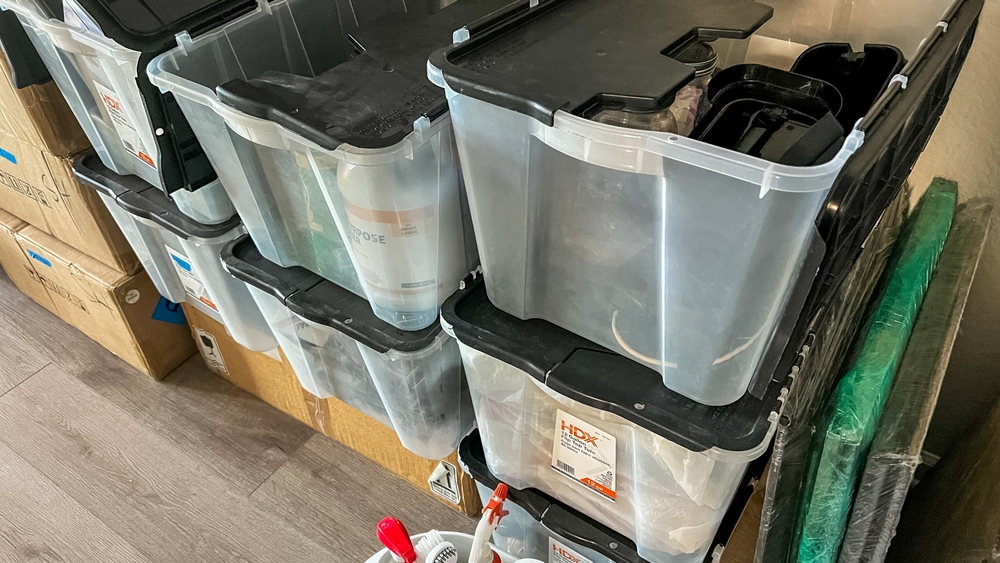
Plastic bins feel like the answer to every clutter problem, but they are not as harmless as they look. Certain things can warp, mold, stain, or even become unsafe when you seal them into plastic, especially in hot kitchens or drafty garages. If you want your stuff to last, you need to know what never belongs in those tubs and what to use instead.
1. Food Items
Food items are the first thing you should think twice about before tossing into plastic bins. When you pack raw meats, tomato sauces, curries, garlic, onions, fruits, or other hot foods into plastic, the surface can stain and hold odors, and there is a risk that chemicals from the container migrate into what you eat. Guidance on things you should never store in plastic containers highlights how these everyday ingredients are especially problematic when they are hot or acidic.
Instead of a big plastic bin, use glass, stainless steel, or food-safe containers that are clearly labeled for long-term storage. That matters even more if you are stacking meals in a warm pantry or near appliances that run hot. Over time, poor storage habits can affect both flavor and safety, and if you are feeding kids or older adults, you want to cut out any avoidable risk from your storage choices.
2. Photographs and Negatives
Photographs and negatives are incredibly sensitive to the conditions inside plastic bins. Static electricity can build up on the plastic walls and lids, which is rough on delicate photo surfaces and film. Advice on what not to keep in plastic bins points you toward acid-free boxes and archival sleeves instead, because they protect against both physical damage and chemical reactions that can fade images.
When you cram old family prints into a cloudy bin and shove it into a closet or garage, you are trapping moisture and fluctuating temperatures right next to irreplaceable memories. Over a few seasons, that can mean curling, sticking, or mold spots that never come off. If you care about passing those photos down, it is worth using archival albums or flat storage boxes that let the paper breathe and keep static to a minimum.
3. Important Documents
Important documents, from birth certificates to home records, are another category that does not belong in plastic bins, especially if you are tempted to stash them in the garage. When air is sealed in, any humidity that sneaks inside has nowhere to go, and that trapped moisture can lead to mold, ink bleeding, and brittle pages. Guidance on what you should never store in the garage warns that this space is already risky because of temperature swings and dampness.
A better move is to keep critical papers in a fire-resistant file box or cabinet inside your living space, where the climate is more stable. If you need backup copies, scan them and store digital versions in secure cloud storage. That way, a leaky roof, a flooded garage floor, or a cracked plastic bin will not wipe out records you might need for taxes, insurance claims, or legal issues later.
4. Natural Fiber Clothing
Natural fiber clothing, like wool sweaters, silk blouses, and cotton heirlooms, suffers in plastic bins that do not breathe. When you trap these fabrics without airflow, any residual moisture from cleaning or the air can turn into mildew, and that musty smell is almost impossible to remove. Experts who warn about things you should never store in cardboard point out that poor storage materials invite pests and damage, and plastic bins have their own version of that problem.
Instead of stuffing sweaters into a sealed tub, use breathable garment bags, cotton storage boxes, or even a Cedar chest lined with acid-free tissue, as long as you avoid wrapping items directly in plastic. Related advice on what not to keep in Cedar chests notes that plastic bins or acid-free tissue are often mentioned together, but the key is choosing materials that do not trap damp air. If you store clothes correctly, you are less likely to deal with moth holes, warped fibers, or mystery stains when you pull them out next season.
5. Fragile Kitchenware
Fragile kitchenware, including delicate glassware, fine china, and thin baking dishes, is not a great match for plastic bins, especially if you park those bins near heat sources. Plastic can soften or warp when it sits close to the top of your fridge or next to a hard-working oven, and that movement can shift and crack what is inside. Advice on what you should never store on top of your fridge explains that this area runs warm and vibrates, which is already bad news for breakables.
Cardboard boxes are not ideal either, since they can sag or attract pests, so you are better off with sturdy, padded crates or dedicated dish storage containers that are designed for fragile items. If you must use plastic at all, keep it in a cool, stable pantry and cushion every piece with foam or cloth. That extra care protects both your investment and your safety, because broken glass hidden in a bin is an accident waiting to happen.
6. Canned Goods
Canned goods might seem indestructible, but they do not belong in plastic bins that live in a winter garage. When temperatures drop, the metal cans and their contents respond differently than the surrounding plastic, and the bin itself can crack or split. Guidance on what not to store in the garage during winter points out that cold-sensitive items are at risk in that space, and plastic containers only add another failure point.
If a bin breaks, cans can rust on the damp floor or even burst if the contents freeze and expand. That is not just a waste of food, it can also create a mess that attracts pests and makes the garage smell awful. Keep canned goods in a cool, dry pantry or basement instead, where temperatures stay relatively steady and you can actually see what you have before it expires.
7. Flammable Liquids
Flammable liquids, like gasoline for your mower, paint thinner, or certain solvents, should never be sealed inside plastic bins. Fumes can build up in that confined space, and plastic surfaces can hold static, which is the last thing you want around combustible vapors. Lists of things you should never store in plastic containers highlight how some substances simply are not compatible with plastic, especially when heat or chemical reactions are involved.
Most flammable liquids come in containers that are already rated for safe storage, so your job is to keep those in a well-ventilated area, away from ignition sources and out of reach of kids. Tossing them into a random bin might look tidier, but it hides labels, makes leaks harder to spot, and can turn a small spill into a bigger hazard. Treat these products like the fire risk they are, not just another thing to corral.
8. Chemicals and Cleaners
Chemicals and cleaners, from bleach to strong degreasers, can slowly eat away at plastic bins or react with each other if they leak inside a shared container. Over time, that kind of damage can leave you with a cracked bin and a sticky, corrosive puddle you did not see coming. Advice on things you should never store in plastic containers is often echoed in organizing tips that steer you toward safer, more visible storage for harsh products.
Instead of stacking random bottles in a deep tub, use open shelves or shallow trays that keep labels facing out and leaks easy to spot. If you want a carrier, choose a sturdy caddy that keeps bottles upright rather than buried. That way, you reduce the chance of mixing incompatible chemicals, protect your floors and hands, and make it easier to see when something is running low before you reach for an empty bottle mid-clean.
9. Electronics
Electronics, including laptops, game consoles, routers, and spare phones, are extremely vulnerable to condensation inside plastic bins. When you store them in a garage or attic that swings from hot to cold, moisture can form on metal contacts and circuit boards, leading to corrosion and failure. Warnings about clear plastic storage boxes note that while these containers can be handy for some things, they are not a cure-all for sensitive gear.
Instead, keep electronics in climate-controlled rooms and use padded cases or original boxes that support the device and allow a bit of airflow. If you must store them for a long time, remove batteries and memory cards, and label each item so you are not digging through a bin and dropping something fragile. For anyone who relies on older devices for backups or work, protecting them from moisture is the difference between a smooth restart and an expensive replacement.
10. Bulk Dry Goods (Except Specific Exceptions)
Bulk dry goods, like rice, beans, sugar, and cereal, seem perfect for big plastic bins, but most of the time that setup invites pests and stale flavors. When you pour everything into one opaque container, it is harder to spot insects or mold starting in a corner, and you may not notice when something has been sitting too long. Advice on the one thing you should always store in a clear plastic container makes a point of treating clear, food-safe plastic as a specific exception, not a blanket rule for every pantry item.
For most dry goods, smaller airtight jars or canisters work better, because you can see what is inside and rotate stock more easily. If you do use plastic, choose containers that are explicitly food-grade and sized to match how quickly you actually cook through that ingredient. That way, you get the convenience of bulk buying without turning your pantry into a mystery bin where quality quietly goes downhill.
Leave a Reply