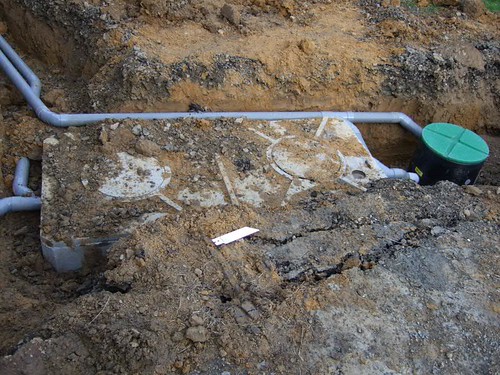
A homeowner in Connecticut is facing a daunting $20,000 repair bill after discovering that the house he purchased in 2024, listed as being on town sewer, actually has an unpumped septic tank. The situation has left him frustrated and questioning the integrity of the parties involved in the sale.
Upon buying the house, which was built in 1946, the homeowner was assured that the property was connected to the town’s sewer and water systems. The sellers indicated “no” regarding the presence of a septic system and “yes” for town sewer on the disclosure forms. Additionally, they marked “idk” for the amount of water bills, a discrepancy that the buyer initially overlooked. Relying on an appraisal and inspections—including a VA appraisal, a home inspection, and a termite inspection—he assumed everything was in order. However, nobody mentioned a septic tank.
It wasn’t until the homeowner came dangerously close to the wooden lid of what turned out to be the septic system while using a tractor that alarm bells began to ring. Concerned about the tank’s proximity to the house, an abandoned outdoor pool, and an electrical outlet, he decided to investigate further. Visiting the town hall, he learned that his home had never been connected to the town sewer. “No, you’ve never been on town sewer. Why would you think that, silly goose?” the town clerk responded, leaving him puzzled and anxious about where the wastewater from his home was actually going.
The situation escalated when he finally got the septic system inspected and pumped. To his dismay, the tank had never been pumped and failed inspection. “The quote to fix it is $20,000 to $23,000, which is not ideal, planned for, or disclosed,” he lamented. Unsure of who to blame for the mess—whether the sellers, the real estate broker, or even the town—he sought assistance from another realtor to get an official town card. This document revealed the truth: the property had always been on septic, contradicting what the sellers had stated.
As the homeowner navigates the aftermath of this predicament, he has reached out to several lawyers but remains uncertain about the legal steps he can take. “Someone lied and now this house is on borrowed time,” he said, expressing his frustration with the situation that feels like a ticking time bomb. The complexities of real estate transactions, especially concerning inspections and disclosures, have left him tangled in a web of uncertainty.
Reactions from readers emphasize the sheer disbelief about the situation. Many were quick to focus on the financial implications, concerned that the homeowner might be left to foot the bill for what could easily be classified as negligence or even fraud on the part of the sellers and the real estate agent. Others expressed sympathy, sharing similar experiences where home inspections failed to catch critical issues, leaving new homeowners in a bind.
Some commenters questioned why the VA appraisal did not uncover the septic tank issue. “It’s baffling that nobody caught this,” one reader noted, highlighting the importance of thorough inspections in real estate transactions. Others suggested that the homeowner consider legal action against the sellers, emphasizing the potential for a case regarding undisclosed issues that should have been disclosed prior to the sale.
As this homeowner looks to unravel the truth behind his property’s sewer situation, the burden of a looming $20,000 repair hangs heavy over his head, underscoring the risk many buyers take when they place trust in the transparency of real estate transactions and the people conducting them.
Original discussion: https://www.reddit.com/r/legaladvice/comments/1uknguj/undisclosed_septic/
Leave a Reply