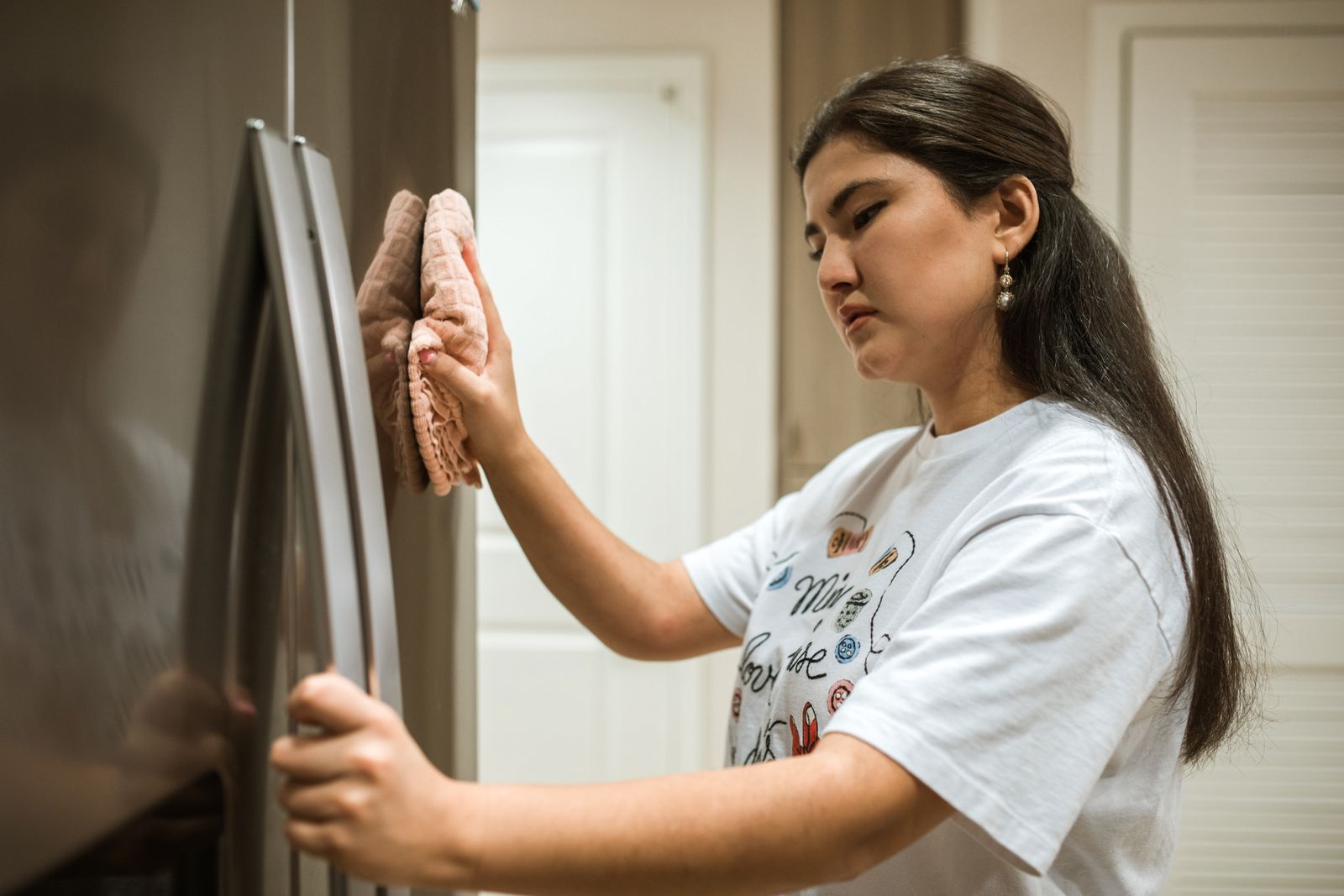
In an astonishing display of family dynamics, a woman found herself at the center of an uncomfortable exchange between her husband and her mother-in-law. The tension unfolded over an innocuous household chore—washing dishes—but quickly escalated into a deeply personal interrogation about the woman’s eczema, all conducted in a language she didn’t understand. This startling scenario raises eyebrows about boundaries and the respect we ought to extend to one another in familial settings.

According to the poster, the incident took place in a typical household setting. Her husband was washing the dishes when his mother stood at the sink, watching intently. What seemed like a simple moment of shared chores turned sour as the mother-in-law began questioning her son in their native language. Although she couldn’t follow the conversation, the daughter-in-law caught on quickly through gestures and expressions—an awkward realization that her hands were the focal point of scrutiny. The cracked skin on her hands, a visible manifestation of her battle with eczema, became the subject of discussion.
While the son explained the condition of his wife’s hands, the poster stood just a few feet away, feeling exposed and vulnerable. She described the discomfort of being evaluated in the midst of a conversation in a language she didn’t speak. The mother-in-law’s gestures were unmistakable; they pointed directly at her hands, amplifying the sting of the situation. It wasn’t just a casual discussion; it felt like a direct commentary on her condition, her worth, and—inadvertently—her role in the household.
The poster’s feelings were compounded by the fact that she had no opportunity to defend herself or clarify her struggle with eczema, a chronic condition often riddled with misconceptions. In that moment, she felt a mix of powerlessness and embarrassment, trapped in a familial situation where her autonomy seemed overlooked. Was it unreasonable to expect that discussions about her health should involve her, rather than take place over her like she wasn’t present?
As the story circulated, many readers were captivated by the intensity of the moment and the implications of such behavior. The dynamics of in-laws can be tricky, and here was an example that struck a nerve. Some commentators expressed empathy for the poster, acknowledging the rarity of such discomforting situations. Others criticized the mother-in-law’s lack of regard for her daughter-in-law’s feelings, pointing out how important it is for family members to communicate openly and respectfully, especially when it involves personal matters.
Reactions varied widely, but many seemed to coalesce around the idea that the mother-in-law’s approach was both invasive and inappropriate. Some argued that language barriers should not be an excuse for disrespectful behavior, particularly when family members are involved. The awkwardness didn’t just stem from the topic of the discussion but also from the very setting and the unilateral way it was handled. Readers commented on how such behavior demonstrated a failure to recognize the daughter-in-law as an equal and valued member of the family.
In addition to empathy for the poster, many readers expressed frustration with the lack of boundaries common in relationships between mothers-in-law and daughters-in-law. Some shared their own experiences with similar situations, noting that it’s often difficult to establish mutual respect and understanding. As the conversation flowed, it was clear that the discomfort resonated widely, creating a sense of solidarity among those who have faced similar familial trials.
Ultimately, the incident leaves an unsettling question hanging in the air: how can families navigate the complex interplay of culture, language, and personal health without crossing lines that lead to hurt? The daughter-in-law’s experience serves as a striking example of both the tensions that can arise in family dynamics and the profound impact that seemingly small moments can have on personal well-being.
More from Willow and Hearth:
Leave a Reply